Boat Loan CaBoat Loan Calculator: How Much Will You Really Pay Monthly?
loan calculator estimates often look simple on the surface, yet many buyers still feel unsure when they see a monthly payment that seems lower than expected. The excitement of buying a boat can quickly fade when financing details become confusing and the numbers don’t seem to match real-world costs.
That confusion usually starts when lenders present interest rates, repayment terms, and fees in separate pieces. Picture someone comparing two boat financing offers on a Friday evening after work. One lender advertises a lower rate, while another offers a longer repayment period, making the decision far more difficult than expected.
Here’s what changes everything. Once you understand how monthly payments are calculated and which numbers matter most, you can compare offers confidently, avoid expensive surprises, and choose a financing option that fits your budget before signing any paperwork.
Why Do Boat Payments Often Cost More Than Buyers Expect?
A boat purchase involves more than the sticker price displayed in a marina or online listing. Most buyers focus on the vessel’s advertised price but overlook interest charges, lender fees, insurance requirements, and registration expenses that affect total ownership costs.
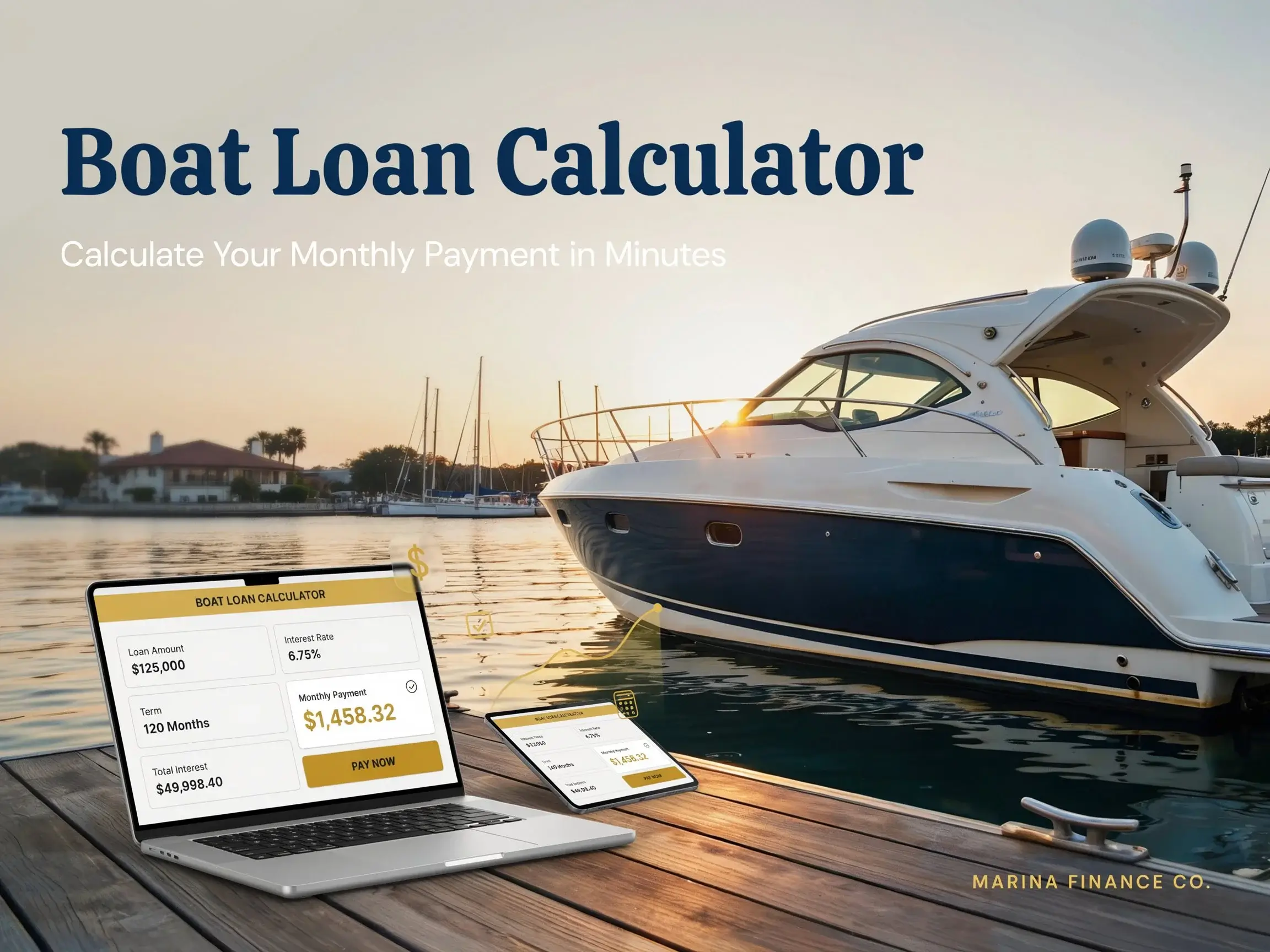
A loan calculator helps reveal those hidden costs before they become a problem. For example, a $40,000 boat financed over fifteen years may produce an affordable monthly payment, but the total interest paid over the life of the loan can add thousands of dollars to the final cost.
Repayment length creates another common misunderstanding. Extending a loan from ten years to fifteen years may reduce the monthly bill, yet the overall amount paid increases significantly. Small monthly savings can sometimes lead to much larger long-term expenses.
How Can You Tell Whether a Boat Loan Fits Your Budget?
Many buyers start with the lender’s approval amount instead of their actual budget. That approach often creates pressure because approval does not automatically mean affordability.
A loan calculator gives a clearer picture by allowing you to test different scenarios before submitting an application. You can compare a five-year, ten-year, or fifteen-year term and immediately see how each choice affects monthly payments and total interest costs.
What Numbers Should You Check Before Applying?
Start with the purchase price, down payment amount, interest rate, and repayment term. If a lender quotes 7% interest on a $50,000 loan with a 15% down payment, entering those figures provides a realistic estimate rather than a guess.
You should also leave room for insurance, fuel, maintenance, storage, and seasonal repairs. Boat ownership costs often surprise first-time buyers more than the financing itself.
What Is the Best Way to Estimate Your Monthly Boat Payment?
The most effective approach starts with accurate numbers rather than optimistic assumptions. Gather the boat price, expected down payment, estimated interest rate, and desired repayment period before running any calculations.
A loan calculator becomes especially useful when comparing multiple financing offers side by side. Imagine two lenders offering similar loans. One charges a slightly lower rate, while the other offers lower upfront fees. Running both options often reveals which deal actually saves more money.
Many experienced buyers test several repayment terms before making a decision. A shorter term usually increases monthly payments but reduces total interest. A longer term lowers monthly obligations while increasing overall borrowing costs. Seeing those figures together makes the trade-off much easier to understand.
Another useful habit involves checking affordability against real monthly income. If the projected payment leaves little room for fuel, maintenance, or unexpected repairs, adjusting the purchase price before applying can prevent financial stress later.
What Happens After You Find the Right Payment Amount?
Once you’ve identified a comfortable payment range using a loan calculator, the next step involves comparing lenders carefully. Look beyond promotional rates and review fees, repayment flexibility, early payoff options, and customer service reputation.
A strong financing decision supports long-term enjoyment rather than creating ongoing financial pressure. Someone who chooses a payment that comfortably fits their monthly budget usually enjoys ownership more than someone who stretches finances to purchase a larger boat.
Before submitting an application, review your credit profile, confirm your down payment funds, and gather supporting documents. Taking these steps often improves approval chances and may help secure better financing terms from lenders.
A few extra hours of preparation can save thousands of dollars over the life of a boat loan.
Boat financing becomes stressful when buyers focus only on advertised monthly figures without understanding the factors behind them. The solution is simple: compare realistic numbers, evaluate total borrowing costs, and use a loan calculator before making any commitment.
Spend ten minutes running several payment scenarios today, save the results, and use them to compare lenders with confidence before choosing your next boat.
A boat loan doesn’t have to be a financial mystery. By understanding how interest rates, loan terms, and down payments affect your costs, you can make a smarter financing decision. Use a boat loan calculator to compare options, estimate realistic monthly payments, and choose a loan that fits comfortably within your budget.