Boat Insurance Guide: Coverage, Costs, and How It Works
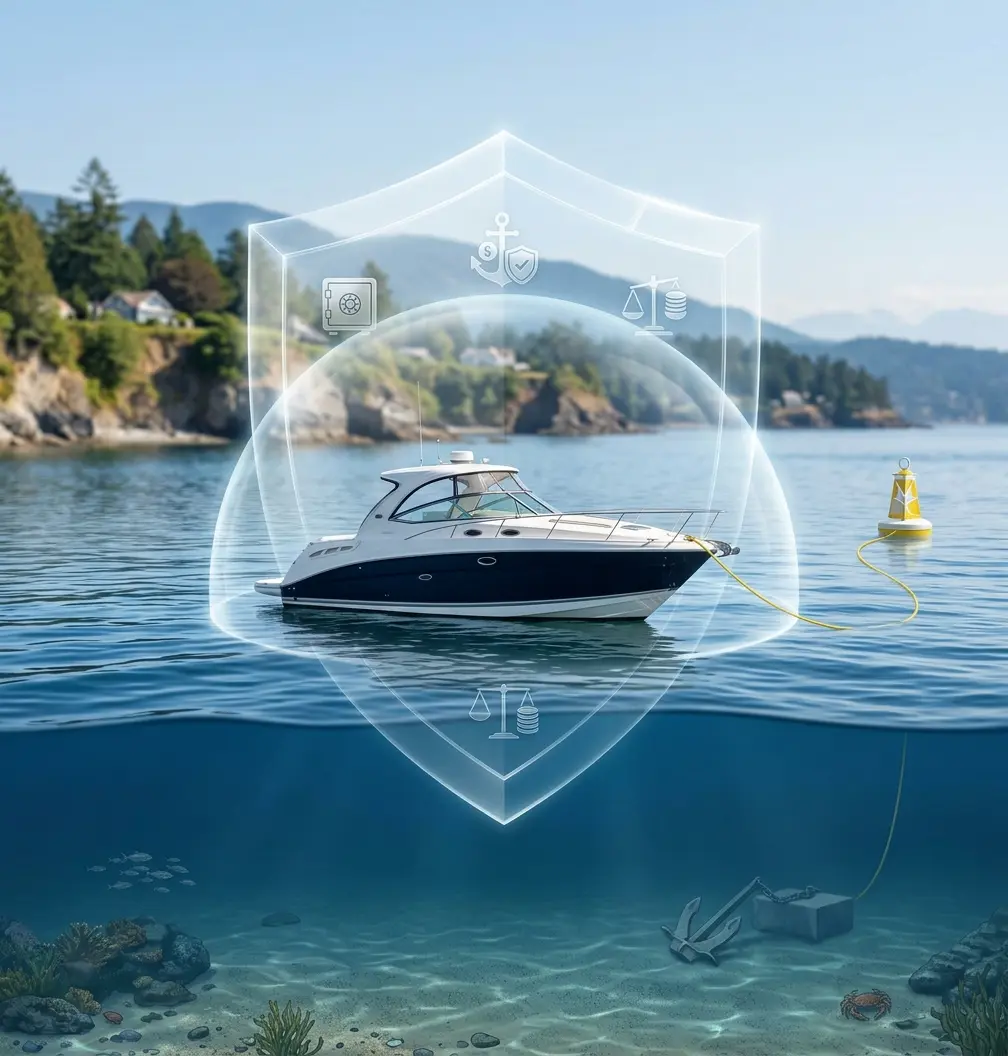
Many boat owners know their boat is valuable but are unsure what boat insurance guide actually covers, how much protection they need, or what they could pay after an accident. Boat insurance helps close that gap by protecting against covered damage, injuries, and liability.
You pay a premium for coverage, while your policy sets the coverage limits, deductible, exclusions, and claim terms. The right policy depends on your boat’s value, usage, passengers, financing requirements, and risk exposure. For a broader cost picture, connect insurance with a Boat Ownership Guide and Boat Loan Calculator.
What Does Boat Insurance Cover?
Boat insurance can protect against boat damage, third-party liability, injuries, and selected additional risks. Coverage varies by insurer, policy limits, and optional endorsements.
Physical Damage Coverage
Physical damage coverage helps pay to repair or replace a boat after a covered loss, such as a collision, theft, fire, or certain weather-related damage. Hull coverage is commonly included within this protection.
Liability and Medical Coverage
Liability coverage can help pay for injuries or property damage you cause to others while operating your boat. Medical payments coverage may help with eligible medical expenses for injured passengers, depending on the policy.
Optional Add-Ons
Some policies offer additional protection for towing, personal effects, fuel spills, wreck removal, or uninsured and underinsured boaters.
| Coverage | Main Purpose |
|---|---|
| Physical Damage | Protects the boat from covered damage |
| Liability | Protects against third-party claims |
| Medical Payments | Helps with eligible injury expenses |
| Towing | Helps cover emergency assistance |
| Personal Effects | Protects covered belongings on the boat |
A useful rule is to match coverage to your actual risk. A high-value boat may need stronger physical damage protection, while frequent passengers can increase the importance of liability and medical coverage.
The next decision is equally important: how the insurer values your boat after a major loss.
Agreed Value vs Actual Cash Value: Which Is Better?
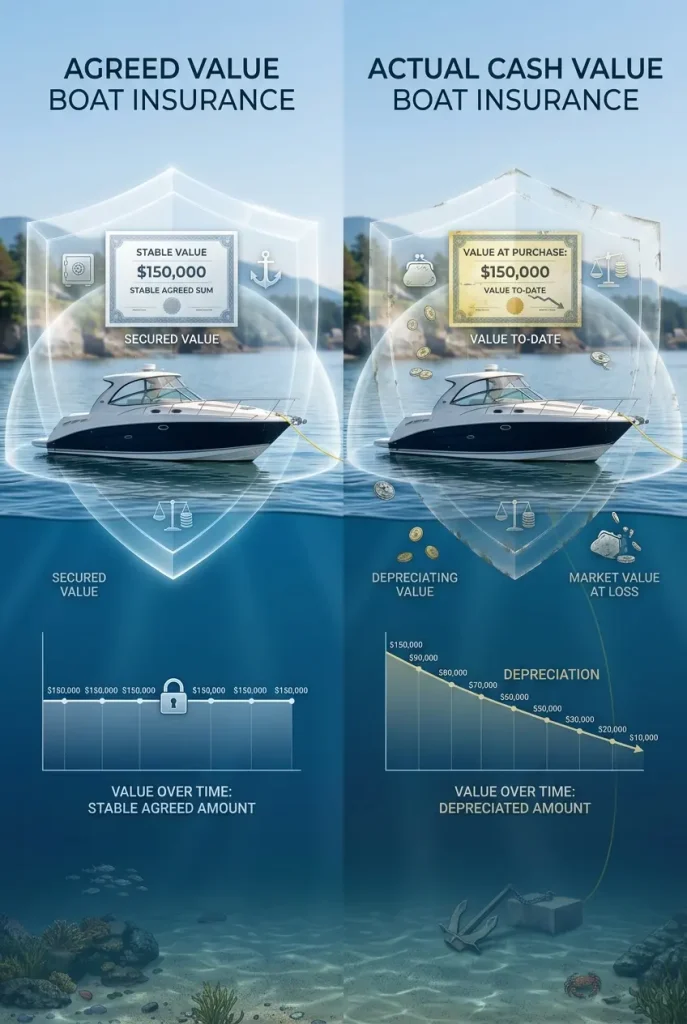
Agreed value and actual cash value determine how your insurer may calculate a payout after a covered total loss. The better option depends on whether you prioritize predictable protection or a potentially lower premium.
| Feature | Agreed Value | Actual Cash Value |
|---|---|---|
| Payout Basis | Predetermined insured value | Current depreciated value |
| Depreciation | Usually less relevant to the agreed total-loss value | Reduces payout as the boat loses value |
| Premium | Often higher | Often lower |
| Best For | Owners wanting predictable protection | Owners prioritizing lower cost |
Agreed value can be useful when you want a clearer total-loss payout based on the insured value agreed when the policy is issued.
Actual cash value considers depreciation and the boat’s value at the time of loss. An older boat may therefore receive a lower payout than its original purchase price.
For example, a boat insured for an agreed value of $50,000 may have a different total-loss settlement than the same boat insured on an actual cash value basis after years of depreciation.
Choose agreed value when predictable protection matters more than a lower premium. Compare actual cash value when reducing insurance costs is the higher priority.
Your valuation choice can affect both your protection and the price of your policy.
How Much Does Boat Insurance Cost?
Boat insurance cost depends on the boat, the owner, the location, and the protection selected. There is no single price that accurately applies to every boat owner.
Your premium may be affected by:
- Boat value and age
- Boat type and size
- Horsepower
- Location and operating territory
- Claims history
- Coverage limits
- Deductible
- Boating experience
A higher coverage limit or lower deductible can increase the premium because the insurer may face greater potential claim costs. A higher deductible can reduce the premium but increases the amount you may pay after a covered loss.
Think of the cost as a risk calculation:
Boat Characteristics + Location + Usage + Coverage Level + Deductible = Insurance Premium
Do not choose a policy based only on the cheapest quote. A lower premium may result from lower coverage limits, a higher deductible, actual cash value protection, or additional exclusions.
Estimate insurance alongside fuel, maintenance, storage, and financing with a Boat Ownership Cost Calculator.
Price matters, but exclusions can determine whether a low-cost policy actually provides the protection you expect.
What Does Boat Insurance Usually Not Cover?
Boat insurance does not cover every problem that happens to a boat. Policy exclusions define situations where the insurer may not pay, even if you have active coverage.
Common exclusions or limitations may involve:
- Normal wear and tear
- Poor maintenance
- Mechanical or gradual deterioration
- Unauthorized or excluded use
- Commercial activities not covered by the policy
- Racing or other restricted activities
- Certain weather-related risks or operating territories
For example, an insurer may cover sudden damage from a covered accident but not damage caused by long-term neglect or lack of maintenance.
The important distinction is simple: having boat insurance does not mean every repair is insured. Always review the policy’s exclusions, endorsements, coverage limits, and deductible before buying.
Regular maintenance can also reduce preventable risks, making a Boat Maintenance Guide a useful supporting resource.
Once you understand coverage and exclusions, you can compare policies based on actual protection rather than price alone.
How to Choose the Right Boat Insurance Policy
The right boat insurance policy depends on your boat’s value, how you use it, where you operate it, and how much financial risk you can accept.
Use this decision framework:
1. Assess Your Boat and Risk
Consider your boat’s value, age, location, passenger use, and exposure to theft, storms, or accidents.
2. Choose the Coverage You Need
A valuable or financed boat may require stronger physical damage protection. Frequent passenger use can increase the importance of liability and medical coverage.
3. Compare Valuation Methods
Compare agreed value and actual cash value before choosing a policy. A lower premium may not be worthwhile if depreciation creates an unacceptable payout gap.
4. Compare Quotes Beyond Price
Do not compare:
Premium only
Compare:
- Premium
- Coverage limits
- Deductible
- Agreed value or actual cash value
- Exclusions
- Optional endorsements
A $300 policy is not automatically better than a $400 policy if the cheaper option provides significantly lower protection or excludes risks that matter to you.
Before making a final decision, compare your options through Best Boat Insurance Companies and calculate how insurance fits into your total financing costs with the Boat Loan Guide.
Frequently Asked Questions
Is boat insurance legally required in the USA?
Boat insurance requirements vary by state and situation. Even when state law does not require coverage, a marine lender or marina may require insurance.
Does homeowners insurance cover a boat?
Some homeowners policies provide limited coverage for certain small watercraft, but coverage may be restricted by boat type, value, size, horsepower, or use. Larger boats often need separate boat insurance.
Do I need insurance for a financed boat?
A marine lender may require physical damage insurance while the loan remains active. Review your loan agreement for the lender’s specific coverage requirements.
How much boat insurance do I need?
The right amount depends on your boat’s value, liability exposure, location, usage, and personal financial risk. Compare coverage limits and exclusions instead of choosing based only on the premium.
Can I lower my premium by increasing my deductible?
Yes, a higher deductible can reduce your premium. However, you will usually pay more out of pocket when making a covered claim.
Does boat insurance cover theft and storm damage?
Many policies can cover theft and certain storm-related damage, but coverage depends on the policy terms, exclusions, deductible, location, and specific event. Always verify these risks before purchasing coverage.

Michael Carter is a financial research writer specializing in vehicle financing, loan calculations, interest rates, and consumer budgeting. He creates practical, easy-to-understand resources that help readers make more informed financing decisions.