
Boat Loan Requirements: What You Need to Qualify
Buying a boat is exciting, but qualifying for financing can feel uncertain when you do not know what lenders expect. Boat loan requirements typically include your credit, income, debt, down payment, and the boat itself. This article helps you understand these requirements, prepare your application, and identify potential approval issues before you apply, and the boat you want to finance.
Requirements vary by lender and loan type. A borrower with strong credit and stable income may qualify differently than someone with a lower credit score or higher debt. The boat itself may also need to meet lender requirements.
A good starting point is to check affordability with a Boat Loan Calculator before applying.
Financial Requirements Lenders May Check
Lenders want evidence that you can repay the loan. The main factors usually include:
- Credit score and credit history: Can affect approval and APR.
- Income: Shows your ability to make monthly payments.
- Employment or income stability: Helps lenders assess repayment reliability.
- Debt-to-income ratio (DTI): Compares your existing monthly debt with your income.
- Down payment: Reduces the amount you need to borrow.
- Assets or savings: May support your overall financial profile.
No single factor always determines approval. For example, a larger down payment may reduce lender risk, while a strong credit profile may help you qualify for better terms.
If credit is your main concern, see Boat Loan Credit Score. To understand how upfront cash affects financing, see Boat Down Payment.
Documents Needed for a Boat Loan
Most lenders require documents that verify identity, income, financial capacity, and boat details.
Typical requirements include:
- Government-issued identification
- Proof of income
- Bank statements
- Employment information
- Boat purchase agreement or seller details
- Proof of down payment, if required
Self-Employed Borrowers
Self-employed applicants may need additional records, such as:
- Recent tax returns
- Business income records
- Profit and loss statements
- Additional bank statements
Boat Documents
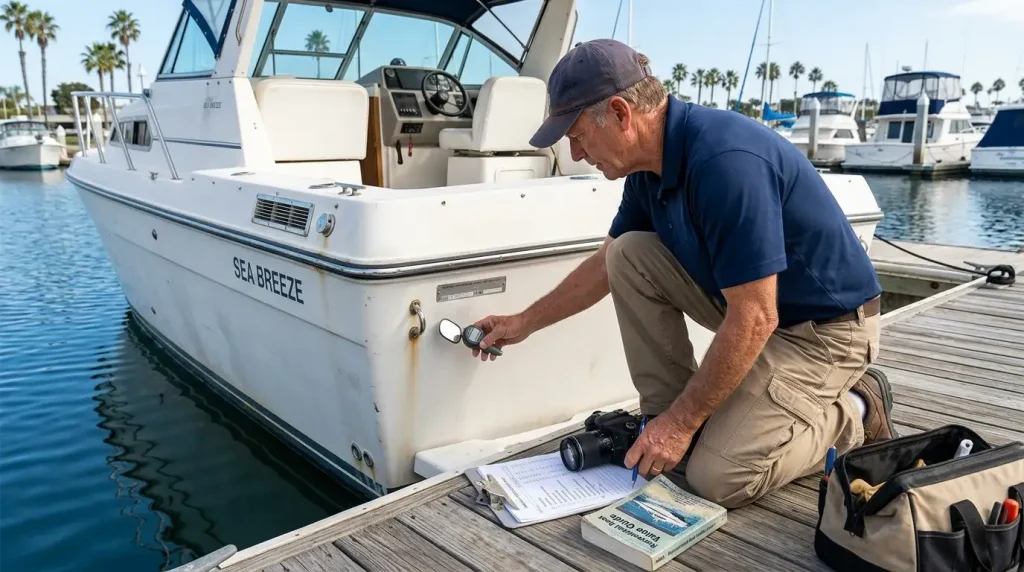
The lender may also request the boat’s purchase price, age, Hull Identification Number (HIN), title, registration, or survey information.
Preparing both borrower documents and boat documents before applying can reduce processing delays. The next requirement is confirming whether the vessel itself qualifies for financing.
Does the Boat Need to Meet Loan Requirements?
Yes. You can meet the lender’s personal financial requirements and still face problems if the boat does not meet the lender’s collateral requirements.
Lenders may review:
- Boat age
- Market value
- Make and model
- Hull Identification Number (HIN)
- Physical condition
- Title or registration status
- Marine survey requirements
A newer boat with clear ownership records may be easier to finance than an older vessel with uncertain value or missing documentation.
Some lenders may also require boat insurance before closing. Boat Insurance Guide and Used Boat Financing provide the next steps for evaluating these requirements.
Prequalification vs Boat Loan Approval
Prequalification gives you an early indication of possible borrowing eligibility. Final approval requires a complete application and lender underwriting.
| Prequalification | Final Approval |
|---|---|
| Preliminary estimate | Final lending decision |
| May use limited financial information | Requires full verification |
| Helps estimate borrowing options | Confirms approved loan terms |
| Does not guarantee approval | Subject to lender conditions |
Prequalification can help you compare options before committing to a full application. Final approval may still change if your verified income, debt, credit, documents, or boat information differs from the initial information.
When you are ready to compare financing options, review Best Boat Lenders.
What Can Prevent Boat Loan Approval?
Boat loan applications may be delayed or denied when lenders identify repayment or collateral risks.
Common issues include:
- Low credit or negative credit history: Improve your credit profile before applying when possible.
- High debt-to-income ratio: Paying down existing debt may improve affordability.
- Unstable or insufficient income: Provide clear and complete income documentation.
- Missing documents: Prepare financial and boat information in advance.
- Insufficient down payment: Increasing the down payment reduces the loan amount.
- An ineligible boat: Older, difficult-to-value, or poorly documented vessels may face additional restrictions.
The most useful approach is to identify the weak area before applying. Boat Loan Credit Score can help with credit-related concerns, while Boat Loan Refinancing may be relevant for borrowers reviewing an existing loan.
Boat Loan Qualification Checklist
Before applying, check the following:
- Do you have a credit profile that meets the lender’s standards?
- Can your income support the estimated monthly payment?
- Is your existing debt manageable?
- Do you have funds for a down payment if required?
- Are your ID and income documents ready?
- Do you have the boat’s price, age, HIN, and seller information?
- Does the boat fit the lender’s financing criteria?
- Have you calculated the full cost of ownership?
A loan payment is only one expense. Use a Boat Loan Calculator to estimate financing costs and a Boat Ownership Cost Calculator to account for insurance, fuel, maintenance, storage, and other ownership expenses.
Frequently Asked Questions
What debt-to-income ratio do lenders look for?
Lenders may review your debt-to-income ratio to determine whether your existing monthly debt and proposed boat payment fit within your income.
Does employment history affect boat loan approval?
Stable employment or consistent income can strengthen an application. Self-employed borrowers may need additional documentation to verify income.
Does applying for a boat loan affect my credit score?
A full loan application may involve a credit inquiry. Ask the lender whether the application or prequalification process affects your credit before proceeding.
Can I get approved for a boat loan before choosing a boat?
Some lenders allow prequalification before you select a specific vessel. Final approval may still depend on the boat’s price, age, value, and condition.
Do I Qualify for a Boat Loan?
You may qualify if you meet the lender’s requirements for credit score, income, debt-to-income ratio, down payment, and the boat’s eligibility. Final approval depends on the lender and your overall financial profile.
How Long Are Boats Financed For?
Boat loan terms typically range from 2 to 20 years, depending on the loan amount, boat value, lender, and borrower qualifications. Longer terms lower the monthly payment but usually increase the total interest paid.

Michael Carter is a financial research writer specializing in vehicle financing, loan calculations, interest rates, and consumer budgeting. He creates practical, easy-to-understand resources that help readers make more informed financing decisions.