Boat Storage Options and Costs: A UK Owner’s Guide
Storage is one of the biggest yearly bills of owning a boat. In the UK, most owners pay between £500 and £6,500 per year, depending on the size of the boat and where they keep it. A trailerable boat stored at home can cost just a few hundred pounds a year. A marina berth on the south coast for an 8 metre boat can cost over £4,400 a year.
This guide explains the five main storage options, what each one costs in the UK, the extra fees most owners forget, and how to pick the right option for your boat.
Storage Costs at a Glance
Here are typical UK annual costs for an 8 metre boat, based on real 2026 marina and boatyard tariffs:
| Storage option | Typical annual cost (8 m boat) |
|---|---|
| Home or trailer storage | £300 to £800 |
| Swing mooring | £400 to £900 |
| Hardstanding (boatyard ashore) | £1,500 to £2,500 |
| Dry stack | £3,500 to £4,500 |
| Marina berth (in the water) | £3,500 to £6,500 |
| Indoor storage | £2,400 to £5,000 |
Prices vary a lot by region. The south coast is the most expensive. Scotland, the north of England and inland waterways are usually cheaper.
The 5 Main Boat Storage Options
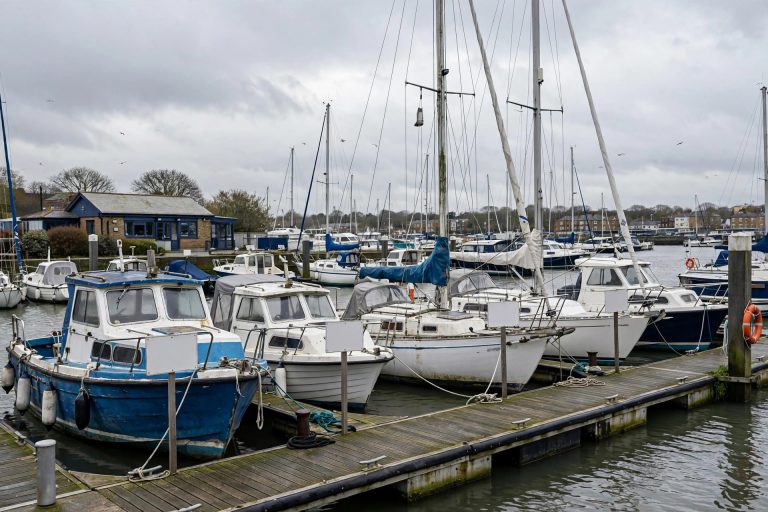
1. Marina Berth
Your boat stays in the water, tied up alongside a pontoon. This is the most convenient option. You can step aboard any time, day or night.
Good for: owners who use their boat often, larger boats, and anyone who wants easy access.
Downsides: it is the most expensive option, and a boat left in the water needs more maintenance. You will need regular antifouling and hull cleaning.
Marina berths in the UK are usually priced per metre of LOA (length overall), with VAT included. As a rough guide, an 8 metre boat on the south coast costs around £4,400 a year for a berth.
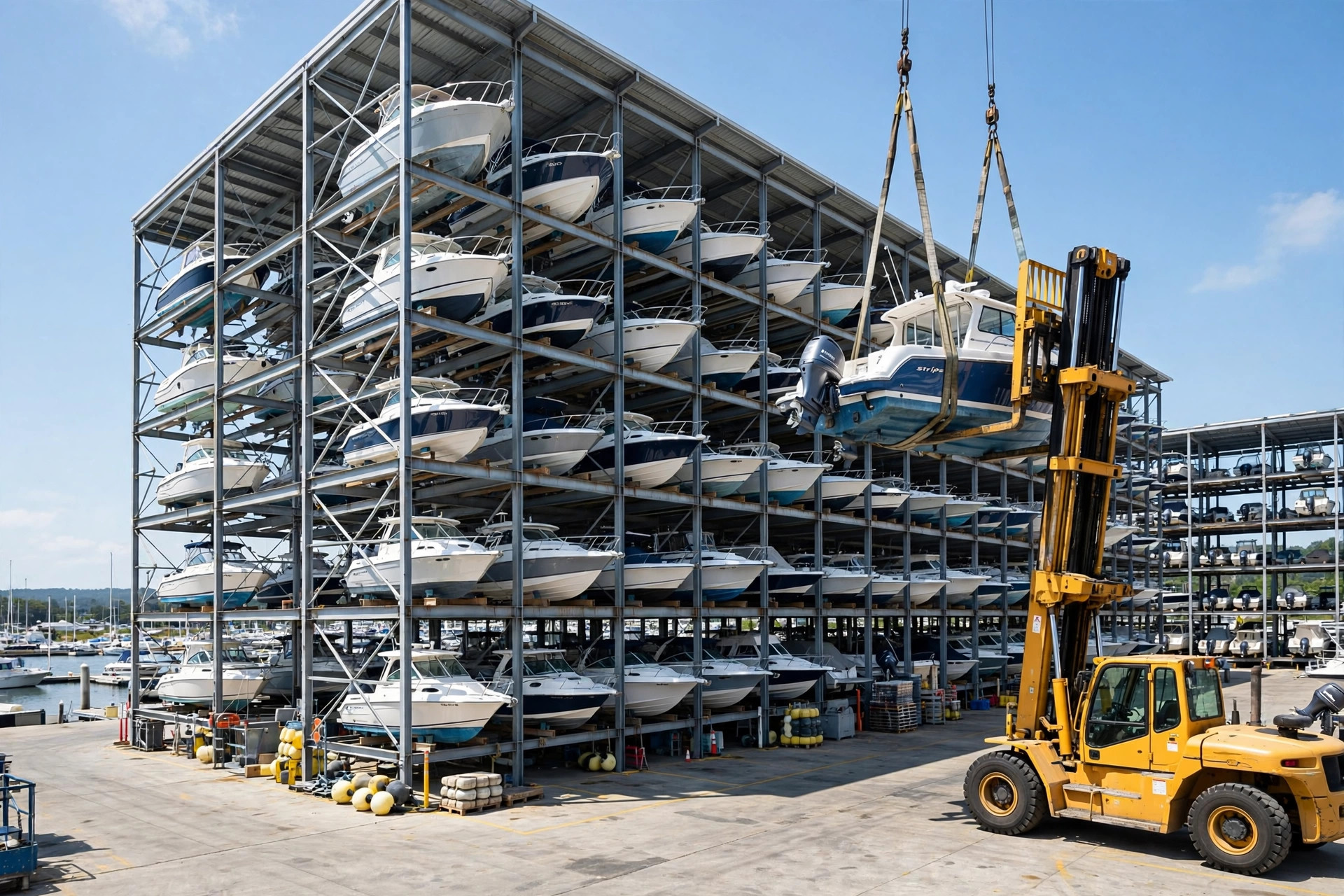
2. Dry Stack
Your boat sits in a tall rack on shore. When you want to go out, you phone ahead and the marina lifts it into the water with a forklift.
Good for: boats up to about 9 metres, weekend boaters, and owners who want low maintenance. The hull stays clean because it is out of the water, so you may not even need antifouling.
Downsides: there are size and weight limits (roughly 9 metres or 13 tonnes). You must book your launch in advance, and at busy times you may have to wait.
Typical UK dry stack prices are around £3,050 a year for a 6 metre boat, £4,100 for an 8 metre boat and £5,390 for a 10 metre boat.
3. Hardstanding
Your boat is lifted out of the water and stored ashore in a boatyard, on jack stands or a cradle. This is the classic choice for winter lay-up.
Good for: winter storage, boats that need repair work, and budget-conscious owners.
Downsides: you pay for the lift out and the relaunch on top of the storage fee. You also need a cradle or stands for many boats.
UK boatyards typically charge about £9 per metre per week for hardstanding. For an 8 metre boat that is £72 a week. A five month winter stay works out at roughly £1,500, plus around £200 to £250 each way for lift out and relaunch.
4. Indoor and Covered Storage
Your boat is kept inside a building or under a roof. This is the premium option and gives the best protection from weather, sun damage and theft.
Good for: high-value boats, classic boats, and anyone who wants maximum protection.
Downsides: it costs more, and access is usually limited to set hours.
As a UK example, indoor storage for a boat up to 10 metres costs around £240 a month, or £2,400 a year, at some south coast yards. Some yards offer combined deals, such as six months of indoor winter storage plus six months of trailer storage for about £1,680 a year.
5. Home and Trailer Storage
You keep the boat on a trailer on your drive or in your garden. This is by far the cheapest option.
Good for: trailerable boats (usually under 8 metres), owners with space at home, and people who want instant access.
Downsides: you need a car that can legally tow the weight, somewhere to launch nearby, and a good cover. Check local rules too, as some areas restrict keeping boats on drives.
Real yearly costs are often just £300 to £800 for trailer upkeep and a cover. Some owners report paying as little as £200 a year at a basic rural yard.
Boat Storage Costs by Boat Size
UK marinas and boatyards price storage by the length of your boat. Here are real 2026 examples to help you budget:
Marina berth (south coast, annual, including VAT):
- 6 metre boat: about £3,155 a year
- 8 metre boat: about £4,443 a year
- 10 metre boat: about £6,520 a year
Dry stack (south coast, annual):
- 6 metre boat: about £3,050 a year
- 8 metre boat: about £4,100 a year
- 10 metre boat: about £5,390 a year
Budget options reported by UK owners:
- Swing mooring with harbour dues: about £450 a year for a 25 foot yacht
- Basic rural boatyard ashore: about £200 a year for a small boat
- Dinghy park at a marina: about £350 a year
Remember that most UK prices already include VAT at 20 percent, and boats are measured by LOA, which includes bowsprits, davits and outboards.
Extra Costs Most Owners Forget
The storage fee is only part of the bill. Budget for these extras:
- Lift out and relaunch: about £25 to £33 per metre each way at a typical boatyard. For an 8 metre boat, that is £200 to £264 per lift.
- Cradle or stand hire: around £260 for a winter season for a keel boat.
- Winterisation: engine and water system winterising typically costs £300 to £600 if you pay a yard to do it.
- Electricity: metered shore power can add £30 to £100 a month in winter if you run a dehumidifier or heater.
- Insurance: most UK boatyards ask for proof of third party liability insurance before they accept your boat. Factor the premium into your yearly budget.
- Antifouling: a boat kept in the water all year needs antifouling every year or two, at roughly £38 per metre for one coat plus labour.
These extras can easily add 30 to 50 percent on top of the base storage price.
Winter Storage in the UK
Most UK owners lift their boats out between October and April. Winter is when demand for hardstanding is highest, so book early. Many yards offer five month winter packages from autumn to spring, which work out cheaper than paying weekly.
Council-run harbours can be good value. For example, one south west council offers five months of winter storage at £90 per metre including VAT, so a 9 metre boat costs £810 for the whole winter, on the water or on the hard.
If you keep your boat in the water all winter on a marina berth, that is fine too, but you must still lift it once a year to clean the hull, check the antifouling and service the running gear.

How to Choose the Right Option
Use this simple framework:
| If you… | Consider… |
|---|---|
| Use the boat every week | Marina berth |
| Go out most weekends, boat under 9 m | Dry stack |
| Only boat in summer | Hardstanding for winter, berth for summer |
| Have a trailerable boat and space at home | Home storage |
| Want the lowest possible cost | Swing mooring or basic boatyard |
| Own a valuable or classic boat | Indoor storage |
Also think about how far you are willing to travel. A yard 30 minutes further away can cost far less. Work out whether the saving is worth the extra driving.
7 Ways to Cut Your Storage Bill
- Pay annually in advance. Many marinas give 10 to 15 percent off for yearly contracts paid up front.
- Book winter storage early. The best value hardstanding spots fill up by late summer.
- Consider a swing mooring. If you do not need shore power or daily access, a mooring buoy can cost a few hundred pounds a year instead of a few thousand.
- Share costs. Some yards let two owners share a storage bay or split a cradle.
- Do your own winterisation. If the yard allows DIY work, you can save hundreds on labour.
- Look inland. Non tidal rivers, canals and inland marinas are often much cheaper than the south coast.
- Downsize seasonally. Keep the boat on a berth in summer and move it ashore for winter instead of paying for a berth all year.
Questions to Ask Before You Book
- What is the total yearly cost, including VAT and all fees?
- What is included in the price, and what costs extra?
- How is the price calculated: per metre, per week, or per season?
- What are the contract terms and the cancellation notice period?
- What security is in place: CCTV, locked gates, staff on site?
- Can I work on my own boat in the yard?
- What are the access hours?
- For dry stack: how much notice do I need to give for a launch, and are there after hours charges?
- Is third party insurance required, and what proof do you need?
FAQs
Is dry stack cheaper than a marina berth?
Usually yes, slightly. For an 8 metre boat on the south coast, dry stack costs around £4,100 a year while a marina berth costs around £4,443. Dry stack can also save you money on hull maintenance because the boat stays out of the water.
Can I store my boat at home?
Yes, if it is trailerable and you have the space. It is the cheapest option at a few hundred pounds a year. You need a suitable tow car, a roadworthy trailer, and somewhere to launch nearby.
Do I need insurance to store my boat?
Most UK marinas and boatyards require at least third party liability insurance. Some ask to see your policy documents before they accept the boat, especially for longer stays.
When should I book winter storage?
As early as you can. Book in late summer for an autumn lift out. The cheapest hardstanding places fill up first.
The Bottom Line
Boat storage in the UK ranges from a few hundred pounds a year for home or swing mooring storage to over £6,000 a year for a large boat on a south coast marina berth. For most owners of mid sized boats, the realistic choice is between a marina berth at roughly £3,500 to £6,500 a year, dry stack at roughly £3,500 to £4,500, or winter hardstanding at roughly £1,500 to £2,500 plus lift fees.
Add the storage cost to your other yearly bills, insurance, maintenance, fuel and loan payments, before you buy. Knowing the true yearly cost is what separates happy boat owners from surprised ones.

Michael Carter is a financial research writer specializing in vehicle financing, loan calculations, interest rates, and consumer budgeting. He creates practical, easy-to-understand resources that help readers make more informed financing decisions.