Boat Mooring vs Anchoring: Which Should You Use?
Choosing between boat mooring vs anchoring depends on how long you plan to stay, the type of water you are using, weather conditions, and whether a permitted mooring is available. Using the wrong method can lead to dragging, swinging into other boats, or violating local rules.A mooring provides a fixed connection at an approved location, while anchoring gives you more flexibility. Understanding the different boat mooring options can also help you decide which setup fits your boating needs.
The practical distinction is simple: anchoring temporarily holds a boat to the bottom using an anchor and rode, while mooring connects the boat to a fixed underwater or surface mooring system. The right choice depends on your intended stay, location, holding conditions, and local regulations.
What Is the Difference Between Mooring and Anchoring?
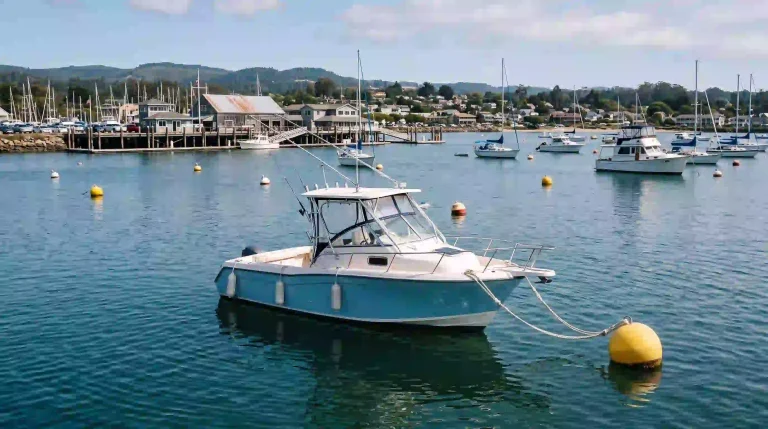
A mooring is a permanent or semi-permanent fixed system designed to hold a vessel in a specific location. The boat normally connects to a mooring buoy or pickup point rather than deploying its own anchor.
Anchoring allows the boat operator to select a suitable location and deploy an anchor connected to the boat by an anchor rode. The anchor holds by engaging the bottom material.
| Factor | Mooring | Anchoring |
|---|---|---|
| Holding system | Fixed mooring system | Boat’s anchor |
| Location | Designated or approved location | Suitable anchorage |
| Setup | Connect to mooring | Deploy and set anchor |
| Mobility | Limited | High |
| Best use | Longer or repeated stays | Temporary stops |
| Main concern | Permit and mooring condition | Anchor holding and scope |
The key difference is fixed-location security versus flexibility.
When Should You Use a Boat Mooring?
A mooring is generally more suitable when you regularly keep a boat in the same area or need to remain in a designated mooring field.
Consider a mooring when:
- You stay in one location for extended periods.
- The harbor provides designated mooring spaces.
- Anchoring is restricted or unsuitable.
- You want a consistent pickup point.
- The waterway has an approved mooring system.
A mooring does not automatically mean you can use any buoy you find. The mooring location, mooring system, vessel size, and local authorization may determine whether you can legally use it.

When Is Anchoring the Better Choice?
Anchoring is more practical when you want flexibility and only plan to stop temporarily.
It can be useful for:
- Short swimming or fishing stops
- Overnight stays where permitted
- Exploring different anchorages
- Areas without available moorings
- Moving between multiple locations
Before anchoring, check the bottom conditions, water depth, weather, current, nearby traffic, and local anchoring restrictions.
A suitable anchor must also match the boat and expected conditions. The anchor needs adequate holding power, and the anchor rode and scope must be appropriate for the situation.
Mooring vs Anchoring: Which Is Safer?
Neither method is automatically safer in every situation. Safety depends on the equipment, location, weather, bottom conditions, and how the system is used.
With anchoring, the main concern is whether the anchor has properly set and continues to hold. Wind or current changes can cause the boat to drag or swing.
With mooring, the critical issues include the condition of the mooring system, attachment point, hardware, and permitted location.
For either method, reassess conditions when wind, current, water level, or traffic changes.
What Should You Check Before Choosing?
Use this decision framework:
Choose a mooring when:
- You need a fixed location.
- A suitable authorized mooring is available.
- Your vessel meets the location’s requirements.
- You expect to stay for an extended period.
Choose anchoring when:
- You need flexibility.
- You are making a temporary stop.
- Anchoring is permitted.
- The bottom provides suitable holding conditions.
If weather is deteriorating, do not rely solely on the fact that a method worked in calm conditions. Reassess whether the equipment and location remain appropriate.
Do Mooring and Anchoring Have Different Rules?
Yes. Mooring regulations and anchoring regulations can vary by state, waterway, harbor, and local authority.Some areas may restrict where boats can anchor, while others may require a mooring permit for permanent or semi-permanent moorings.
Some areas may restrict where boats can anchor, while others may require authorization for permanent or semi-permanent moorings. A designated mooring field can also have its own requirements for vessel eligibility, permits, fees, and use.
Before installing or occupying a mooring, verify the requirements with the authority responsible for that waterway. Before anchoring, check local restrictions and designated no-anchor areas.
Boat Mooring vs Anchoring: Quick Decision
The simplest way to choose is to match the system to the purpose:
- Temporary stop + suitable legal anchorage → Anchor
- Regular use of one location + authorized mooring → Moor
- Restricted anchoring area → Check for an approved mooring
- Changing locations frequently → Anchor where permitted
- Longer stay → Consider a suitable authorized mooring
The choice should ultimately be based on duration, location, vessel requirements, bottom conditions, weather, and local rules rather than assuming one method is universally better.If you’re comparing the overall cost of owning a boat, remember to consider more than the purchase price. Mooring, storage, maintenance, insurance, and financing can all affect your ownership budget. You can estimate your boat financing costs before comparing different boats.
Frequently Asked Questions
Is mooring better than anchoring?
Neither is universally better. A mooring provides a fixed connection at an authorized location, while anchoring provides greater flexibility where anchoring is permitted.
Can you anchor where there are mooring buoys?
Not necessarily. A mooring field or harbor may restrict anchoring or reserve designated spaces for permitted moorings.
Can you leave a boat anchored overnight?
Sometimes. Overnight anchoring depends on local rules, the anchorage, weather, and the suitability of the anchoring system. Check the specific waterway before staying overnight.
Is a mooring permanent?
A mooring is generally designed for repeated or longer-term use at a fixed location, but the permitted duration and ownership or use conditions depend on local regulations.
Can you use any mooring buoy you find?
No. A buoy may belong to a private owner, be assigned to a specific vessel, or be located within a regulated mooring field. Verify that the mooring is authorized for your vessel before using it.

Michael Carter is a financial research writer specializing in vehicle financing, loan calculations, interest rates, and consumer budgeting. He creates practical, easy-to-understand resources that help readers make more informed financing decisions.