Boat Maintenance Checklist: A Season-by-Season Guide for UK Boat Owners
A boat maintenance checklist is a simple list of checks and jobs that keep your boat safe, reliable and ready to use. It covers the engine, fuel system, electrics, hull, safety gear and trailer, organised by season so you always know what to do and when.
This guide is about looking after a boat you already own. If you are thinking of buying one and want to check its condition first, see our pre-purchase boat inspection checklist instead.
Quick Checks Before Every Trip
Do these short checks each time you go out. They take ten minutes and catch most problems early.
Engine and fuel
- Check engine oil and coolant levels, and top up if low
- Look at fuel lines and connections for leaks or cracks
- Make sure you have enough fuel for the trip
- Check the bilge for water, and test that the bilge pump works
Safety and electrics
- Turn batteries on and check they hold charge
- Test navigation lights, horn and VHF radio
- Check steering moves freely from lock to lock
- Confirm life jackets, fire extinguisher and flares are on board and in date
Spring Checklist: Commissioning After Winter
Spring is when you wake the boat up after winter storage. Go through it carefully before the first trip.
Engine and mechanical
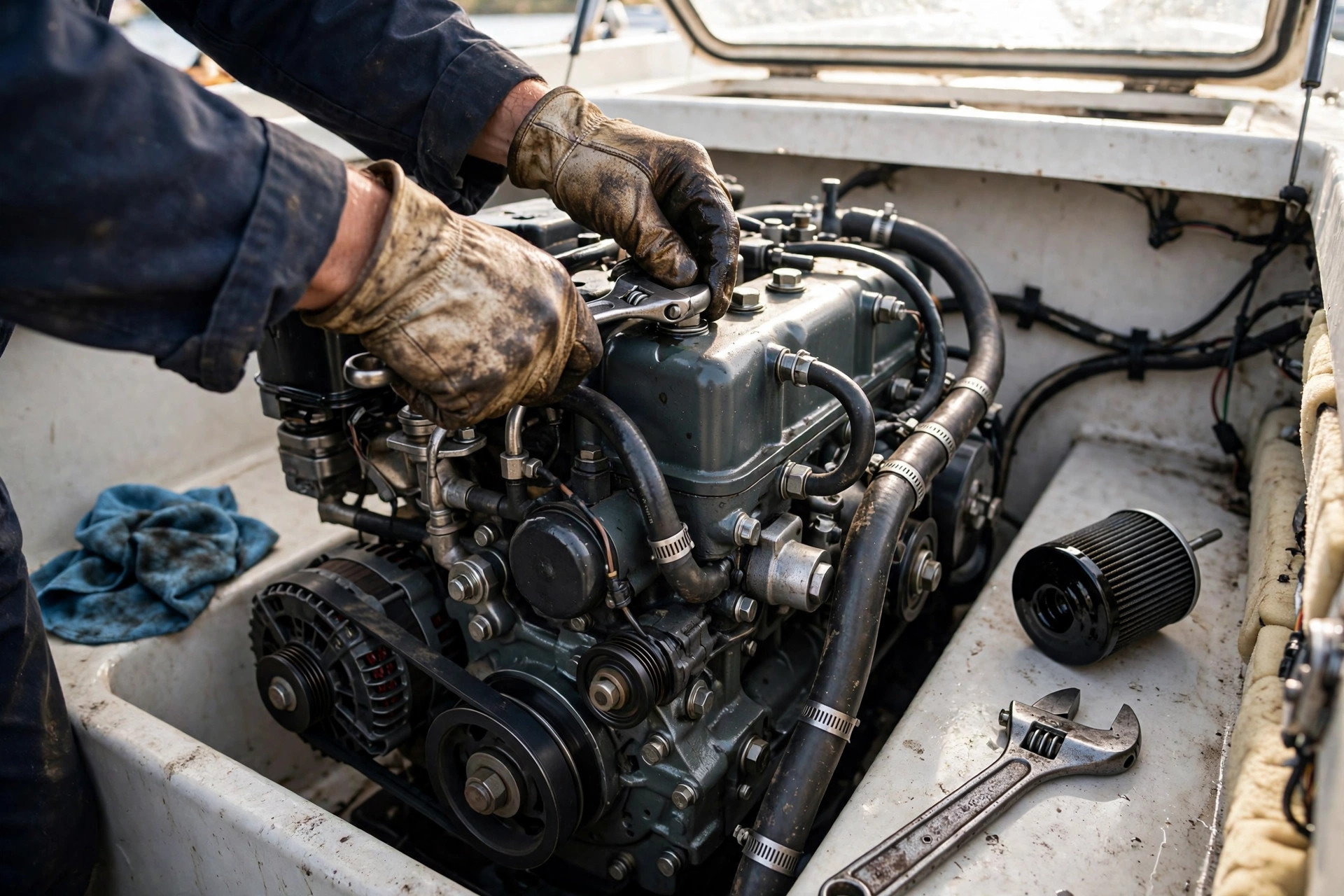
- Change engine oil and replace oil and fuel filters
- Check belts, hoses and clamps for cracks or soft spots
- Inspect the raw water pump impeller and replace it if worn
- Check the propeller for damage and remove any fishing line
- Test throttle and gear shift controls
Hull, deck and rigging
- Wash the hull and check for cracks, blisters or damage
- Check sacrificial anodes and replace them if more than half worn away
- Service seacocks: open and close each one to check they move freely
- For sailing boats, check standing and running rigging, winches and sails for wear
- Apply fresh antifouling paint if the old coat is thin or patchy
Electrics and safety gear
- Fully charge batteries and clean the terminals
- Test all navigation lights, instruments and the bilge pump
- Check life jackets, replace expired flares and service the liferaft if due
- Check fire extinguishers are in date and gauges read correctly
UK tip: check the fuel tank for diesel bug, a slime that grows in diesel over winter and blocks filters. If the fuel looks cloudy or filters clog fast, treat the tank before you run the engine.

Summer Checklist: In-Season Upkeep
Summer is peak boating time. Small regular jobs now prevent breakdowns later.
- Rinse the boat with fresh water after every trip, especially after saltwater use. Salt speeds up corrosion on metal parts.
- Flush the engine with fresh water after saltwater trips if your engine allows it
- Check battery charge levels weekly
- Watch engine temperature gauges while running and investigate any rise
- Clean the deck and cockpit often to stop mould and mildew
- Protect vinyl seats and covers from sun damage
- Check mooring lines for chafe and replace worn lines
Autumn Checklist: Lay-Up Preparation
Autumn is the time to prepare the boat for winter storage. Good lay-up work makes spring commissioning much easier.
- Change engine oil and filters so dirty oil does not sit in the engine all winter
- Add fuel stabiliser to the tank and run the engine so treated fuel reaches the whole system
- Drain fresh water tanks, pipes and pumps so nothing freezes and splits
- Clean the hull and deck well and remove marine growth
- Dry cushions and fabrics fully before storing to stop mildew
- Remove batteries, clean them and store in a cool dry place on a trickle charger
- Take sensitive electronics home for the winter
- Cover the boat with a breathable cover and leave vents open for airflow
If you store ashore, our boat winterizing checklist goes deeper into freeze protection step by step.
Winter Checklist: Storage Protection
Even when the boat sits still, winter needs a few checks.
- Use marine antifreeze in the engine cooling system where your engine maker recommends it
- Fog the engine cylinders with fogging oil to stop internal rust
- Check the cover stays secure after storms and that vents are not blocked
- Visit the boat now and then to check for leaks, damp or pests
- For trailers, check tyre pressure and grease wheel bearings before spring

Boat Maintenance Schedule: How Often to Service Each Part
| Task | How often |
|---|---|
| Engine oil and filter change | Once a season or every 100 engine hours |
| Fuel filters | Once a season |
| Raw water impeller | Every 1 to 2 seasons |
| Sacrificial anodes | Check yearly, replace when half worn |
| Antifouling paint | Every 1 to 2 seasons |
| Batteries | Replace every 3 to 5 years |
| Standing rigging (sailing boats) | Professional check every 5 years |
| Life jackets | Check yearly, replace around 10 years |
| Liferaft | Service to maker schedule, often yearly |
| Seacocks and skin fittings | Service yearly |
| Fire extinguishers | Check yearly, replace when out of date |
How Much Does Boat Maintenance Cost in the UK?
Costs vary by boat size, engine type and whether you do the work yourself. These are rough UK guides only. Always get local quotes.
- Annual engine service by a marine engineer: often £250 to £600 for a small to mid-size boat
- Antifouling (lift, scrub, paint): often £300 to £900 depending on boat length and yard fees
- Lift-out and storage ashore for winter: often £400 to £1,500 for the season
- New batteries: often £80 to £200 each
- DIY oil and filter change: often £40 to £100 in parts
Skipping maintenance almost always costs more later. A failed impeller or a frozen cracked block can run into thousands of pounds.
UK-Specific Notes: BSS, Insurance and Narrowboats
Boat Safety Scheme. If you keep a boat on UK inland waterways, you need a Boat Safety Scheme (BSS) certificate, renewed every four years. The examiner checks gas, fuel and electrical systems. Keeping these systems maintained makes the exam far less stressful.
Insurance. Most boat insurance policies expect you to keep the boat in good repair. Keep receipts and a log of service dates. If you ever claim, this paper trail helps a lot.
Narrowboats. Canal boats need hull blacking (protective bitumen paint) every 2 to 4 years, plus the usual engine and BSS care. Check weed hatches and stern glands often, as canals throw up more debris than open water.
Surveys. For bigger jobs or if you are unsure about structural issues, a professional marine survey gives you a clear picture of what needs attention.
Common Boat Maintenance Mistakes to Avoid
- Skipping oil changes to save money
- Ignoring small leaks until they become big ones
- Using car or household products instead of marine-grade ones
- Forgetting battery care over winter
- Leaving winterization until after the first hard frost
- Not keeping any record of what was serviced and when
FAQs
How often should I service my boat?
Do quick checks before every trip, seasonal maintenance four times a year, and a full engine service once a year or every 100 engine hours.
Can I do boat maintenance myself?
Yes for many jobs: oil changes, filter swaps, cleaning, anode checks and battery care. Leave engine diagnostics, rigging replacement and gas system work to professionals.
Is maintenance different for saltwater boats?
Yes. Rinse with fresh water after every trip, flush the engine, and check anodes and metal fittings more often. Salt speeds up corrosion.
Does good maintenance affect resale value?
A lot. Buyers pay more for boats with full service records. When the time comes, see our guide to selling your boat for how service history lifts the asking price.
How does maintenance connect to storage and depreciation?
Poor maintenance speeds up boat depreciation and can cause damage during storage. Pair this checklist with our boat storage options and costs to plan the full year.

Michael Carter is a financial research writer specializing in vehicle financing, loan calculations, interest rates, and consumer budgeting. He creates practical, easy-to-understand resources that help readers make more informed financing decisions.