Boat Depreciation Guide: How Fast Boats Lose Value and How to Slow It Down
Quick answer: Most boats lose about 10 to 20 percent of their value in the first year, then around 5 to 10 percent each year after that. After 10 years, a typical boat is worth roughly half of what it cost new. Sailboats and well-known brands hold their value best, and good maintenance slows the loss.
What Is Boat Depreciation?
Boat depreciation is simply the drop in your boat’s value over time. It works just like a car. The day you buy a new boat, it starts losing value. After a few years, you could not sell it for what you paid.
The loss comes from age, wear and tear, and new models coming out. Sun, water, and wind wear a boat down. Newer boats with better features make older ones worth less. The gap between what you paid and what you can sell it for is the depreciation.
How Fast Do Boats Depreciate?
Here are typical figures for a recreational boat that is looked after:
| Boat age | Total value lost (typical) | Left on a £40,000 boat |
|---|---|---|
| Year 1 | 10-20% | £32,000 to £36,000 |
| Year 3 | 25-35% | £26,000 to £30,000 |
| Year 5 | 35-50% | £20,000 to £26,000 |
| Year 10 | 50-65% | £14,000 to £20,000 |
Two things to know about these numbers. First, they are ranges, not promises. Your boat could do better or worse. Second, each year’s percentage applies to the value that is left, not to the original price. So a 10 percent drop in year two comes off the already lower year-one value. That is why the curve is steep at first and flattens later.
Which Boats Lose Value Fastest and Slowest?
Not all boats lose value at the same speed. The type matters a lot.
Slowest to lose value:
- Sailboats. Simple engines and lower running costs keep demand strong.
- Fishing and centre console boats. Steady demand from anglers holds prices up.
- Trawlers. The cruising lifestyle keeps buyers interested.
- Narrowboats. A UK favourite. Steel hulls last for decades, and demand on the canals stays strong, so well-kept narrowboats hold value well.
Fastest to lose value:
- Bowriders. Mass produced and styles change fast.
- Jet skis and personal watercraft. New tech makes old models feel dated quickly.
- Entry-level pontoon boats. Cheap brands lose value fast.
- High-performance boats. A small pool of buyers and costly upkeep push prices down.
If holding value matters to you, the type you choose is one of your biggest decisions.
How Brand Affects Your Boat’s Resale Value
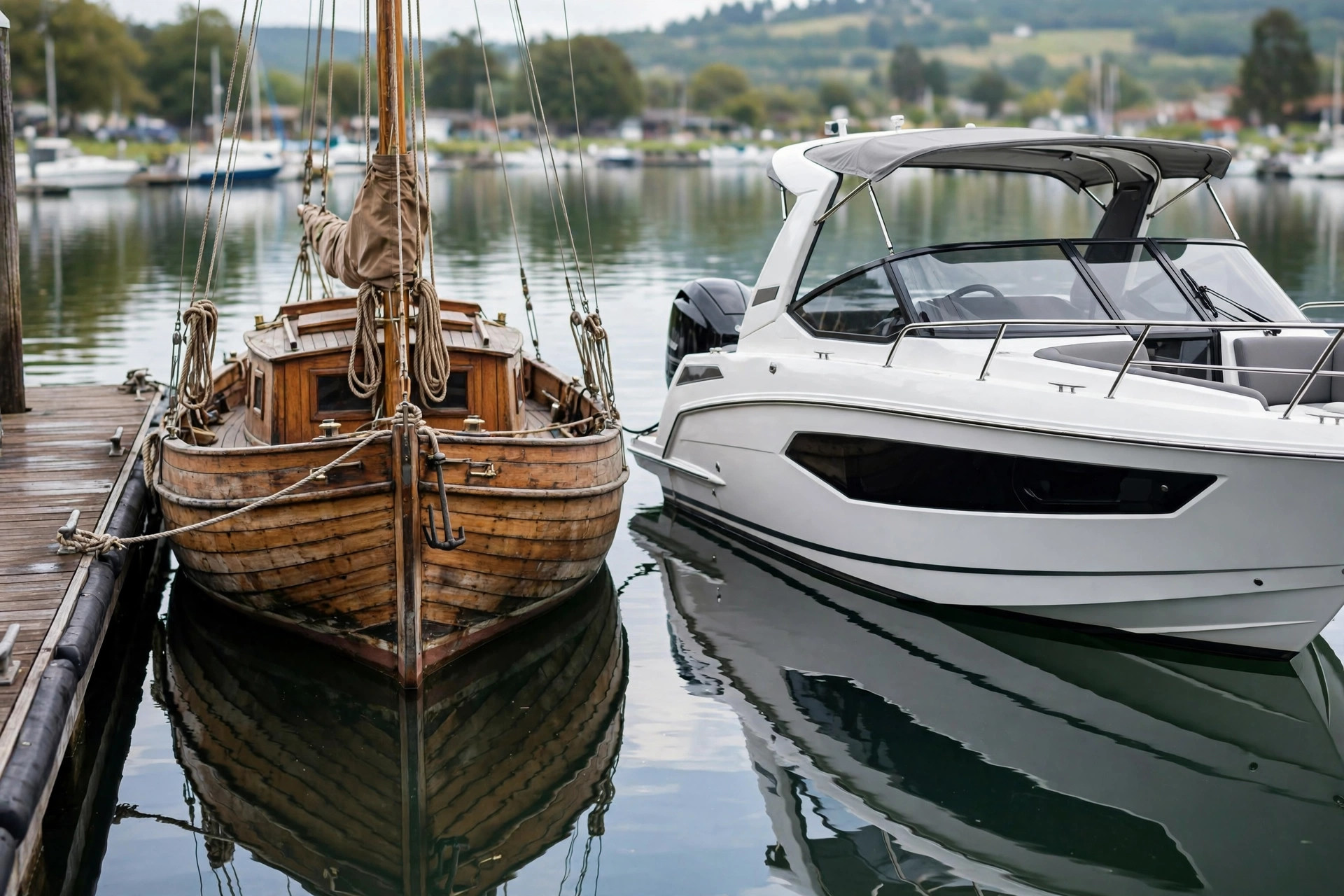
Brand matters. Premium brands can hold 15 to 25 percent more of their value than budget brands over the same period. Buyers trust names known for strong build quality, and that trust shows up in resale prices. Examples often cited include Boston Whaler and Grady-White for fishing boats, Bennington and Harris for pontoons, and Hallberg-Rassy and Oyster for sailboats.
In the UK, there is an extra point. A boat from a builder with a strong UK dealer and brokerage network is easier to sell here. More dealers means more buyers see it, more servicing options exist, and parts are easier to find. That demand supports the price when you sell.
7 Factors That Speed Up or Slow Down Depreciation
- Age. Older boats are worth less. New models with better features push old prices down.
- Condition and maintenance. A clean, serviced boat sells for more. Keep every service receipt, as buyers pay extra for full records.
- Engine hours. Low hours suggest less wear. Log your hours and service the engine on schedule.
- Brand and model popularity. Popular models have more buyers chasing them, which supports the price.
- Storage and usage. A boat stored under cover or indoors ages slower than one left out all year. Saltwater use wears boats faster than freshwater use.
- Market demand and the economy. When the economy is strong, more people buy boats and used prices rise. In a downturn, prices fall.
- Upgrades and modifications. Some upgrades help, like new electronics or a reconditioned engine. But heavy personal modifications can shrink your pool of buyers and hurt resale value.
When you go to buy a used boat, turn this list into a checklist. Ask for service records, check the engine hours, and get a survey before you commit. marine survey guide

How to Calculate Your Boat’s Depreciation
The maths is simple. You need two numbers: what you paid, and what the boat is worth now.
Formula: Depreciation = original price minus current value
Steps:
- Find what you paid for the boat, including any major extras.
- Find what it is worth now. Check similar boats for sale, ask a broker, or get a professional valuation.
- Subtract the current value from the original price. That is your depreciation in pounds.
- To get the rate, divide the loss by the original price and multiply by 100.
Worked example: You bought a boat five years ago for £50,000. Similar boats now sell for about £30,000. The loss is £50,000 minus £30,000, which is £20,000. The rate is £20,000 divided by £50,000, times 100, which is 40 percent. So the boat has lost 40 percent of its value in five years.
New vs Used: Where Depreciation Hits Hardest
The new owner takes the biggest hit. That first-year drop of 10 to 20 percent is the steepest fall the boat will ever see. After that, the yearly loss gets smaller.
That is why many smart buyers shop for boats that are two to three years old. The first owner has already absorbed the worst of the depreciation, and you still get a modern boat with plenty of life left. You pay less upfront and lose less going forward.
If you are weighing the two options, read our full comparison before you decide. new vs used boat
Depreciation and Your Boat Loan: Don’t Owe More Than the Boat Is Worth
Here is the part most guides skip. If you borrow to buy a boat, depreciation can leave you owing more than the boat is worth. Lenders call this negative equity, and it is a real risk in the early years of a loan.
Picture this. You buy a £40,000 boat with a small deposit and borrow £36,000. Two years later the boat is worth about £32,000, but you still owe £35,000 on the loan. If you had to sell, you would be £3,000 short.
A bigger deposit is your best defence. It gives you a buffer between the loan balance and the falling value from day one. Shorter loan terms help too, because you pay down the balance faster. Before you sign anything, run the numbers on a calculator and check how the monthly payment fits your budget. boat loan calculator boat loan down payment guide
8 Ways to Slow Down Your Boat’s Depreciation
You cannot stop depreciation, but you can slow it down:
- Service on schedule. Follow the maker’s service plan and keep every receipt.
- Store it well. Covered or indoor storage protects against sun and weather damage.
- Fix small problems fast. A small repair now stops a big bill, and a big discount demand, later.
- Log engine hours. Buyers trust a boat with recorded, sensible hours.
- Choose a popular brand and model. Easy to buy, easy to sell.
- Keep modifications sensible. Reversible upgrades are fine. Extreme personal changes put buyers off.
- Time your sale. Boats sell best in spring when buyers are planning the season. Present it at its best and price it against similar listings. how to sell a boat
UK Notes: Tax, Narrowboats and Valuing Your Boat
A quick word on things UK readers often ask about. You may read American guides talking about tax deductions for boat depreciation. Those are US rules. In the UK there is no tax deduction for depreciation on a boat you use privately. If you use a boat for charter or other commercial work, the tax position is different, so speak to an accountant.
On narrowboats: they deserve their reputation for holding value. A steel narrowboat with a sound hull and a good fit-out stays in demand on the UK canals. Still get a hull survey before buying, as hull condition is everything.
To value any boat in the UK, check similar boats currently for sale, ask a broker for an opinion, or pay for an independent marine survey. marine survey guide
Quick Answers
Do boats ever go up in value?
Rarely. Classic wooden boats and a few very desirable models can level out or even rise slightly, but never buy a boat expecting it to appreciate.
How much does a boat depreciate per year on average?
Roughly 10 to 20 percent in year one, then 5 to 10 percent a year after that, slowing further as the boat gets older.
Should I buy new or used to lose less money?
Used. A two to three year old boat lets the first owner take the steepest hit while you still get a modern boat.
Does maintenance really make a difference?
Yes. A full service history, low engine hours, and good storage can cut your value loss noticeably and make the boat far easier to sell.

Michael Carter is a financial research writer specializing in vehicle financing, loan calculations, interest rates, and consumer budgeting. He creates practical, easy-to-understand resources that help readers make more informed financing decisions.