Boat Winterizing Checklist: How to Winterise Your Boat in the UK
Winterizing a boat means getting it ready to sit unused through the cold, wet months. You drain water from the engine and pipes, protect the fuel, look after the batteries, clean the inside, and cover the boat up. Do it well and your boat will start first time in spring. Skip it and you risk cracked pipes, a ruined engine, flat batteries, and mould all over the cabin.
This checklist covers every job, grouped by system, so you can tick them off one by one.
What Does Winterizing a Boat Mean?
Winterizing is just a thorough end of season clean and protection routine. Water left in an engine or pipe can freeze and expand, which cracks blocks and splits hoses. Fuel goes stale over months. Batteries slowly die in the cold. And a closed up cabin with no airflow grows mould fast.
In the UK our winters are more wet than freezing. That means damp and mould are as big a threat as ice. A good winter lay up protects against both.
When Should You Winterize Your Boat in the UK?
Aim for October or early November, before the first hard frost. If you still cruise into late autumn, winterize as soon as you lay the boat up for the season. Do not leave it until December. One hard freeze on an unprotected engine can cause damage that costs thousands to fix.
The Complete Boat Winterizing Checklist
Work through each group in order. Tick each job off as you finish it.
Engine and fuel system
The engine is the most expensive thing on your boat, so start here.
- Change the engine oil and oil filter. Old oil holds acids that corrode parts over winter.
- Flush the engine with fresh water to wash out salt.
- Drain the raw water side or run antifreeze through it, following your owner’s manual.
- On petrol outboards, spray fogging oil into the cylinders to coat them against corrosion.
- On freshwater cooled engines, test the coolant strength and top up if needed.
- Fill the fuel tank right to the top. A full tank leaves little room for condensation to form.
- Add fuel stabilizer to petrol, or a diesel biocide to diesel, then run the engine for 10 to 15 minutes so the treated fuel reaches every part of the system.
- Change the fuel filters and fuel water separators.
Water systems and plumbing
Any pipe or tank that holds water can split in a freeze.
- Drain the fresh water tanks completely.
- Drain the water heater. If it has a bypass valve, use it so you do not waste antifreeze filling the heater.
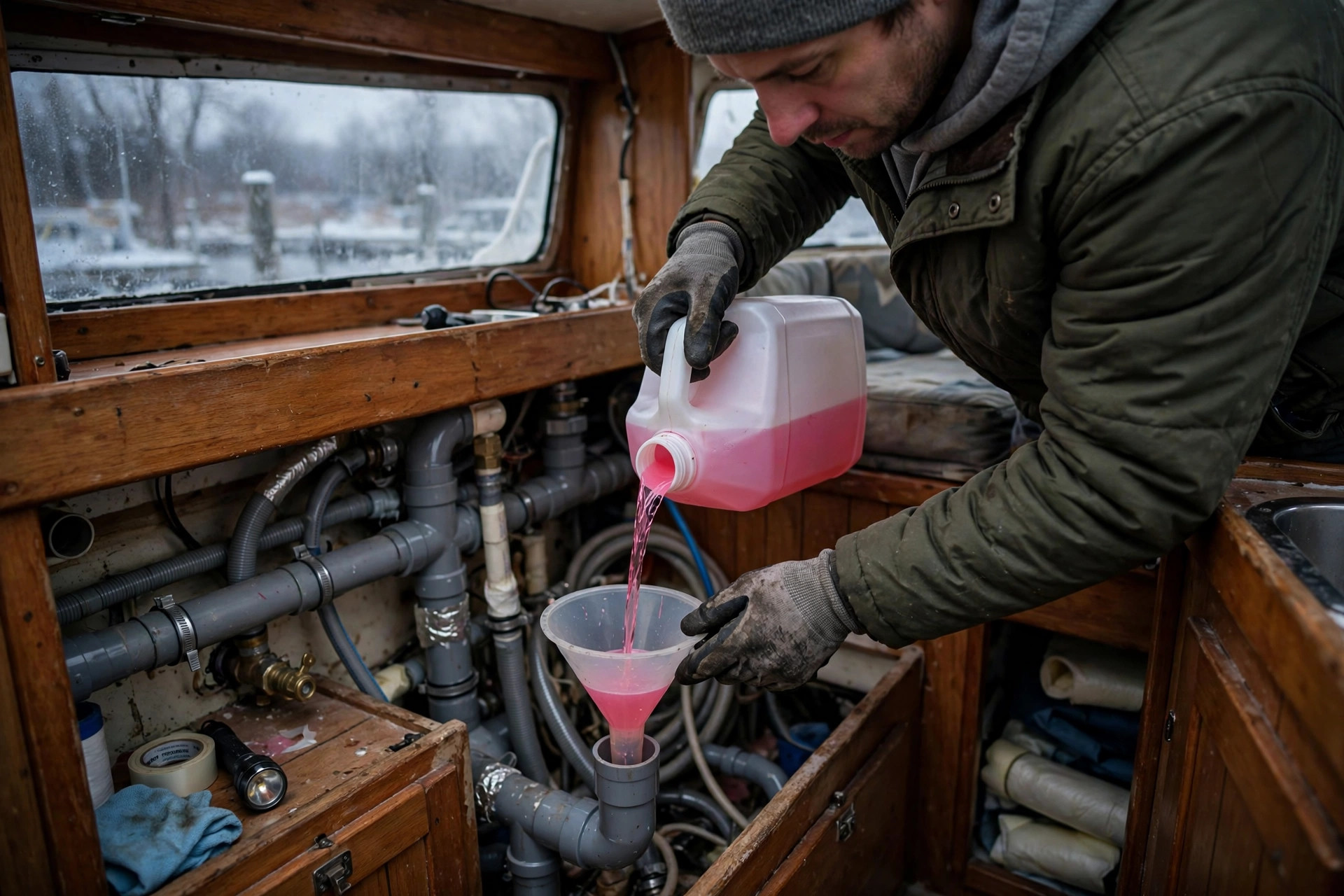
- Open every tap and shower, then pump non toxic propylene glycol antifreeze through the lines until it runs pink at each tap. Start with the tap furthest from the pump.
- Pump out the holding tank, rinse it, then flush antifreeze through the toilet.
- Never use car antifreeze in a boat. Car antifreeze uses ethylene glycol, which is highly toxic to people and marine life. Only use non toxic propylene glycol antifreeze, often called the pink stuff.
Bilge, seacocks and through hulls
- Pump the bilge dry and clean out any sludge or debris.
- Check the bilge pump and float switch actually work.
- Pour a little antifreeze into the bilge to protect the pump.
- If the boat is coming ashore, close all seacocks. If it stays in the water, check they open and close freely.
Batteries and electrics
Cold kills batteries that are left flat.
- Fully charge every battery.
- On wet cell batteries, top up the cells with distilled water.
- Disconnect the battery terminals to stop slow drain.
- If you can, take smaller batteries home and keep them on a trickle charger in a cool, dry place.
- If batteries stay on the boat, disconnect them and top up the charge once a month.
- Turn off all circuit breakers.
Cabin and interior
- Take all food off the boat, including tins and packets. Food attracts pests.
- Empty the fridge and freezer, clean them, and leave the doors propped open so they do not go mouldy.
- Clean the whole cabin and make sure everything is dry.
- Remove cushions, bedding, towels and clothing, or stand cushions on edge so air flows around them.
- Take home valuables and portable electronics.
- Put moisture absorbers in the cabin, or run a small dehumidifier if you have shore power.
- Open lockers and cupboards so air can move.
- Lock all hatches and ports.
Hull, deck and cover
- Wash the hull and remove weed, barnacles and waterline stains.
- Polish or wax the topsides for protection.
- Check the anodes and replace any that are badly worn.
- Cover the boat with a breathable cover or have it shrink wrapped. Make sure the cover is well secured against winter winds.
- If stored ashore outside, set the boat so the bow sits slightly higher than the stern. Rain then drains out through the transom instead of pooling inside.

Trailer or mooring gear
- Trailer: check tyre pressures, wheel bearings, brakes and the hitch. Grease moving parts.
- Mooring: check lines for wear, set fenders correctly, and add chafe protection where lines touch the boat.
Diesel Boats: Stop the Diesel Bug
Most UK boats run on diesel, so this one matters. Diesel bug is a microbe that grows where water meets diesel fuel in your tank. Condensation over winter gives it the water it needs. It forms a black slime that clogs filters and starves the engine.
Prevention is simple and cheap:
- Fill the tank to the brim before lay up, so condensation has little air space to form in.
- Add a diesel biocide made for marine fuel.
- Change fuel filters in spring before your first trip.
Treating a bad case of diesel bug can mean polishing or replacing the whole tank of fuel. A bottle of biocide in autumn costs a few pounds.
Winterising in the UK: Damp Is the Bigger Enemy
British winters rarely freeze hard for long, but they stay damp for months. That makes moisture control the heart of UK winterising.
- Ventilation beats sealing. A cover that traps damp air grows mould. Make sure covers allow airflow.
- A small dehumidifier or moisture absorber tubs work well in the cabin.
- If you have shore power, a small thermostatic tube heater on a low setting keeps the chill and damp off for pennies a day.
- Visit the boat every few weeks. Check for leaks, condensation, and musty smells, and fix problems early.
- Narrowboat owners on the canals should also protect the stern gear and check the weed hatch seal, since canal boats often stay in the water all winter.
In the Water or Ashore: Which Is Better?
Ashore in a boatyard: best protection from storms and hull fouling. Easier to work on the hull and check everything. Costs yard fees and a lift out.
In the water on your mooring: cheaper and the boat stays usable on fine winter days. But you must check lines and fenders after every storm, watch for chafe, and accept more hull fouling.
Either way, the checklist above still applies. Tell your insurer where the boat will spend the winter.
DIY or Professional: What Does It Cost in the UK?
Doing it yourself costs mainly supplies: antifreeze, oil and filters, fuel stabilizer or biocide, moisture absorbers, and maybe a cover. For a typical small to mid sized boat, budget around £80 to £200 in materials.
A boatyard full winterization service, where they do the engine, fuel, and water systems for you, usually runs from about £300 to over £800 depending on boat size and engine type. Many owners do the simple jobs themselves and pay a mechanic for the engine service.
Check Your Boat Insurance Before Lay Up
Some policies have a laid up clause. This can require the boat to be ashore, or limit cover while it is not in commission. Read your policy before winter, and tell your insurer where the boat will be stored. A quick call now avoids a refused claim later.
boat insurance for winter storage
6 Winterizing Mistakes to Avoid
- Using car antifreeze in the water system. It is toxic. Use only non toxic propylene glycol antifreeze.
- Leaving the fuel tank half empty. Air space means condensation, and condensation means water in the fuel.
- Forgetting the batteries. A battery left flat all winter may never hold a charge again.
- Sealing the boat up with no ventilation. Trapped damp air grows mould fast.
- Leaving food on board. It attracts mice and insects, and rots.
- Skipping the seacocks. A failed hose or seacock can sink a boat left in the water.
Boat Winterizing FAQs
When should I winterize my boat in the UK?
October or early November, before the first hard frost. Do not wait until deep winter.
What happens if I do not winterize my boat?
Water can freeze and crack the engine block and pipes. Fuel goes stale, batteries die, and the cabin grows mould. Repairs cost far more than prevention.
Can I leave my boat in the water over winter?
Yes, many owners do. Keep up with line and fender checks after storms, make sure the bilge pump works, and consider a de icer if your marina freezes.
Should the fuel tank be full or empty for winter?
Full. A full tank leaves little air inside, which means less condensation and less water in the fuel.
Can I use car antifreeze in my boat?
No. Car antifreeze contains ethylene glycol, which is toxic. Use non toxic propylene glycol antifreeze in boat water systems.
Do I need to take the batteries out?
It is best if you can, kept on a trickle charger somewhere dry. If they stay on the boat, fully charge them, disconnect the terminals, and recharge monthly.

Michael Carter is a financial research writer specializing in vehicle financing, loan calculations, interest rates, and consumer budgeting. He creates practical, easy-to-understand resources that help readers make more informed financing decisions.