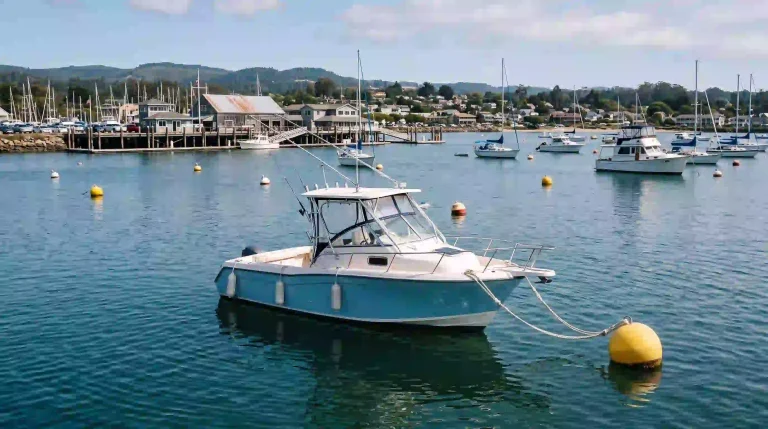

How to Moor a Boat: Step-by-Step Guide
Mooring a boat can feel difficult when wind, current, limited space, or unfamiliar equipment make it hard to keep the boat under control. A poor approach or incorrectly secured line can lead to collisions, hull damage, or an unsafe mooring setup.
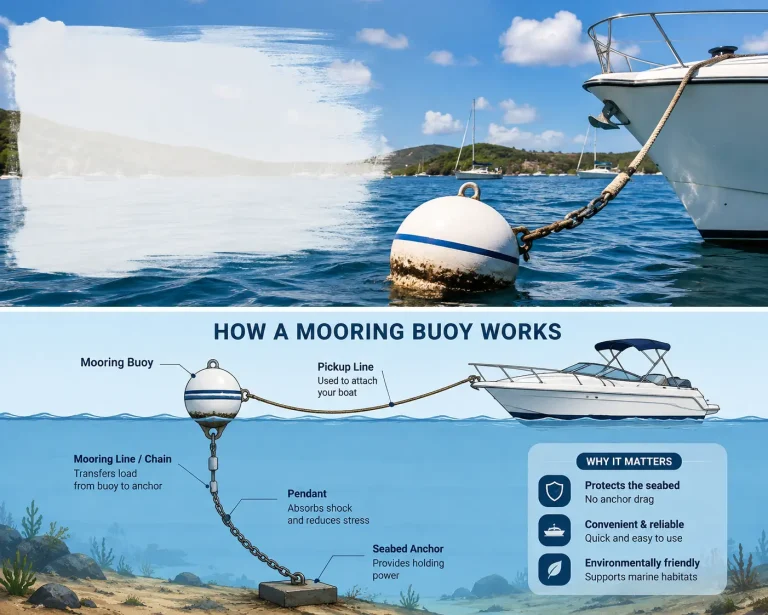
This step-by-step guide explains how to moor a boat safely, from preparing fenders and lines to approaching the dock or mooring buoy and securing the boat correctly. You’ll also learn how wind, current, tide, and line placement affect a secure mooring.When securing a boat to a designated buoy, understanding what a mooring buoy is and how to use it can help you connect the boat correctly and avoid common mooring mistakes.
What Does It Mean to Moor a Boat?
Mooring a boat means securing it to a fixed point such as a dock, piling, or mooring buoy. The boat remains connected through mooring lines while wind, waves, and current continue to move it within a controlled range.
Mooring vs. docking: Docking is bringing the boat alongside a dock. Mooring is securing it after positioning.
Mooring vs. anchoring: Anchoring uses an anchor and rode to hold the boat on the seabed. Mooring uses lines connected to a fixed structure or designated mooring point.
What Do You Need to Moor a Boat?
The basic equipment depends on the mooring location, boat size, and conditions.
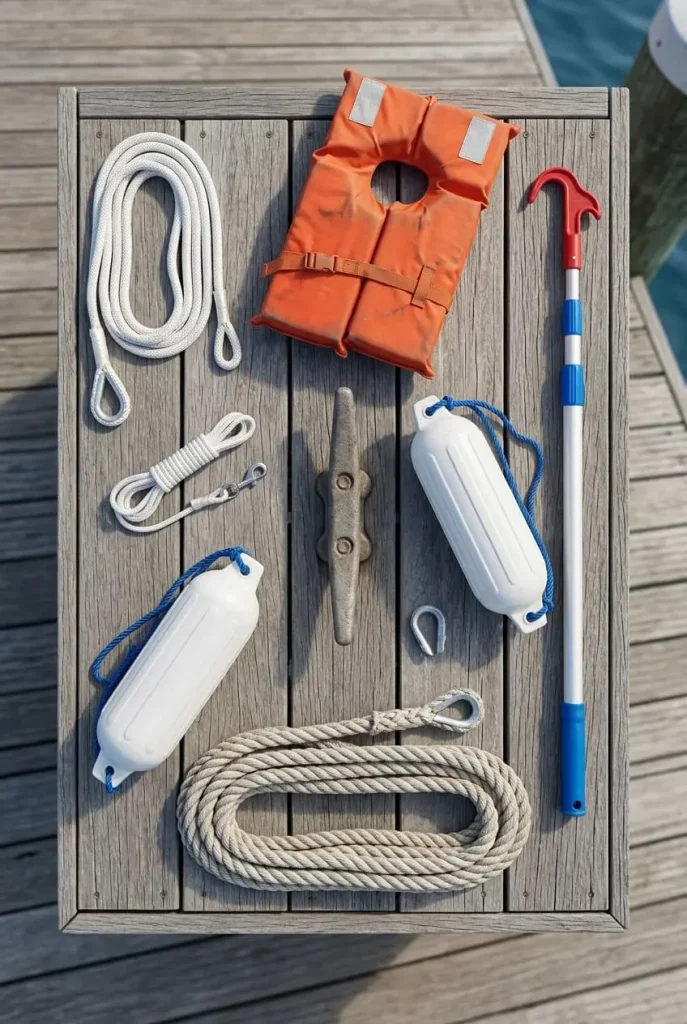
- Mooring or dock lines: Secure the boat to cleats, pilings, or other attachment points.
- Fenders: Protect the hull from contact with docks or other boats.
- Cleats: Provide secure attachment points for lines.
- Boat hook: Helps retrieve a mooring line or reach a dock cleat.
- Mooring buoy: Provides a fixed connection point when using a designated mooring.
- PFD: Keep appropriate personal flotation devices available during the maneuver.
Nylon lines are commonly used because they provide strength and some stretch, helping absorb movement from wind and waves. Lines should also be appropriate for the boat and protected from excessive chafe.
How to Moor a Boat Step by Step
- Prepare before approaching. Attach fenders, prepare the required lines, and make sure everyone understands their role. Reduce speed before entering the mooring area.
- Assess wind and current. Determine how they are moving the boat. Approach at a controlled speed while maintaining enough steerage to stay in control.
- Position the boat. Bring the boat alongside the dock or toward the mooring point without rushing the final approach.
- Secure the first line. Attach the line that gives you the best control for the current conditions and mooring position. Avoid jumping between the boat and dock.
- Add the remaining lines. Use bow, stern, and spring lines as appropriate. Spring lines help control forward and backward movement.
- Adjust line tension. Lines should hold the boat securely while allowing appropriate movement. Avoid creating excessive tension.
- Check the setup. Confirm that lines are secure, fenders are correctly positioned, hardware is holding, and no line is rubbing dangerously against an edge.
How to Moor to a Dock, Slip, or Mooring Buoy
The correct setup depends on the attachment point.
| Mooring Location | Typical Setup |
|---|---|
| Dock or side tie | Bow, stern, and spring lines |
| Boat slip | Bow, stern, and spring lines |
| Mooring buoy | Pickup line connected securely to the boat |
| Piling | Lines arranged to control forward and backward movement |
For a dock or slip, bow and stern lines control the boat’s position while spring lines limit forward and backward movement. A mooring buoy requires a secure connection to the designated pickup or mooring line.
The key decision is not simply how many lines to use. It is whether the arrangement controls the boat’s movement in the expected wind, current, waves, and water-level changes.
Which Knots and Mooring Lines Should You Use?
A cleat hitch commonly secures dock lines to cleats, while a bowline creates a fixed loop for suitable attachment points.
Choose mooring lines based on boat size, line diameter, length, strength, stretch, and expected conditions. Nylon is commonly used because its stretch helps absorb shock from waves and boat movement.
Inspect lines for chafe, especially where they pass through fairleads or around pilings. Replace damaged lines rather than relying on weakened rope.
Key practical rule: Use lines strong enough for the boat and conditions, but do not compensate for poor positioning by simply adding excessive tension.
How Do Wind, Current, and Tide Affect Mooring?
Wind and current can push the boat in different directions, changing tension on each mooring line. Tide and water-level changes can also alter line angles and available slack.
In tidal water, leave enough controlled movement for the boat to rise and fall without making the lines excessively loose. Recheck the setup as water level, wind, or current changes.
When conditions become stronger, use an appropriate combination of bow, stern, and spring lines rather than relying on one heavily loaded line.
Common Mooring Mistakes and Safety Tips
Avoid these common mistakes:
- Jumping onto the dock: Step ashore only when it is safe and stable.
- Putting hands or feet between surfaces: Keep clear of pinch points between the hull and dock.
- Standing in a loaded line’s path: A failed or released line can move suddenly.
- Using damaged lines: Replace lines showing serious wear or chafe.
- Ignoring fenders: Position fenders where hull contact is likely.
- Tying lines excessively tight: Allow appropriate movement and account for changing water levels.
- Working near a running propeller: Keep people and lines clear of propulsion equipment.
Before leaving the boat, inspect every connection, cleat, line, fender, and potential chafe point. Competitor content commonly covers these individual techniques; combining them into a final verification sequence provides a more practical way to check the complete mooring system.
Final Boat Mooring Checklist
Before considering the boat secure, check:
- Bow and stern lines are properly attached.
- Spring lines control unwanted movement.
- Fenders protect contact points.
- Lines show no dangerous chafe.
- Cleats and attachment points are secure.
- The boat has enough controlled movement for current conditions.
- Tide, wind, and current changes have been considered.
- Crew and passengers remain clear of pinch points and loaded lines.
A safe mooring setup matches the boat, attachment point, equipment, and environmental conditions. Use this sequence each time you secure the boat, then recheck the lines whenever weather, tide, or water conditions change.If you’re planning to buy a boat, use Boat Loan Calculator to estimate your monthly payment and understand the financing cost before making a purchase.
Frequently Asked Questions
What is the safest way to moor a boat?
Approach slowly, account for wind and current, position fenders first, and secure appropriate bow, stern, and spring lines. Check every attachment point before leaving the boat.
What is the difference between mooring and anchoring a boat?
Mooring secures a boat to a fixed point such as a dock, piling, or mooring buoy. Anchoring uses an anchor and rode to hold the boat against the seabed.
What lines do you need to moor a boat?
Most dock setups use bow, stern, and spring lines. Bow and stern lines position the boat, while spring lines limit forward and backward movement.
How tight should mooring lines be?
Mooring lines should control the boat without being excessively tight. Allow enough movement for waves, wakes, tides, and changing water levels while preventing contact with hazards.
What knot should you use to moor a boat?
A cleat hitch is commonly used for securing a line to a dock or boat cleat. A bowline is useful when a strong fixed loop is required.
Can you moor a boat in strong wind?
Yes, but strong wind requires slower maneuvering, careful approach planning, suitable fender placement, and enough properly positioned lines to control movement. Avoid relying on a single heavily loaded line.

Michael Carter is a financial research writer specializing in vehicle financing, loan calculations, interest rates, and consumer budgeting. He creates practical, easy-to-understand resources that help readers make more informed financing decisions.