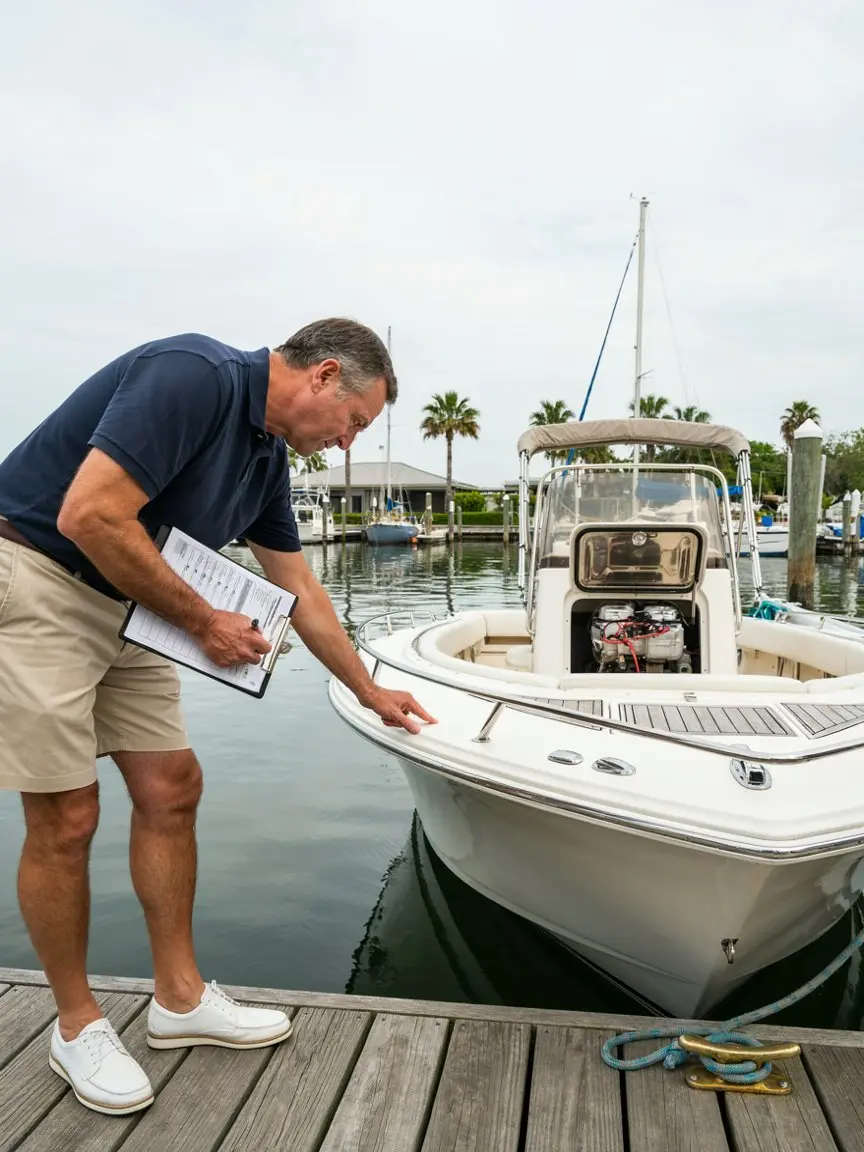
Boat Inspection Checklist: What to Check Before Buying a Boat
Buying a boat without inspecting it properly can lead to expensive repairs, safety issues, or ownership problems. This boat inspection checklist helps you check the hull, engine, electrical systems, documents, trailer, and on-water performance before making an offer.Buying a boat? Take this checklist with you. Download the free Boat Inspection Checklist PDF and check each item during your viewing, sea trial, and final inspection.
Quick Boat Inspection Checklist Before You Buy
Use this checklist during your first inspection:
- Hull: Check for cracks, blisters, repairs, leaks, and impact damage.
- Deck: Walk across it and check for soft spots.
- Transom: Look for cracks, movement, or signs of water intrusion.
- Engine: Check starting, smoke, oil, cooling, and engine hours.
- Propeller: Look for dents, cracks, or bent blades.
- Steering: Test for smooth and responsive movement.
- Battery: Check condition and secure connections.
- Bilge pump: Confirm that it operates correctly.
- Lights and electronics: Test navigation lights, switches, GPS, and VHF radio.
- Safety equipment: Check life jackets, fire extinguishers, anchor, and emergency gear.
- Documents: Verify the HIN, title, registration, and service history.
- Trailer: Inspect tires, bearings, brakes, lights, frame, and winch.
- Sea trial: Test acceleration, handling, vibration, steering, and engine temperature.
A quick inspection can identify obvious risks, but it cannot guarantee that the boat has no hidden mechanical or structural problems. For a broader purchase process, review the Boat Buying Guide and Used Boat Guide.
Start with the boat’s exterior and structural condition.
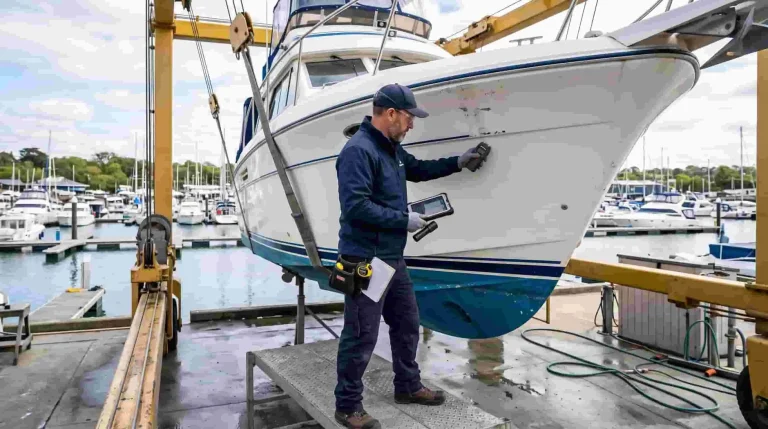
Inspect the Hull, Deck and Exterior
The hull protects the boat from water and provides its structural foundation. Small cosmetic marks may be harmless, but cracks, soft areas, or water intrusion can indicate expensive problems.
Check the following areas:
- Gelcoat cracks: Fine surface cracks may be cosmetic. Deep or spreading cracks need closer inspection.
- Blisters: Small blisters can sometimes be repaired, but widespread blistering may indicate moisture problems.
- Soft spots: Walk across the deck. Flexing or spongy areas can suggest water damage below the surface.
- Transom: Look for cracking, separation, or movement around the engine mounting area.
- Corrosion: Inspect metal fittings, rails, and underwater components.
- Leaks: Check inside storage compartments and around fittings for water stains or moisture.
A scratched hull may be a negotiation point. A soft deck or damaged transom is a more serious structural concern and may justify a marine survey.
Once the exterior passes inspection, check the engine and propulsion system.
Check the Engine and Mechanical Systems
A clean engine does not always mean a healthy engine. Sellers can clean an engine compartment without fixing internal mechanical problems.
Check these areas:
Engine Start and Smoke
Start the engine when it is cold if possible. Watch for difficult starting, excessive smoke, unusual noises, or warning alarms.
Oil and Cooling System
Check the engine oil for unusual discoloration or contamination. Inspect cooling components and look for leaks, corrosion, or overheating signs.
Engine Hours
Engine hours provide useful context, but low hours do not automatically mean the engine is in better condition. Maintenance history and actual use also matter.
Propeller and Steering
Inspect the propeller for bends, cracks, and damaged blades. Test steering from lock to lock and check for excessive looseness or resistance.
Fuel System
Look for fuel leaks, damaged hoses, strong fuel odors, or visible corrosion around connections.
Mechanical problems should be connected to repair cost before you make an offer. A repair estimate may help you negotiate, while major engine concerns may justify walking away.
For long-term expense planning, compare the condition of the boat with expected Boat Maintenance Cost and Used Boat Financing options.
Next, test the systems that support safe operation.
Test the Electrical and Onboard Systems
Electrical problems range from minor convenience issues to serious safety concerns. Test each system instead of assuming it works because the boat looks well maintained.
Safety-Critical Systems
Prioritize:
- Battery and battery connections
- Bilge pump
- Navigation lights
- Horn
- Emergency switches
- Required safety systems
A failed bilge pump is more important than a broken cabin light because it can directly affect the boat’s safety.
Navigation and Convenience Equipment
Also test:
- GPS
- VHF radio
- Cabin lights
- Switches
- Gauges
- Chargers and onboard electronics
Replaceable electronics may be negotiable. Safety-critical electrical failures should be investigated before purchase.
Review Boat Safety Equipment and Boat Maintenance requirements when assessing systems that affect safe operation.
A working boat also needs complete safety equipment and usable onboard spaces.
Check Safety Equipment and Interior Condition
Separate safety problems from cosmetic defects. Worn upholstery may reduce the boat’s appearance, while missing emergency equipment can affect safe operation.
Check for:
- Properly sized life jackets
- Fire extinguisher condition
- Anchor and line
- Emergency equipment
- Water damage inside cabins or storage areas
- Mold, mildew, or persistent moisture
- Damaged flooring or upholstery
Water stains inside the cabin may indicate a current or previous leak. Follow the source of the water rather than treating the stain as a cosmetic issue.
A damaged seat may be easy to replace. Repeated water intrusion around structural areas deserves closer investigation.
Consider Boat Insurance requirements and a Boat Safety Checklist before relying on existing onboard equipment.
After inspecting the boat itself, verify that its ownership and history are legitimate.
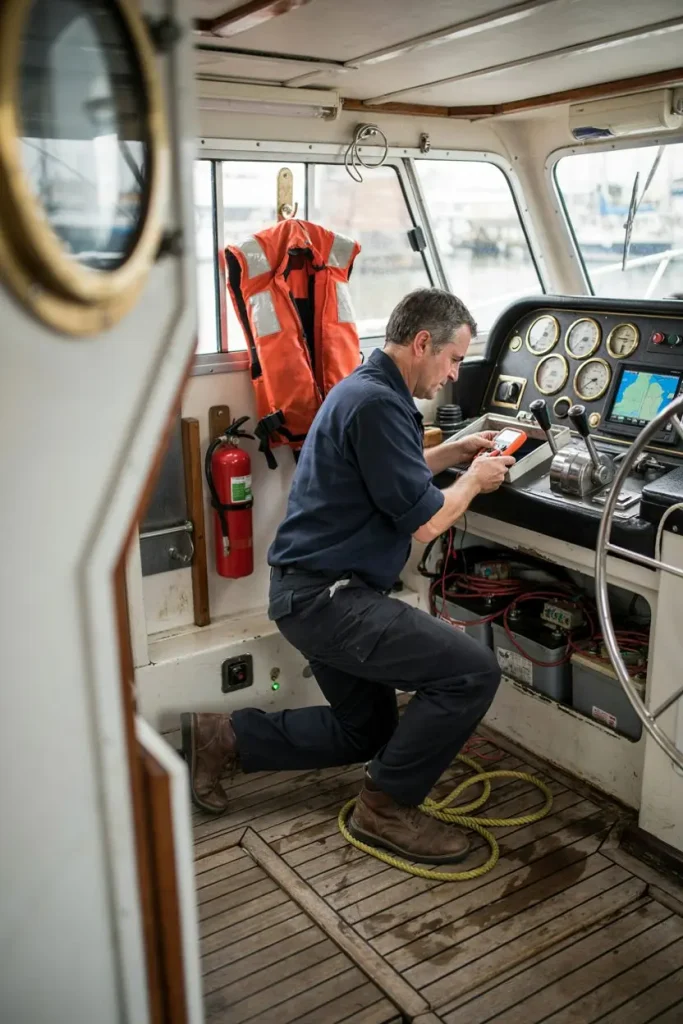
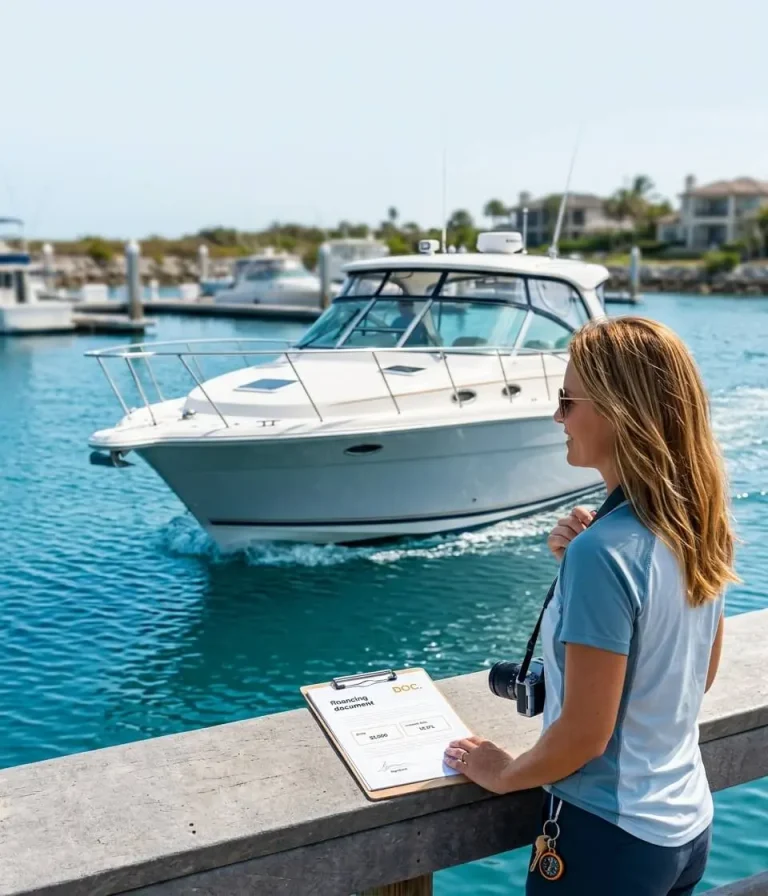
Verify Boat Documents and Ownership History
A boat can be mechanically sound and still create problems if its ownership records are incomplete or inconsistent.
Check:
- Hull Identification Number (HIN): Confirm that the number on the boat matches the documents.
- Title: Verify ownership where a title is required.
- Registration: Check that registration details are consistent with the seller and vessel.
- Maintenance records: Look for evidence of regular servicing and major repairs.
- Service history: Ask about engine work, structural repairs, accidents, and replacements.
The HIN is especially important because it connects the physical boat to its ownership and registration records. A mismatch should be resolved before money changes hands.
Review the Boat Registration Guide and Boat Insurance Guide before completing the transfer.
If the boat is sold with a trailer, inspect that equipment separately.Do not rely on a seller’s explanation alone when the HIN, title, registration, or ownership details do not match. Pause the purchase until the discrepancy is independently resolved through the relevant registration or title authority.
Inspect the Boat Trailer
A trailer can create major costs even when the boat itself is in good condition.
Check:
- Tire condition and age
- Wheel bearings
- Brakes
- Trailer lights
- Frame corrosion
- Winch operation
- Bunks and supports
- Safety chains and coupler
Surface rust may be manageable. Severe frame corrosion can affect transport safety and replacement cost.
Do not assume the trailer is included without checking its ownership documents and condition. Include repair or replacement costs when estimating total ownership expenses with a Boat Ownership Cost Guide.
A dockside inspection should be followed by testing the boat on the water when possible.
What to Check During a Boat Sea Trial
A sea trial tests how the boat performs under real operating conditions. Problems that are invisible at the dock may appear once the engine is under load.
Check:
Cold Start
Ask to start the engine cold. This can reveal starting problems that may not appear after the engine has already warmed up.
Acceleration
The boat should accelerate smoothly without unusual hesitation, loss of power, or excessive smoke.
Steering and Handling
Test steering response, turning, tracking, and general handling at different speeds where safe.
Vibration
Unusual vibration may indicate propeller damage, alignment problems, or mechanical issues.
Engine Temperature
Watch engine temperature and warning indicators throughout the trial.
A boat can look excellent during a dockside inspection and still reveal overheating, vibration, or handling problems during a sea trial.
Use the Boat Buying Guide to place sea-trial findings within your overall purchase decision.
Some problems require more expertise than a buyer can reasonably assess.
When Should You Hire a Marine Surveyor?
A DIY inspection is useful for identifying visible problems. A marine survey provides a more detailed professional assessment of the boat’s condition.
Consider hiring a marine surveyor when:
- The boat is expensive.
- The boat is older.
- You find structural cracks or soft spots.
- There are signs of water intrusion.
- The maintenance history is incomplete.
- You need an independent valuation.
- An insurer requires a survey.
- A lender requires professional documentation.
| Situation | DIY Inspection | Marine Survey |
|---|---|---|
| Basic visible condition | Usually sufficient | Optional |
| Expensive boat | Useful first step | Strongly recommended |
| Older boat | Limited assessment | Recommended |
| Structural concern | Insufficient | Recommended |
| Insurance or financing requirement | Depends on provider | May be required |
| Independent valuation | Not available | Available |
A DIY inspection helps you identify questions. A marine survey helps answer technical questions that require professional expertise.
If the purchase involves financing or insurance, review Boat Loan Requirements and the Boat Insurance Guide before making a final commitment.
Once you identify problems, decide whether they should change the purchase.
Boat Inspection Red Flags: Buy, Negotiate or Walk Away?
Not every problem should end the purchase. The key question is whether the issue is cosmetic, repairable, or a serious financial or ownership risk.
| Finding | Recommended Action |
|---|---|
| Minor cosmetic damage | Buy or negotiate |
| Worn upholstery or outdated electronics | Negotiate if replacement costs matter |
| Repairable mechanical issue | Get a repair estimate |
| Missing maintenance records | Investigate further |
| Structural cracks or major water intrusion | Pause and seek professional assessment |
| Serious engine failure | Get an expert opinion or walk away |
| Ownership or title problem | Do not transfer money until resolved |
Before making an offer, use boat loan to estimate your monthly payment and understand the total cost of financing the boat.
Buy
Proceed when the boat passes inspection and remaining issues are minor or already reflected in the price.
Negotiate
Use documented repair costs to support a lower offer. Inspection findings are most useful when they are specific and supported by an estimate.
Walk Away
Consider walking away when the boat has major structural damage, serious engine problems, unresolved ownership issues, or risks that cannot be accurately priced.
Before making an offer, estimate how repairs and financing affect the total purchase cost with a Boat Ownership Cost Calculator and review Used Boat Financing options.
Before making an offer, complete the final inspection checklist.
Final Boat Inspection Checklist
Use this condensed version during your final viewing.
Exterior
- Hull checked for cracks and blisters
- Deck checked for soft spots
- Transom inspected
- Corrosion and leaks checked
Engine and Mechanical Systems
- Cold start tested
- Oil checked
- Cooling system checked
- Engine hours reviewed
- Propeller inspected
- Steering tested
- Fuel system inspected
Electrical and Safety
- Battery tested
- Bilge pump tested
- Navigation lights tested
- Electronics tested
- Life jackets checked
- Fire extinguisher checked
- Anchor and emergency equipment reviewed
Documents
- HIN matches documents
- Ownership documents verified
- Registration checked
- Maintenance records reviewed
- Service history reviewed
Trailer
- Tires inspected
- Bearings checked
- Brakes tested
- Lights tested
- Frame checked for corrosion
- Winch tested
Final Decision
- Sea trial completed where possible
- Repair costs estimated
- Major red flags reviewed
- Marine survey considered
- Notes recorded before making an offer
Print this Boat Inspection Checklist or save it on your phone before viewing a used boat. After the inspection, compare the purchase cost with a Boat Loan Calculator and arrange suitable coverage through the Boat Insurance Guide.
Use these answers to resolve common inspection questions before buying.
Frequently Asked Questions
Can I inspect a boat myself?
Yes. A DIY inspection can identify visible problems with the hull, engine, systems, safety equipment, documents, and trailer. It cannot replace a professional assessment when structural or major mechanical concerns exist.
Should I get a marine survey before buying?
A marine survey is especially useful for older, high-value, or questionable boats. Insurance companies or lenders may also require one in some situations.
What is the most important thing to check on a used boat?
There is no single part that matters most. Structural condition, engine health, ownership documents, and water intrusion can all create significant costs or legal problems.
Should I sea trial a used boat?
Yes, when possible. A sea trial can reveal overheating, vibration, steering problems, poor acceleration, and handling issues that may not appear at the dock.
What should make me walk away from a boat purchase?
Major structural damage, serious engine failure, unresolved title or ownership issues, or repair risks that cannot be reasonably assessed are strong reasons to pause or walk away.
Can a boat inspection help negotiate the price?
Yes. Documented defects and repair estimates can provide a clear basis for negotiating a lower purchase price.
A thorough boat inspection is not just about finding defects. It helps you understand the cost, risk, and next step before committing to a purchase. Use the findings to decide whether to buy, negotiate, request a professional survey, or walk away.

Michael Carter is a financial research writer specializing in vehicle financing, loan calculations, interest rates, and consumer budgeting. He creates practical, easy-to-understand resources that help readers make more informed financing decisions.