What Documents Do You Need for a Boat Loan?
Walk into a boat loan application unprepared and the process stalls before it starts. Lenders do not approve financing on a handshake; they approve it on paperwork. The full set of boat loan documents proves three things: who you are, that you can repay, and that the boat is actually worth the money you want to borrow.
The good news is that the list is predictable. Gather everything below before you apply and you can cut days or even weeks off your approval timeline, because the most common reason applications slow down is a lender waiting on one missing document.
Personal documents every lender asks for
These establish your identity and legal eligibility for a credit agreement. Have them ready in digital form so you can upload them the moment you apply.
Proof of identity
A government-issued photo ID such as a driver’s license or passport. Some lenders ask for a second form of ID, so keep both handy if you have them.
Proof of income
Recent pay stubs, usually covering the last 30 to 60 days, plus the last one to two years of tax returns. If you are self-employed, expect to provide business tax returns and possibly profit-and-loss statements, since lenders look harder at variable income.
Proof of residence
A utility bill, lease agreement, or mortgage statement in your name showing your current address.
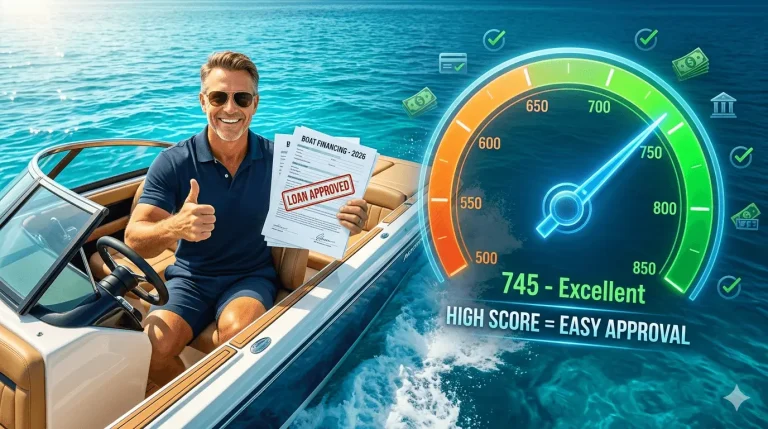
Identity and income paperwork is also where your credit profile enters the picture. Pull your own credit report before you apply so you can fix errors early; a stronger score shortens the approval process and earns better rates. See our guide on the credit score you need for a boat loan to know where you stand.
Financial documents that prove you can repay
Income alone is not enough. Lenders want the full picture of your finances to judge whether the monthly payment fits your life.
- Bank statements: usually the last two to three months, showing income deposits, savings, and spending patterns.
- Existing debt details: statements for credit cards, car loans, mortgages, or student loans, so the lender can calculate your debt-to-income ratio.
- Asset documentation: investment and retirement account statements, property holdings, or other savings that show financial reserves.
- Down payment source: proof of the funds you will use for the down payment, which is commonly 10 to 20 percent of the purchase price.
Getting pre-approved for a boat loan is the smartest way to use this paperwork: you submit it once, learn exactly how much you can borrow, and then shop for boats with a firm budget.

Boat loan documents about the vessel itself
This is the part first-time buyers forget. Because the boat serves as collateral on most marine loans, the lender needs to verify the vessel in detail.
- Purchase agreement or bill of sale: the signed agreement between you and the seller showing the price and terms.
- Boat specifications: year, make, model, length, and engine details.
- Hull Identification Number (HIN): the boat’s unique serial number, used the way a VIN is used for cars.
- Seller invoice or quote: confirming the purchase price the loan is based on.
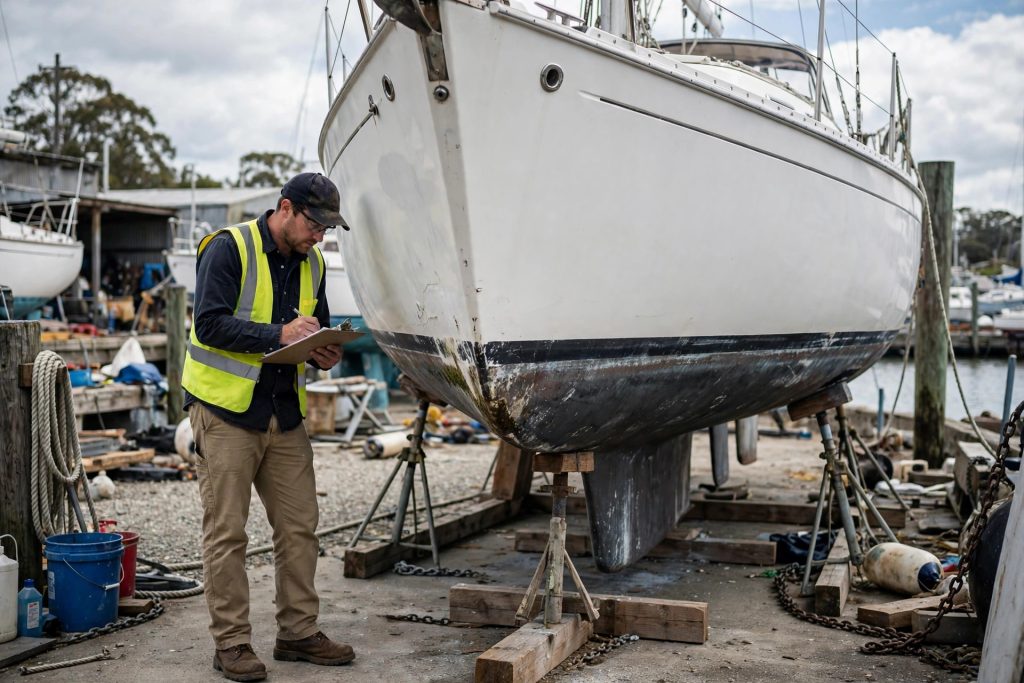
- Marine survey report: for used boats, most lenders require an independent marine survey or appraisal to confirm the boat’s condition and fair market value. The lender relies on this report to make sure the boat is genuinely worth the loan amount.
- Proof of insurance: most lenders require full coverage, including comprehensive and collision, before they release funds, since the insurance protects the collateral.
- Registration or documentation papers: state registration for smaller boats; larger vessels may be documented with the U.S. Coast Guard, in which case the lender typically records a preferred ship’s mortgage.
Buying from an individual rather than a dealer adds a few wrinkles to this paperwork. Our guide on how to finance a boat from a private seller walks through the extra steps.
Documents for special situations
Most applications fit the standard list above, but a few scenarios call for extra paperwork:
- Self-employed borrowers: two years of personal and business tax returns plus recent bank statements, to prove stable income.
- Liveaboard buyers: lenders may ask about your marina slip agreement or mooring arrangement before approving a floating home.
- Buying through an LLC or trust: entity formation documents and proof you are authorized to borrow on its behalf.
- Co-borrowers: every borrower on the application must provide their own full set of identity and financial documents.
How to organize everything before you apply
- Create one digital folder with subfolders for identity, income, bank statements, and boat documents.
- Scan or photograph each document clearly; blurry uploads are a top cause of back-and-forth delays.
- Label files by content and date, for example “pay-stubs-march-april-2026.pdf”.
- Check expiration dates: IDs and insurance quotes can go stale if your boat search takes months.
- Do not open new credit lines or make large unexplained deposits while your application is active; both trigger extra questions from underwriters.
What happens after you submit your documents
With a complete file, many lenders respond within a few hours to a few days. Larger loans, usually those above $100,000, take longer because the survey, valuation, and title search have more steps. Once approved, review the loan estimate carefully, then sign the closing paperwork and pay any boat loan closing costs before funds are released to the seller.
Want a preview of the numbers before you apply? Run your scenario through our boat loan calculator to estimate the monthly payment for your target price, rate, and term.
The bottom line
Boat loan documents are not busywork; they are the evidence your lender uses to say yes. Assemble your identity, income, financial, and vessel paperwork before you apply, keep it organized in one place, and you turn a process that can drag on for weeks into one that moves in days.

Michael Carter is a financial research writer specializing in vehicle financing, loan calculations, interest rates, and consumer budgeting. He creates practical, easy-to-understand resources that help readers make more informed financing decisions.