Are boat loans hard to get?
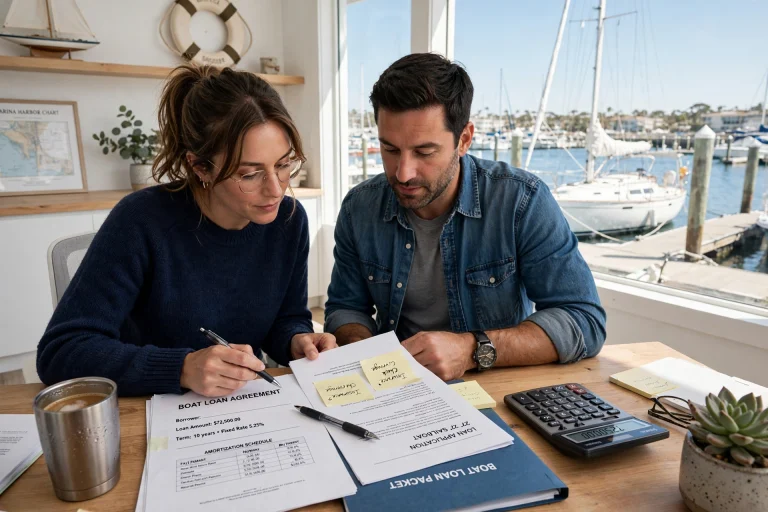
No, boat loans are not hard to get if you have decent credit and a steady income. Approval is harder than for a car loan but easier than for a mortgage: most mainstream lenders look for a credit score around 680 or above, a down payment of 10 to 20 percent, and a debt-to-income ratio under about 45 percent. If you clear those three bars on a sensibly priced, newer boat, approval is usually straightforward.

Why do lenders treat boat loans differently from car loans?
Lenders see a boat as a luxury asset, not a necessity. A car gets you to work; a boat does not, so underwriters assume a borrower under financial pressure will stop paying the boat loan first. Boats are also harder to repossess than cars and can lose value fast if badly maintained. That is why marine lenders ask for more documentation, a bigger down payment, and stronger credit than an auto lender would for the same amount.
What do lenders actually check before approving a boat loan?
Four things decide almost every application. The table shows the typical bars mainstream lenders set in 2026.
| Requirement | Typical bar | What moves the needle |
|---|---|---|
| Credit score | 680+ for competitive offers; 700+ better rates, 750+ best | Payment history, utilisation under 30%, no recent defaults |
| Debt-to-income ratio | Under about 45%, including the new payment | Pay down credit card balances before applying |
| Down payment | 10 to 20% of the purchase price | 20%+ down can offset a borderline credit score |
| Boat age and value | Newer boats qualify easiest; boats over 20 years often refused or capped | A marine survey proving condition and value on used boats |
Your score is only part of the picture. Lenders also want to see a history of handling large instalment debts, such as an auto loan or mortgage, plus stable, provable income. For the full breakdown, see our guide to credit score requirements for a boat loan.
Why do most boat loan applications get denied?
Denials almost always come back to one of five things. First, a credit score below the lender’s floor, usually in the low 600s or worse, especially with recent missed payments. Second, a debt-to-income ratio already near the limit before the boat payment is added. Third, too little down payment: lenders rarely finance 100% of a boat because the collateral loses value immediately. Fourth, the boat itself: too old, in poor condition, or worth less than the loan amount. Fifth, incomplete or inconsistent paperwork, the easiest of the five to fix. If your application was refused, read what to do if your boat loan is denied before reapplying.
Which parts of the deal make approval harder?
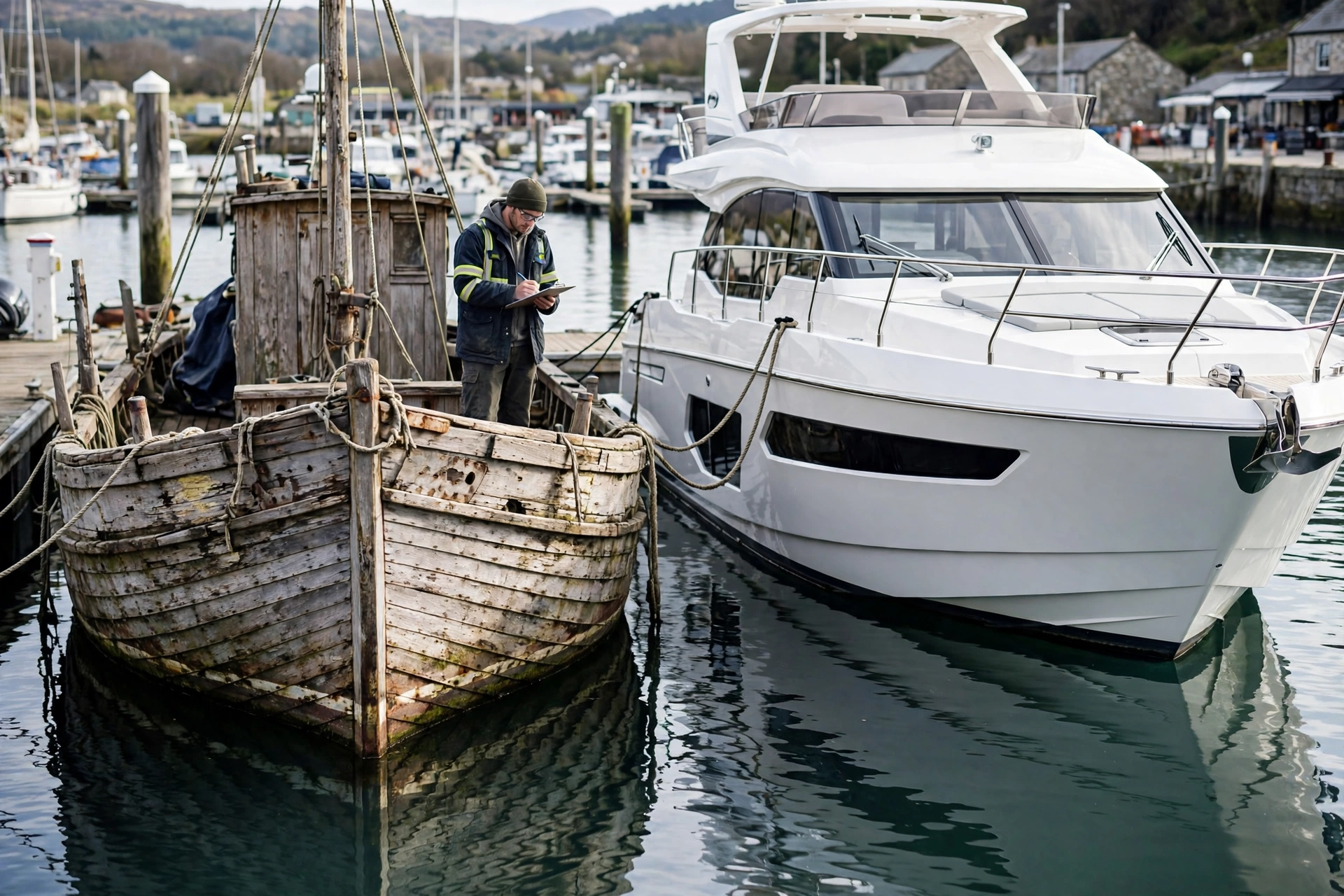
Three deal features raise the bar noticeably. An older boat is the biggest: boats over 15 to 20 years old may only qualify for short 5 to 7 year terms, need 20 to 30 percent down, and many mainstream lenders will not touch them at all. Second is a loan too large for your income: a £60,000 boat on a £40,000 income fails the affordability check however good your credit. Third is an unusual purchase: private-seller, homemade, or liveaboard boats often need extra documentation, such as a marine survey and proof of insurance, before a lender will close.
How much does a boat loan actually cost if you are approved?
Easy to get is not the same as cheap. Rates for qualified borrowers averaged around 8 percent through 2026, with a typical range of roughly 4 to 12 percent depending on credit and the boat. Take a $60,000 loan over 15 years: at 6.5 percent (strong credit) the monthly payment is about $523, while at 9 percent (borderline credit) it is about $608. That is roughly $85 a month, or over $15,000 in extra interest across the life of the loan, for the same boat. Run your own numbers through the main boat loan calculator on our homepage to see what your payment looks like before you apply.
What can you do to get approved more easily?
Five steps reliably improve your odds. First, check your credit reports and fix errors; many applicants discover outdated late payments dragging their score down. Second, bring credit card utilisation under 30 percent and avoid new credit applications for 60 to 90 days before applying. Third, save a bigger down payment: putting 20 percent down, about which our boat loan down payment guide goes into detail, lowers the lender’s risk and can rescue a borderline score. Fourth, choose a newer boat with a clean survey, because the collateral matters as much as you do. Fifth, shop specialist lenders: marine finance companies and credit unions understand boat collateral better than general banks and can be more flexible on unusual boats. Most approvals land within a few days when the paperwork is ready, as our guide to how long boat loan approval takes explains.
FAQs
Are boat loans harder to get than car loans?
Yes. Lenders treat boats as luxury assets rather than necessities, so they ask for stronger credit (usually around 680+), a bigger down payment (10 to 20%), and more documentation than an auto lender would for the same amount.
What is the easiest boat loan to get approved for?
A secured loan on a new or nearly new boat from a specialist lender, with at least 10 to 20 percent down and a credit score of 700 or above: strong collateral, easy valuation, lowest lender risk.
Can you get a boat loan with bad credit?
It is possible but difficult. A few specialist lenders work with scores in the low 600s, but expect higher rates, larger down payments, and shorter terms. Below 600, most borrowers need a co-signer or a very large down payment to get approved.
Do you need a marine survey to get a boat loan?
Usually, yes, for used boats. Lenders want an independent professional valuation before approving, and the survey protects you from overpaying for a damaged hull.
Are boat loans harder to get than car loans?
Yes. Lenders treat boats as luxury assets rather than necessities, so they ask for stronger credit (usually around 680+), a bigger down payment (10 to 20%), and more documentation than an auto lender would for the same amount.
What is the easiest boat loan to get approved for?
A secured loan on a new or nearly new boat from a specialist lender, with at least 10 to 20 percent down and a credit score of 700 or above: strong collateral, easy valuation, lowest lender risk.
Can you get a boat loan with bad credit?
It is possible but difficult. A few specialist lenders work with scores in the low 600s, but expect higher rates, larger down payments, and shorter terms. Below 600, most borrowers need a co-signer or a very large down payment to get approved.
Do you need a marine survey to get a boat loan?
Usually, yes, for used boats. Lenders want an independent professional valuation before approving, and the survey protects you from overpaying for a damaged hull.

Michael Carter is a financial research writer specializing in vehicle financing, loan calculations, interest rates, and consumer budgeting. He creates practical, easy-to-understand resources that help readers make more informed financing decisions.