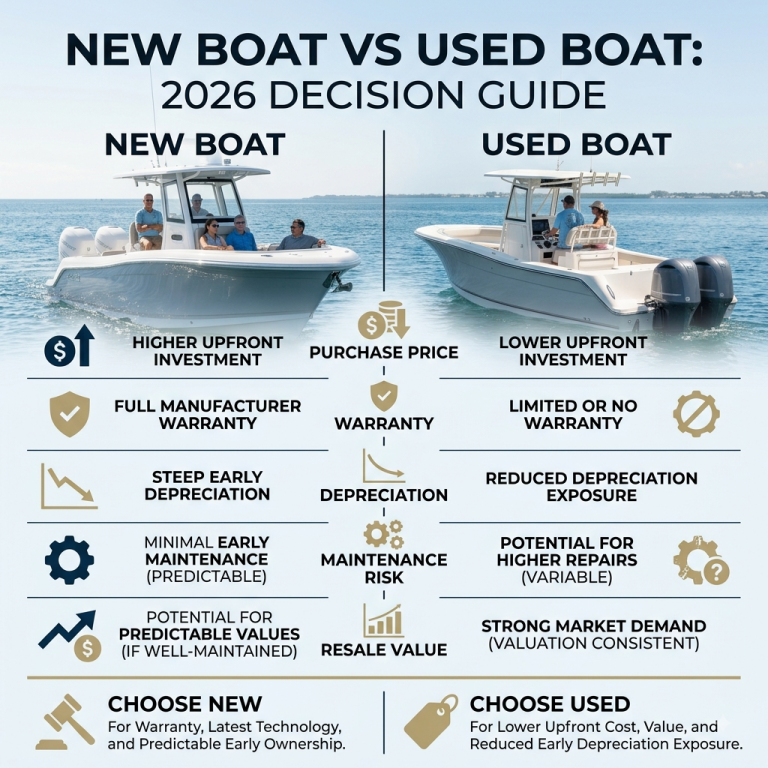
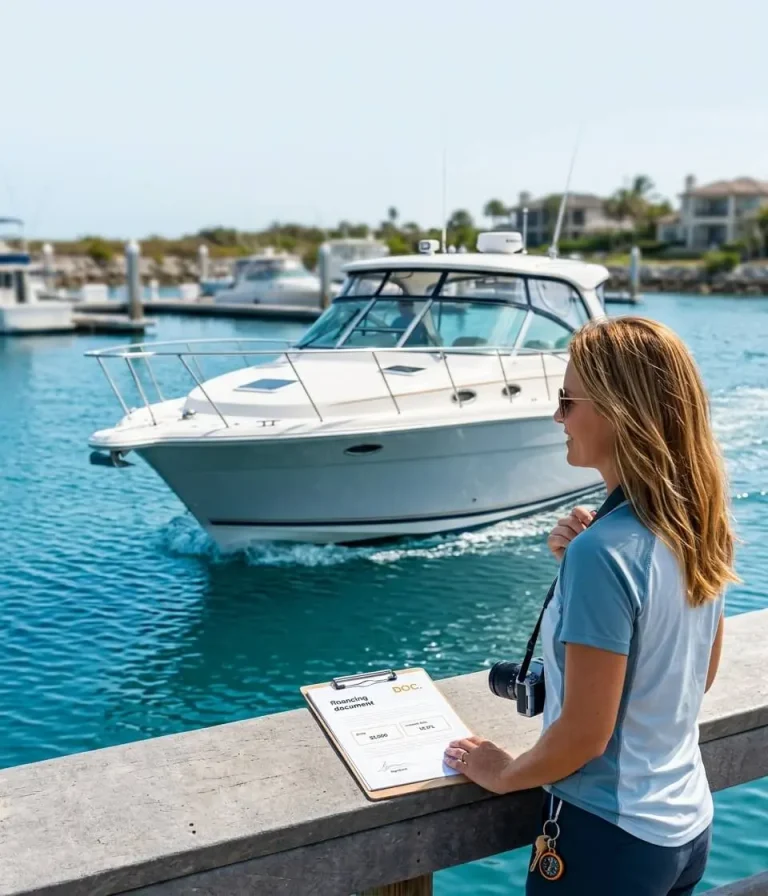
Boat Survey Guide: What Buyers Should Check Before Financing a Boat
Buying a used boat without understanding its condition can turn a seemingly good deal into an expensive repair project. A boat survey guide gives you an independent assessment of the vessel before you commit to the purchase, and it can also provide information needed by a lender or insurer.
The key is knowing what the survey covers, what it does not cover, when to arrange one, and how to use the findings. If you are considering a used boat, a marine survey can help identify structural, mechanical, and system problems before you commit to the purchase. It should be treated as one part of the broader boat buying guide, alongside checking the vessel’s history, condition, ownership documents, financing, and expected repair costs.
What Is a Boat Survey Guide?
A boat survey guide is a professional assessment of a vessel’s condition, systems, safety equipment, and, when included, value. Unlike a DIY boat inspection, a marine survey is performed by an independent surveyor and documented in a formal report. A survey is a condition assessment, not a warranty or guarantee of future performance
Which Type of Boat Survey Do You Need?
The right survey depends on why you need the inspection.
| Survey type | Main purpose |
|---|---|
| Pre-purchase survey | Assess a boat before buying it |
| Insurance survey | Provide condition and valuation information for insurance |
| Damage survey | Document damage and help assess repairs |
| Valuation survey | Establish an estimated market or replacement value |
For a used-boat purchase, a pre-purchase condition and valuation survey is usually the relevant starting point. Insurance and financing requirements can differ, so confirm the required scope with the insurer or lender before scheduling the inspection.
What Does a Boat Survey Check?
A marine survey typically evaluates six areas: structure, machinery, onboard systems, safety, documentation, and value. The exact scope depends on the vessel and survey agreement.
Structure: Hull, deck, transom, stringers, keel and signs of moisture or damage.
Machinery: Engine, propulsion and running gear.
Systems: Electrical, fuel, plumbing, bilge and through-hulls.
Safety: Safety equipment and visible compliance issues.
Documentation: HIN, registration, maintenance and service records.
Value: Condition and valuation information when included in the survey scope.
How Does a Pre-Purchase Boat Survey Work?
A typical pre-purchase survey can involve several stages:
- Initial inspection — The surveyor examines the boat while it is accessible at the dock or storage location.
- Haul-out — The boat is removed from the water so the underwater hull, keel, rudder, propeller, shaft, and through-hull areas can be examined.
- Systems inspection — Accessible electrical, plumbing, mechanical, safety, and onboard systems are evaluated according to the agreed scope.
- Sea trial — When included, the boat is operated on the water so the surveyor can observe handling, engine operation, and system performance.
- Written report — Findings, limitations, recommendations, and valuation information are documented.
Not every survey includes all five stages. Confirm the scope before hiring the surveyor.
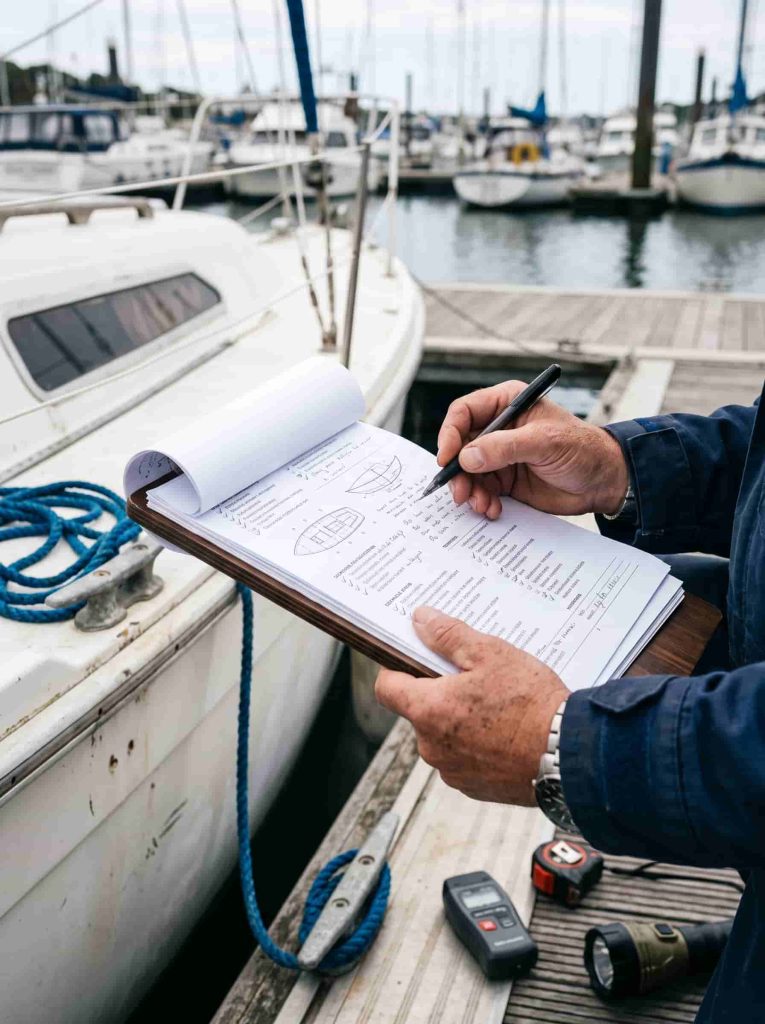
Boat Survey vs. DIY Inspection: What Is the Difference?
A DIY inspection is useful for an initial evaluation and can help identify visible problems. A professional marine survey provides a broader condition assessment and formal report from a qualified surveyor.
| DIY Inspection | Marine Survey |
|---|---|
| Buyer-led first check | Professional assessment |
| Focuses on visible issues | Covers agreed inspection scope |
| Helps shortlist boats | Supports the purchase decision |
| Does not replace specialist assessment | May support financing or insurance |
How Should You Choose a Marine Surveyor?
Choose an independent marine surveyor whose experience matches the type of vessel you are buying. Competitor research consistently emphasizes independence, relevant boat experience, and professional credentials when selecting a surveyor.
Before hiring one, ask:
- Does the surveyor regularly inspect this type of boat?
- What exactly is included in the survey?
- Is the haul-out included?
- Is a sea trial included?
- Will you receive a written condition report?
- Is valuation included?
- Can the surveyor provide a sample report?
- Does the lender or insurer have specific survey requirements?
Do not assume the seller’s preferred surveyor is the right choice for you. An independent surveyor is evaluating the vessel for the client who commissioned the inspection.
What Should You Do Before the Survey?
Good preparation helps the surveyor spend more time inspecting the boat rather than waiting for access, paperwork, or equipment.
Before the appointment, gather:
- Boat title and registration
- Hull Identification Number (HIN)
- Maintenance and service records
- Engine records
- Previous survey reports
- Insurance information
- Repair and refit invoices
- Equipment manuals
- Keys and access information
Before the survey, have the boat title and registration, HIN, maintenance records, engine records, previous survey reports, insurance information, repair invoices, and equipment manuals available. Confirm access to the boat and arrange the haul-out or sea trial if they are included in the agreed scope.
How Much Does a Boat Survey Cost?
There is no single boat survey price. Cost can vary with the boat’s size, location, type, survey scope, systems, haul-out requirements, and surveyor.
Some surveyors use a per-foot rate, while others quote a flat or customized fee. Haul-out, pressure washing, engine inspections, oil analysis, travel, or specialist inspections may cost extra.Survey duration also varies with boat size, scope, haul-out requirements, sea trial, and the number of systems being assessed, so ask the surveyor what the quoted service includes and how much time should be scheduled.
Before approving the survey, request an itemized quote that clearly states what is included and what will be billed separately.
How Do You Read a Boat Survey Report?
Do not treat the report as simply “good” or “bad.” Start by identifying safety-critical findings, structural concerns, major mechanical issues, and items that could materially affect the purchase price.
Pay particular attention to:
- Structural defects
- Water intrusion or moisture concerns
- Through-hull and seacock problems
- Engine or propulsion concerns
- Electrical deficiencies
- Safety-equipment issues
- Evidence of previous damage or repairs
- Systems that were not tested
- Areas the surveyor could not access
- Recommended specialist inspections
A survey report documents the vessel’s observed condition at a particular time. It does not guarantee future performance or prove that every hidden defect has been discovered.
Can a Boat Survey Affect Your Financing Decision?
Yes. A survey can be relevant to boat financing because lenders may require a marine survey or valuation before approving certain purchases. The exact requirement depends on the lender, boat, loan, and transaction.
If you are financing the purchase, ask the lender before scheduling the survey whether it requires a particular survey type, valuation, age limit, survey date, or surveyor qualification.
Once you know the purchase price and financing amount, you can also use a boat loan calculator to estimate the potential monthly payment and total financing cost.
What Should You Do After Receiving the Survey?
Use the findings as part of your purchase decision rather than automatically demanding that every listed issue be repaired.
A practical sequence is:
Review → Prioritize → Price → Negotiate → Decide
Separate findings into safety-critical problems, significant repair costs, routine maintenance, and cosmetic issues. For major findings, obtain specialist opinions or repair estimates where necessary.
The survey may support a request for repairs, a price adjustment, further inspection, or a decision not to proceed, depending on the purchase agreement and the seriousness of the findings.
Frequently Asked Questions
Is a boat survey worth it before buying a used boat?
A pre-purchase survey can identify structural, system, safety, and condition issues that may not be obvious during a normal viewing. It can also provide information useful for financing or insurance.
Does a boat survey include the engine?
A standard survey may include a basic operational assessment, but it is not necessarily a complete mechanical engine inspection. A separate marine mechanic’s inspection may be appropriate for deeper engine evaluation.
Does a boat survey include a sea trial?
It can, but the scope varies. Confirm whether the sea trial is included in the surveyor’s quoted service and whether it will be performed before or after the haul-out.
Can I use a boat survey to negotiate the purchase price?
Survey findings can provide documented evidence for discussing repairs or price adjustments. The surveyor reports the vessel’s condition; the buyer and seller decide how those findings affect the transaction.
Is a boat survey a guarantee that the boat is in good condition?
No. A survey is a condition assessment based on the areas and systems the surveyor could inspect and test. It is not a warranty or guarantee of future performance.

Michael Carter is a financial research writer specializing in vehicle financing, loan calculations, interest rates, and consumer budgeting. He creates practical, easy-to-understand resources that help readers make more informed financing decisions.