How to Buy a Boat: A Beginner’s Guide to Making the Right Choice
How to Buy a Boat: A Beginner’s Guide to Making the Right Choice
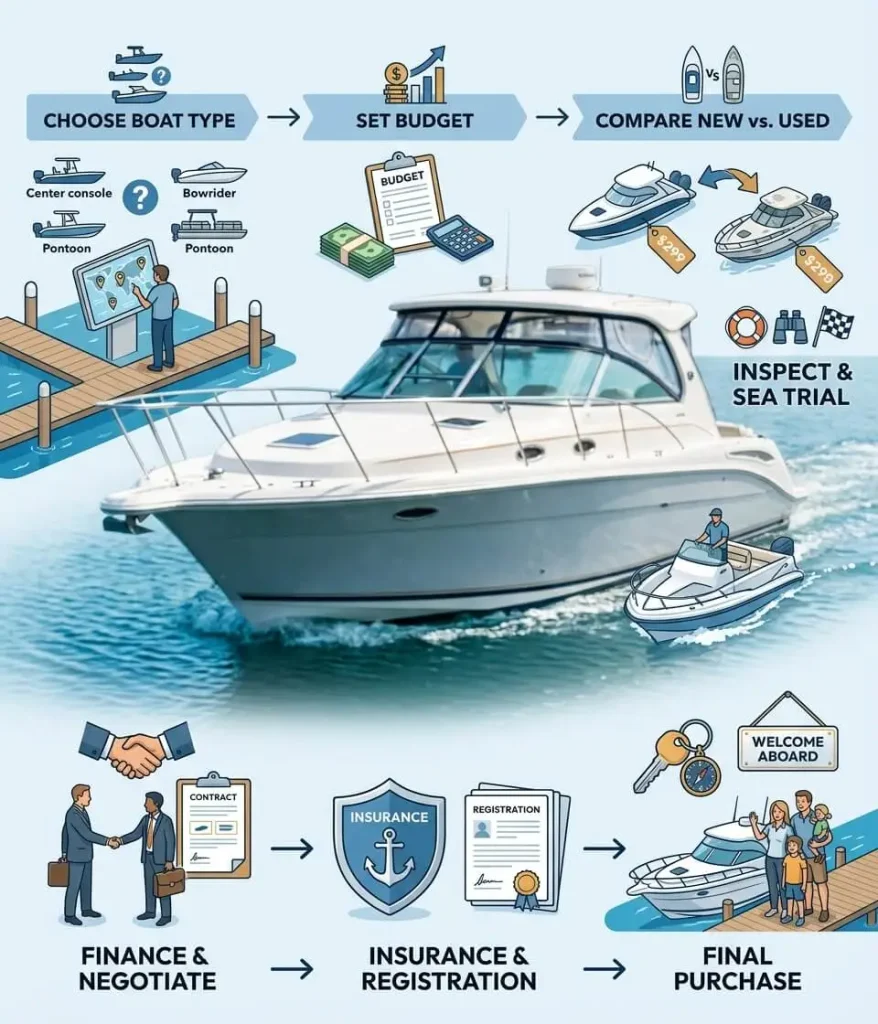
Buying a boat starts with choosing the right type, setting a realistic budget, comparing new and used options, inspecting candidates, arranging financing, and completing ownership requirements.
The safest approach is to decide how you will use the boat first, then work backward to price and features.Before making an offer, it is important to look beyond the boat’s sticker price. Consider financing, insurance, fuel, maintenance, storage, and inspection costs so you know the true cost of ownership and can choose a boat that fits both your lifestyle and budget.
Choose the Right Boat for Your Needs
Your intended activity should determine the boat type, size, passenger capacity, and features you need. A family that cruises on calm lakes has different requirements from an angler fishing offshore.
| Main Use | Boat Types to Consider |
|---|---|
| Family cruising | Pontoon, Bowrider |
| Fishing | Center Console, Fishing Boat |
| Watersports | Bowrider, Ski Boat |
| Long-distance cruising | Cruiser |
| Sailing | Sailboat |
Also consider where you will store the boat, how many people will use it, and whether you will trailer it. Choosing based on lifestyle rather than appearance helps prevent an expensive mismatch.
Set Your Boat Buying Budget
The purchase price is only the starting point. Separate your budget into upfront costs and recurring ownership costs.
| Upfront Costs | Recurring Costs |
|---|---|
| Boat price | Loan payment |
| Sales tax and fees | Insurance |
| Down payment | Fuel |
| Safety equipment | Maintenance |
| Accessories | Storage |
Your affordable purchase price should leave room for these ongoing expenses. Use a Boat Loan Calculator to estimate financing and ownership costs before shopping.
Should You Buy a New or Used Boat?
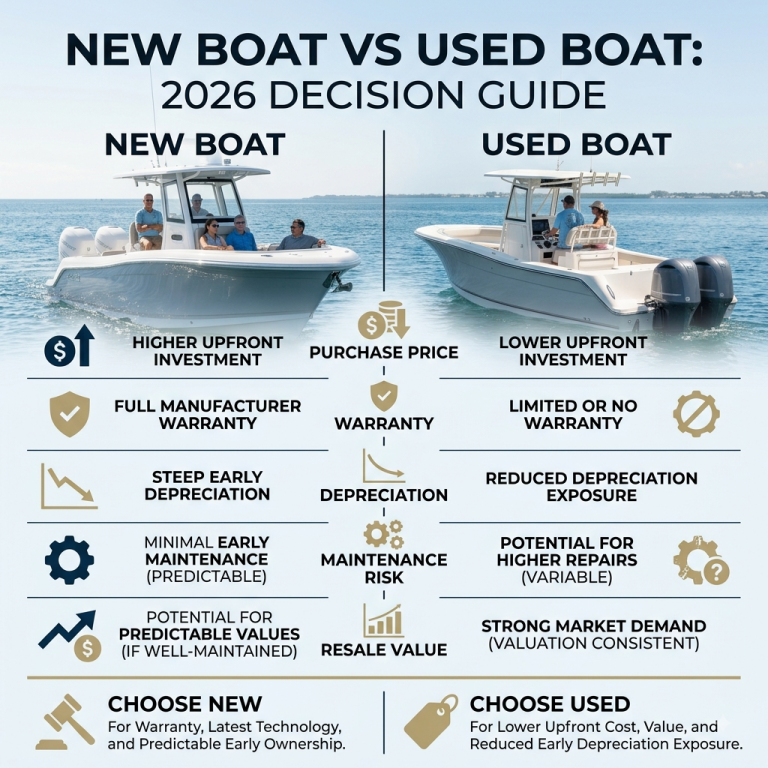
New boats provide current equipment, manufacturer warranties, and fewer concerns about previous maintenance. Used boats can offer more value but require closer inspection of condition, ownership history, engine hours, and maintenance records.
| Factor | New Boat | Used Boat |
|---|---|---|
| Warranty | Usually stronger | May be limited |
| Depreciation | Usually higher initially | Often lower |
| Purchase Price | Higher | Lower |
| Condition Risk | Lower | Higher |
| Inspection Need | Still important | Critical |
Best choice: Buy new when warranty and predictable condition matter most. Consider used when value and lower initial cost are priorities.
Where to Find a Boat
You can buy through a dealer, private seller, broker, boat show, or online marketplace. Dealers may offer warranties, financing, and structured purchasing support; private sellers may offer lower prices but require greater diligence.
Choose a dealer when warranty coverage, financing, and purchase support matter most. Consider a private seller when price and direct negotiation matter, provided you verify ownership, title, maintenance records, and boat condition.
Inspect and Test the Boat Before Buying
Never rely only on photographs or a seller’s description. Inspect the hull, engine, steering, electrical systems, fuel system, bilge, electronics, trailer, and safety equipment.
For a used boat, verify the Hull Identification Number (HIN), title, ownership records, and maintenance history. A marine survey can identify structural or mechanical concerns, while a sea trial shows how the boat performs under operating conditions.
If the seller refuses reasonable inspection or documentation checks, treat that as a warning sign.
Finance, Negotiate, and Close the Deal
Compare financing based on APR, down payment, loan term, monthly payment, and total interest, not just the advertised monthly payment. A longer loan can reduce monthly costs while increasing total borrowing costs.
Negotiate after understanding the boat’s condition and comparable market prices. Before closing, confirm the purchase agreement, included equipment, payment terms, title status, and required documents.
For financing estimates, use a [Boat Loan Calculator] or [20-Year Boat Loan Calculator] before discussing loan terms with a lender.
Complete Insurance, Registration, and Ownership Requirements
Before using the boat, arrange appropriate boat insurance and complete registration and title requirements applicable to your state. Requirements can vary by state, boat type, and ownership circumstances.
Also plan for storage, maintenance, safety equipment, trailer requirements, and boating education. A boat is ready for ownership only when it is financially, legally, and practically prepared for use.
Boat Buying Checklist
Before completing the purchase, confirm:
- Boat type matches your intended use.
- Total ownership cost fits your budget.
- New or used condition matches your priorities.
- Seller and ownership documents are verified.
- HIN and title information are checked.
- Hull and engine have been inspected.
- Sea trial is completed when appropriate.
- Marine survey is arranged when needed.
- Financing terms are understood.
- Insurance is arranged.
- Registration and title requirements are completed.
- Storage, safety equipment, and maintenance are planned.
The best boat purchase balances intended use, total cost, condition, financing, and ownership requirements. Following this sequence helps beginners avoid buying the wrong boat or overlooking costs that appear after the sale.
Frequently Asked Questions About Buying a Boat
How much should I spend on my first boat?
Set your budget using the total ownership cost, not only the purchase price. Include financing, insurance, fuel, maintenance, storage, taxes, registration, and safety equipment before deciding what you can afford.
Is it better to buy a new or used boat?
A new boat offers warranty coverage and predictable condition, while a used boat can provide more value at a lower purchase price. Used boats require stronger inspection and documentation checks.
What should I check before buying a used boat?
Check the Hull Identification Number, title, ownership history, maintenance records, hull, engine, electrical systems, fuel system, steering, and trailer. A marine survey and sea trial can provide additional protection.
Do I need a marine survey?
A marine survey is particularly valuable when buying a used or higher-value boat. It can identify structural and equipment problems that a basic visual inspection may miss.
Can I finance a boat?
Yes. Boat financing commonly depends on the purchase price, down payment, APR, loan term, credit profile, and lender requirements. Compare both monthly payments and total interest before choosing financing.
What other costs come with owning a boat?
Common ongoing costs include insurance, fuel, maintenance, storage, dockage, registration, and repairs. These expenses should be included in your ownership budget before purchasing.
Do I need boat insurance?
Insurance requirements vary by state, lender, marina, and boat type. Even when not legally required, insurance can protect against covered losses and may be required by a financing provider or marina.
Do I need to register my boat?
Registration requirements vary by state and depend on factors such as the boat’s type, size, and use. Check the applicable state boating authority before operating the boat.

Michael Carter is a financial research writer specializing in vehicle financing, loan calculations, interest rates, and consumer budgeting. He creates practical, easy-to-understand resources that help readers make more informed financing decisions.