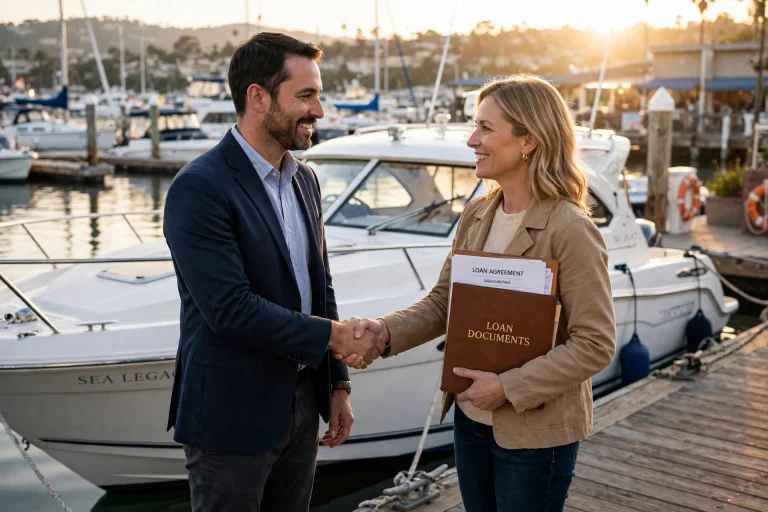
Can You Get a Boat Loan With No Down Payment? What Lenders Really Offer
Can You Get a Boat Loan With No Down Payment? The Short Answer
Yes, you can get a boat loan with no down payment, but the option is limited. A small number of marine lenders, credit unions and dealer programs offer zero-down financing, usually only for borrowers with strong credit, steady income and a low debt-to-income ratio. Most lenders still ask for 10 to 20 percent down, so a zero-down loan is the exception, not the standard deal.
Zero-down programs typically carry rates 0.5 to 1.5 percent higher than standard boat loans, and you start out owing more than the boat is worth.
What Zero Down Really Means for Your Loan
With a normal boat loan, your down payment lowers the amount you borrow and gives you instant equity in the boat. With zero down, you finance the full purchase price from day one, so the loan balance is larger, the monthly payment is higher, and there is no cushion if the boat loses value.
Lenders see this as extra risk and price it in. A higher loan-to-value ratio usually means a higher APR, and some lenders cap the loan amount or shorten the term. You also start underwater, owing more than the boat is worth. New boats lose value fastest in the first year, so an early sale could leave you owing money at closing.
Who Qualifies for a Zero-Down Boat Loan
Lenders set a higher bar when they finance 100 percent of a boat:
- Credit score: Most zero-down programs want 700 or higher, and some ask for 750 or above. At 680 to 719 you can sometimes qualify with strong income and a low debt-to-income ratio. Below 640, approval is rare.
- Stable income: Expect to show pay stubs, tax returns and bank statements proving you can carry the full payment plus ownership costs.
- Low debt-to-income ratio: A lender financing the whole boat wants room in your budget.
- A newer boat: Zero-down deals are easier on newer boats with clear market values. Older boats usually need a larger deposit.
If your score is below that range, a down payment or a cosigner is usually required. See our guide to getting a boat loan with bad credit.

5 Ways to Buy a Boat With No Cash Down
There is more than one route to a zero-down purchase. Here are the five that actually work.
1. Ask marine lenders about zero-down programs
Specialist marine finance companies and some large banks run zero-down programs for qualified buyers. Contact three marine lenders and ask directly whether they offer 100 percent financing, then request a written quote listing the APR, monthly payment, term and every fee. See our guide on how to get the best boat loan rate.
2. Check credit unions
Credit unions are often the most flexible source of zero-down boat financing. Some advertise financing of up to 100 percent of the purchase price for members with strong credit. Membership rules vary, so check whether you qualify to join before you apply.
3. Use a dealer or manufacturer promotion
Boat manufacturers and their finance arms sometimes run promotions that waive the down payment, usually tied to a specific model or sales period. These can include a subsidised low rate, a deferred payment period of 30 to 60 days, or a rebate applied as a cash credit at closing. Check the fine print: most need a minimum credit score and financing through the dealer’s preferred lender.
4. Trade in your current boat
If you already own a boat, its trade-in value can replace a cash down payment. Lenders treat a qualified trade-in just like cash, because it reduces the amount you borrow. A $10,000 trade-in on a $50,000 boat lowers the financed amount to $40,000 and can remove the need for cash at signing, if the lender accepts the appraised value. Our guide to trading in a boat with a loan covers how valuations work.
5. Add a cosigner or use a personal loan
A cosigner with strong credit can push a borderline application over the line, though they become fully responsible for the debt if you miss payments. Alternatively, an unsecured personal loan for a boat needs no down payment at all, which makes it practical for lower-priced boats. Personal loans usually run 2 to 7 years and may carry an origination fee of 0 to 12 percent, so compare the total cost against a secured marine loan first.
What a Zero-Down Loan Costs: A Real Example
The numbers below are illustrative, based on typical lender pricing. Take a $50,000 boat on a 60-month term.
- Zero down: You finance the full $50,000. At around 6.5 percent APR, the monthly payment works out to roughly $970.
- 20 percent down: You put down $10,000 and finance $40,000. At around 6.0 percent APR, the payment drops to roughly $770.
That is about $200 a month, or $12,000 over five years, for the same boat. The gap comes from a smaller loan balance and a lower rate at the same time. Run your own numbers with our boat loan calculator, and ask each lender for the total interest over the full term, not just the monthly figure.

The Hidden Costs That Still Need Cash
Zero down does not mean zero cash at closing. Taxes, registration, title and documentation fees are usually paid separately. On a $50,000 boat, these closing costs can total $3,500 to $5,000, including sales tax, registration and titling, dealer documentation fees, a marine survey on a used boat, and the first year of insurance, which many lenders require upfront. Our breakdown of boat loan closing costs lists every fee to budget for.
When Zero Down Makes Sense, and When It Does Not
Zero-down financing makes sense when your credit is strong, your income is stable, you plan to keep the boat long term, and keeping cash in reserve matters more than minimising total interest.
It does not make sense when your credit is borderline, your budget is already tight, or you might sell within a few years. Starting underwater means a quick sale could leave you paying off a loan on a boat you no longer own. If you can save even 10 percent, the standard minimum at most lenders, you will usually get a better rate, a lower payment and an equity cushion from day one. See our guide to boat loan down payments.
How to Apply for a Zero-Down Boat Loan
Start by checking your credit report and score, and fix any errors before you apply. Then gather the documents lenders ask for: government ID, recent pay stubs, tax returns, bank statements and the signed purchase agreement with the boat’s hull number. Our checklist of documents needed for a boat loan covers the full list.
Next, get written quotes from at least three lenders: a marine finance company, a credit union and your bank. Compare the APR, fees, loan-to-value limits and any prepayment penalties side by side, and compare each zero-down quote with a 10 percent down quote from the same lender. The cheapest deal is the one with the lowest total cost over the loan term, not the one with no cash due at signing.

Michael Carter is a financial research writer specializing in vehicle financing, loan calculations, interest rates, and consumer budgeting. He creates practical, easy-to-understand resources that help readers make more informed financing decisions.