OpenAI Executive Joins Boats Group Board as AI Transforms Boat Buying
Boats Group, the technology company behind the marine industry’s leading digital marketplaces including Boat Trader, YachtWorld and boats.com, has appointed OpenAI executive Brandon McGraw as a non-executive director on its board of directors. The announcement, made on 13 October 2026, signals the boating industry’s growing bet on artificial intelligence to change how people find and buy boats.
Who is Brandon McGraw?
McGraw is currently Interim CMO, Consumer and Hardware Marketing at OpenAI, where he leads the commercial and brand strategy for the company’s consumer applications and hardware products. Before joining OpenAI, he served as Head of Consumer Marketing at Anthropic and co-founded Reflective Works, an AI-powered personal intelligence company.
Earlier in his career, he held senior product and marketing leadership roles at DoorDash, Twitch, Meta and Google.
“Brandon has spent his career building transformative products and helping some of the world’s most influential technology companies navigate defining moments in their growth,” said Patrick Kolek, Chief Executive Officer of Boats Group. “His perspective will be incredibly valuable as we scale new capabilities across our global marketplaces and position Boats Group for its next chapter.”
AI is already changing how boats are bought
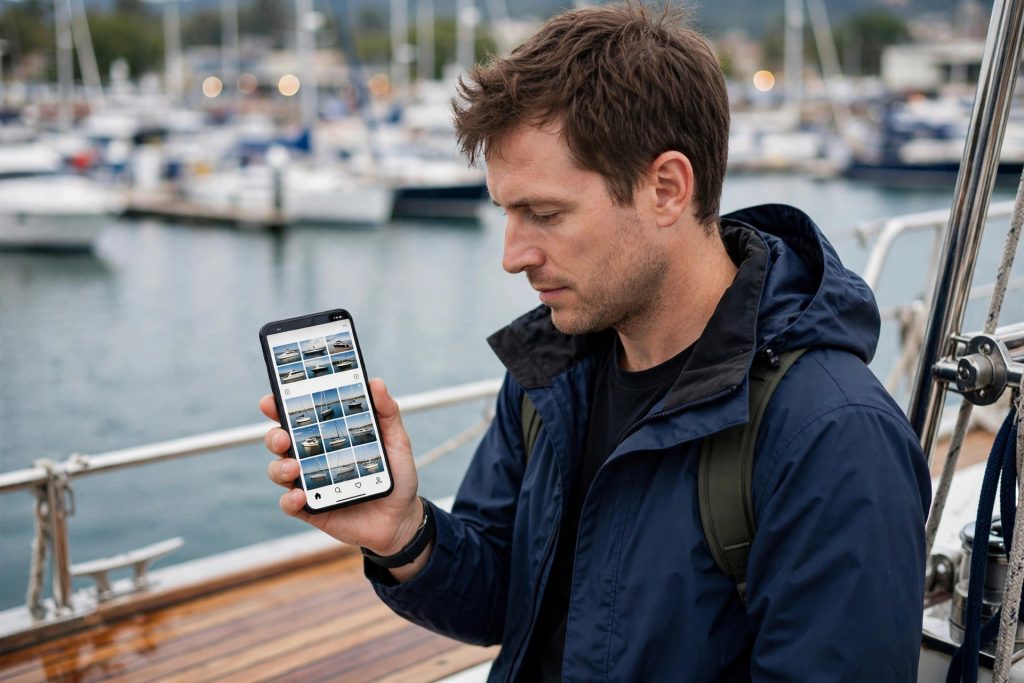
The appointment comes as Boats Group expands its use of AI across its consumer marketplaces and professional tools. Most recently, the company integrated YachtWorld and Boat Trader into ChatGPT, creating a new conversational channel for boat discovery that lets buyers ask questions in plain language instead of manually filtering through hundreds of listings.
The company has also introduced a Listing Optimizer, which uses marketplace data and buyer behaviour insights to help sellers improve their listing performance, and a Market Evaluation Tool that combines active and sold listing data to support pricing and inventory decisions.
What this means for UK boat buyers
AI boat buying tools could make the search process much faster and less overwhelming for British buyers. Instead of trawling through endless listings, buyers may soon be able to describe what they want in everyday language and receive a shortlist of suitable boats, backed by realistic pricing drawn from actual sold data rather than optimistic asking prices.
That matters because pricing has always been one of the trickiest parts of buying a boat. Sold-price data gives buyers a firmer basis for negotiation, and for working out what they can genuinely afford. Before committing to a purchase, it is worth running the numbers through a boat loan calculator to see what the monthly payments on a boat at that price would look like. If you are considering a pre-owned boat, a used boat loan calculator can give a clearer picture of the finance terms typically available.
Smarter discovery does not change the fundamentals, though. A good purchase price still needs to be weighed against mooring fees, insurance, maintenance and running costs, so check how much boat you can actually afford before falling in love with a listing.

A sign of where the industry is heading
AI-powered boat buying is quickly becoming a battleground for the big marketplaces. Boats Group’s move to bring one of Silicon Valley’s most experienced AI consumer marketers onto its board shows the company intends to lead, not follow, as conversational search and data-driven pricing become the norm for boat shoppers on both sides of the Atlantic.
Source: PR Newswire
How to use AI tools without losing the basics
Artificial intelligence is changing how people search for boats, and the change is mostly good. Instead of filtering through hundreds of listings, a buyer can describe what they want in plain language and receive a shortlist. Tools that draw on sold prices, rather than asking prices, give buyers a firmer basis for negotiation. That is a real improvement on the old way of searching, where the price on the screen was often more hopeful than realistic.
But a shortlist is only the start of a purchase, not the end of it. No AI tool can tell you how a boat handles, whether the engine is sound, or whether the layout works for your family. Those answers only come from seeing the boat in person, taking it for a sea trial, and getting an independent survey. A buyer who skips those steps because the listing looked convincing is taking a risk that no amount of smart searching can remove.
Sold price data deserves a careful reading too. It tells you what similar boats actually changed hands for, which is useful when you make an offer. But two boats of the same model can sell for very different prices depending on their condition, their service history, and the equipment on board. Use the data as a guide, then judge the individual boat on its own merits.
The other habit that still matters is budgeting before you fall in love with a listing. Work out what you can afford, including the loan payment and the running costs, before you start shortlisting. Our boat affordability calculator helps you set that budget, and a boat loan calculator shows what the monthly payments on a boat at that price would look like.
Finally, stay alert for listings that look too good to be true. AI makes it easier to find boats, and it also makes it easier for scammers to copy genuine listings and repost them at a tempting price. If a boat is far cheaper than every similar listing, if the seller cannot show it in person, or if they ask for payment before a viewing, walk away. Read our guide to buying a boat for the full checklist, and let the smart tools do the searching while you keep the judgement.

Michael Carter is a financial research writer specializing in vehicle financing, loan calculations, interest rates, and consumer budgeting. He creates practical, easy-to-understand resources that help readers make more informed financing decisions.