Mooring Fields: Permits, Rules, Fees & How They Work
A mooring field is a designated area where boats are secured to approved moorings rather than anchored freely or tied to a marina dock. If you are considering one for your vessel, the important questions are whether space is available, which authority controls the area, whether a permit or assignment is required, and whether your boat meets local limits.
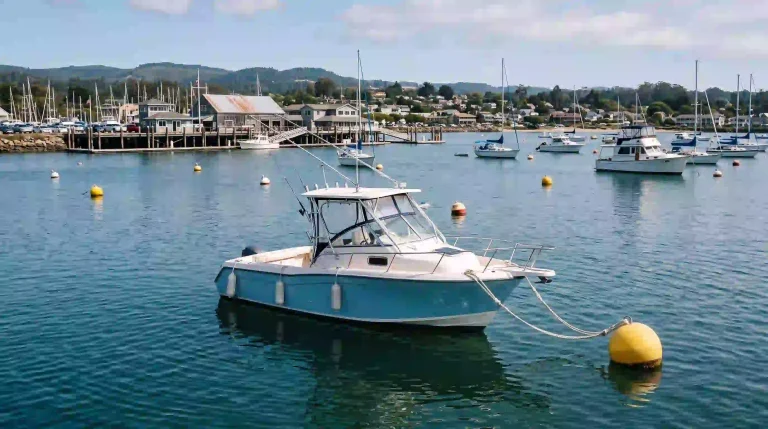
A buoy in or near a mooring field does not automatically mean the space is available for public use; the field operator may assign individual moorings to specific vessels or permit holders.
The process varies by location. A practical approach is to identify the responsible authority first, then verify the field’s rules, vessel requirements, availability, fees, and ongoing responsibilities before using or installing a mooring.
What Is a Mooring Field?
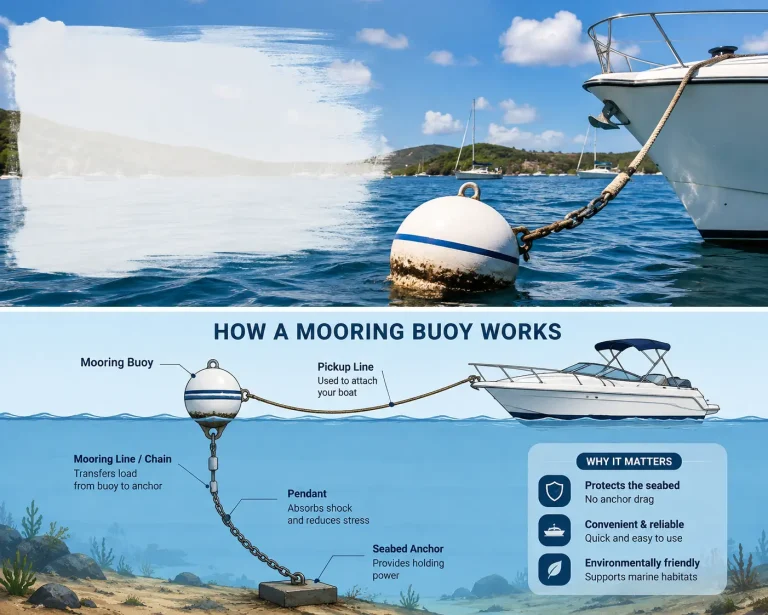
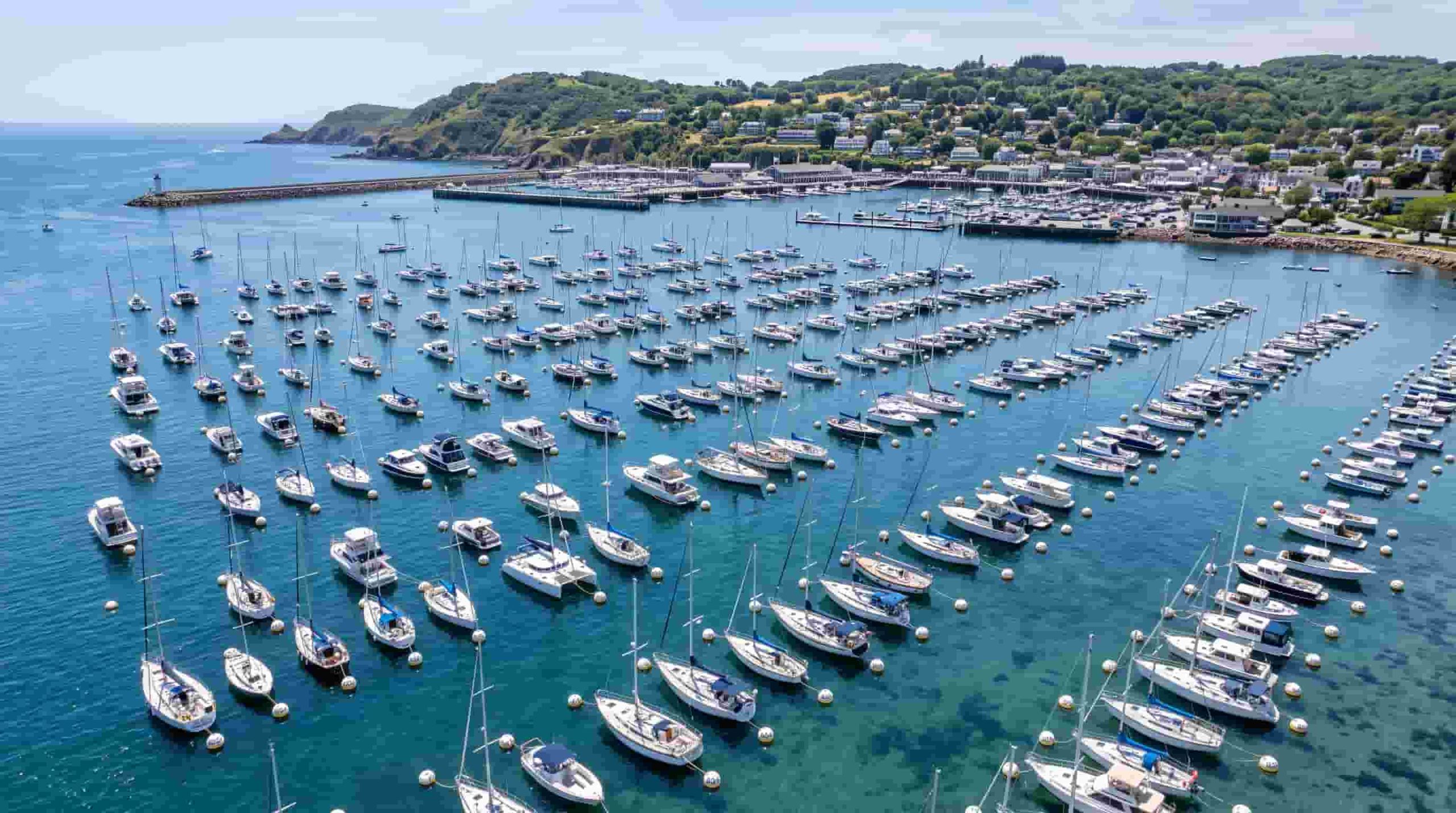
A mooring field is a designated area containing multiple mooring locations where vessels can be secured. Each location may have a mooring buoy connected to an underwater mooring system that holds the vessel in place.
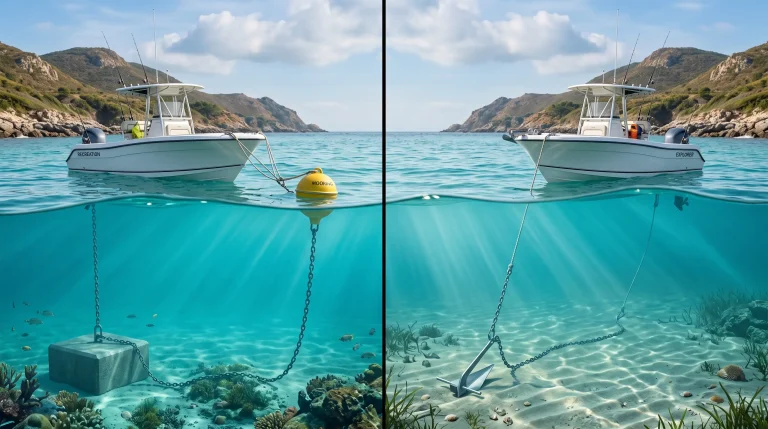
A mooring field differs from an open anchorage because individual mooring positions may be managed or assigned. It also differs from a marina because the boat is secured to a mooring rather than a fixed dock slip.
The field may be operated or regulated by a harbor authority, local government, state boating authority, waterway authority, or another responsible organization.
The key relationship is simple:
Mooring field → designated area → individual mooring → vessel assignment/use → applicable rules or permit.
For different mooring configurations and equipment, see the types of boat moorings.
How Does a Mooring Field Work?
A typical mooring system connects a mooring buoy to underwater ground tackle through components such as a chain, riser, or pendant. The vessel is secured to the buoy rather than dropping its own anchor.
A managed field organizes multiple moorings within a defined area. Location, spacing, water depth, vessel size, and navigation requirements can affect which mooring positions are suitable.
Before using a field, check:
- Whether the mooring is assigned or available for public use
- Whether your vessel meets the field’s size or draft limits
- Whether registration or vessel documentation is required
- Which authority manages the field
- Whether the mooring has inspection or maintenance requirements
The physical mooring system is only part of the process. The field’s operating rules determine how the individual moorings may be used.In a managed field, the physical mooring and the authorization to use it are separate considerations: a mooring may exist physically, but the vessel still needs to meet the field’s eligibility and assignment rules
Do You Need a Permit to Use a Mooring Field?
Not every mooring field follows the same authorization process. Requirements depend on the location, authority, type of mooring, and local rules.
Some managed fields may require an application, permit, reservation, assignment, or other authorization before a vessel can occupy a mooring.
Start with the authority responsible for the specific waterway. Do not assume that a state-wide boating rule or another nearby field’s requirements automatically apply.
Before using a field, verify:
- Who manages the mooring field.
- Whether a permit or assignment is required.
- Whether mooring spaces are currently available.
- Whether your vessel qualifies.
- What documents and fees are required.
- Whether additional installation or inspection rules apply.
This authority-first approach reduces the risk of purchasing equipment or selecting a location that cannot legally or practically be used.
What Are the Requirements to Use a Mooring Field?
Mooring-field requirements can involve both the vessel and the mooring location.
Common factors include:
- Vessel length or LOA
- Vessel draft
- Boat registration or documentation
- Mooring location
- Water depth
- Mooring capacity
- Required spacing
- Navigation restrictions
- Mooring equipment specifications
- Environmental or local restrictions
The vessel must be appropriate for the available mooring position. A location that works for one boat may not be suitable for another because of differences in length, draft, swing area, or local restrictions.
The important decision is therefore not simply “Is there a mooring?” It is “Is there an authorized mooring that is suitable for this vessel?”

How Do You Get a Mooring in a Mooring Field?
Use this sequence before committing money or installing equipment:
- Identify the authority: Find the organization responsible for the specific mooring field.
- Check availability: Determine whether open moorings exist or whether there is a waiting list.
- Verify vessel eligibility: Check length, draft, registration, documentation, and other vessel requirements.
- Check field rules: Confirm permitted locations, mooring specifications, and use restrictions.
- Apply or reserve: Submit the required application or request an assignment.
- Pay applicable fees: Confirm permit, reservation, inspection, or other charges.
- Wait for authorization: Do not assume that submitting an application gives permission to occupy or install a mooring.
- Follow assignment conditions: Use the designated location and comply with continuing field requirements.
This identify → verify → check → apply → pay → authorize → use sequence is more useful than treating every mooring field as if it follows one nationwide process.
How Much Does a Mooring Field Cost?
Not every mooring field charges each of these costs; the applicable charges depend on the authority, field, and type of authorization.
Separate the potential costs into categories:
| Cost | What it may cover |
|---|---|
| Mooring-use fee | Occupying an assigned or designated mooring |
| Permit/application fee | Processing authorization |
| Inspection fee | Required inspection or approval |
| Equipment | Mooring system or related equipment |
| Maintenance | Keeping the mooring system compliant |
| Renewal | Continuing authorization where applicable |
Always check the current fee schedule for the specific field instead of using another location’s price as a planning figure.
If you are also budgeting for the boat itself, a boat loan calculator can help estimate the financing portion of your monthly ownership costs.
What Rules Apply After You Get a Mooring?
If you replace the vessel, transfer ownership, or change the permitted mooring location, contact the field authority before assuming the existing authorization remains valid. The authority may require updated vessel information, a new application, reassignment, or inspection.
Pay particular attention when:
- You change vessels
- Your vessel registration or documentation changes
- You move the mooring
- The mooring equipment is replaced
- Your permit expires
- You transfer ownership
- The authority requires a new inspection
A permit or assignment associated with one vessel or location should not automatically be assumed to transfer to another vessel or owner.
For equipment connecting the vessel to its mooring, see the boat mooring lines information before selecting or replacing lines.
What If the Mooring Field Is Full or Your Application Is Denied?
A full field and a denied application require different responses.
If the field is full: check whether the authority maintains a waiting list, offers another field, or permits applications for future availability.
If your application is denied: identify the specific reason. It may involve vessel size, draft, incomplete documentation, location restrictions, technical requirements, or another field rule.
If your vessel does not qualify: look for another authorized mooring location that matches the vessel’s dimensions and requirements.
The important point is to resolve the restriction before installing equipment or occupying a location. An apparently suitable piece of water does not necessarily constitute an authorized mooring position.
Frequently Asked Questions About Mooring Fields
Do all mooring fields require a permit?
No. Requirements vary by jurisdiction, field operator, waterway, and type of use. Verify the rules for the specific location.
Can I choose any available mooring location?
Not necessarily. Managed fields may assign specific positions based on vessel size, draft, availability, and local rules.
What happens if a mooring field is full?
You may need to join a waiting list, choose another field, or wait for an available assignment, depending on the authority’s rules.
Can I use a different boat on an assigned mooring?
Do not assume so. A change of vessel may require approval or updated vessel information because assignments and mooring suitability can be vessel-specific.
What documents are commonly needed for a mooring field?
Requirements vary by field, but the authority may request boat registration or vessel documentation, ownership information, vessel dimensions, and other vessel-specific details.
How much does a mooring field permit or assignment cost?
There is no universal fee. Costs may include a mooring-use fee, application or permit charge, inspection, equipment, maintenance, or renewal costs depending on the field.

Michael Carter is a financial research writer specializing in vehicle financing, loan calculations, interest rates, and consumer budgeting. He creates practical, easy-to-understand resources that help readers make more informed financing decisions.