Boat Mooring Lines Guide 2026
Boat Mooring Lines Guide helps you avoid a common boating mistake: choosing the wrong line size, length, or material for your boat and docking conditions. Use this guide to select the right mooring lines, understand bow, stern, and spring lines, and secure your boat safely and confidently.
The right mooring line should match your boat’s length and weight while also handling wind, waves, wakes, current, and dock exposure. In this guide, you’ll learn how to choose the correct material, construction, diameter, and length so your lines provide reliable support without unnecessary cost.
What Are Boat Mooring Lines?
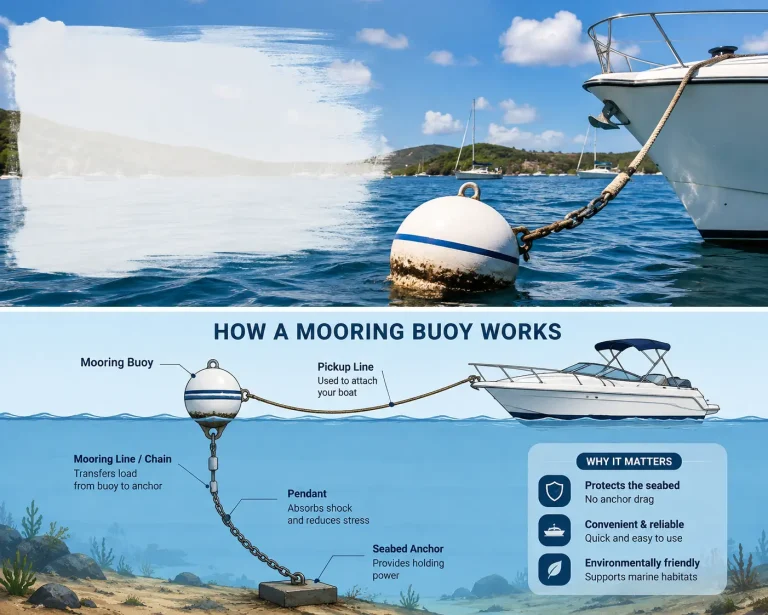
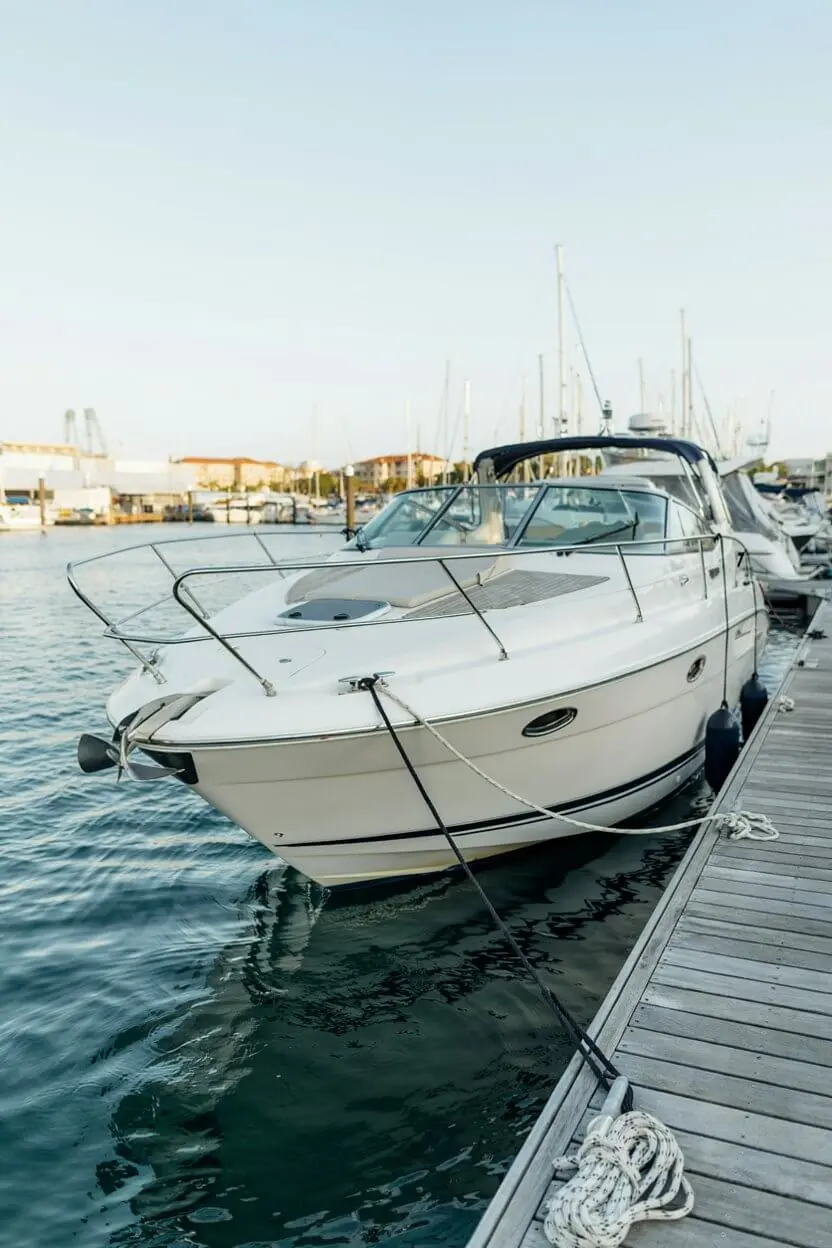
Boat mooring lines are ropes used to hold a boat securely in position. Dock lines are commonly used for temporary or permanent docking, while mooring lines can also refer to lines used with mooring systems and buoys.
A typical docking setup uses bow lines, stern lines, and spring lines. Each line controls a different direction of movement and helps keep the boat stable alongside the dock.
The correct line must handle the boat’s weight and the loads created by wind, waves, wakes, current, and tide.
What Is the Best Material for Boat Mooring Lines?
Nylon is the most common choice for recreational boat mooring lines because it is strong, flexible, and elastic. Its stretch helps absorb sudden loads instead of transferring every shock directly to the boat and dock hardware.
| Material | Main Characteristic | Best Use |
|---|---|---|
| Nylon | Strong and stretchy | General mooring and docking |
| Polyester | Low stretch and good UV resistance | Situations needing dimensional stability |
| Polypropylene | Lightweight and floats | Specialized applications |
For most docking applications, nylon provides the best combination of strength and shock absorption. Material selection should still account for exposure, abrasion, and the specific docking environment.
Choosing the right mooring line is only one part of preparing your boat. If you’re planning your overall boat purchase and financing, explore Boat Financing Guide for a broader look at the costs involved.
Three-Strand vs Double-Braid vs Single-Braid Mooring Lines
Three-strand nylon is economical, flexible, highly stretchable, and easy to splice. It is a practical choice for general docking and mooring.
Double-braid nylon has a braided core and cover, providing strong performance, smooth handling, and good flexibility. It is a popular choice for everyday dock lines.
Single-braid and 8-plait/Brait constructions serve more specialized needs. 8-plait provides strong shock absorption and abrasion resistance, while larger single-braid designs can provide high strength with easy handling.
| Construction | Main Advantage | Best Use |
|---|---|---|
| Three-strand | Stretch and low cost | General docking |
| Double-braid | Smooth handling | Everyday dock lines |
| 8-plait/Brait | Shock absorption and abrasion resistance | Higher-load applications |
| Single-braid | Strength and handling | Larger boats/specialized use |
Choose construction based on load, stretch, handling, splicing needs, and docking conditions not simply price.
What Size Mooring Line Do You Need?
Mooring line diameter should match the boat’s length, weight, and docking conditions. Boat leLine diameter should account for boat length, displacement, exposure, and expected loads. A common starting guideline is approximately 1/8 inch of diameter for every 9 feet of boat length, but practical minimum sizes and manufacturer recommendations should also be considered.
| Boat Length | Common Starting Diameter |
|---|---|
| Up to 27 ft | 3/8 in |
| 28–31 ft | 7/16 in |
| 32–36 ft | 1/2 in |
| 37–45 ft | 5/8 in |
| 46–54 ft | 3/4 in |
| 55–63 ft | 7/8 in |
| 64–72 ft | 1 in |
For a heavy boat, exposed slip, strong surge, or frequent wake action, consider sizing up rather than relying only on boat length. West Marine specifically recommends using the table as a starting point and increasing diameter for heavier boats or exposed locations.
Boat length gives you the starting size; displacement and docking conditions determine whether you need more capacity.
How Long Should Boat Mooring Lines Be?
Line length depends on the boat length, dock layout, cleat positions, and whether the lines are transient or permanent. For transient docking, a useful starting point is about two-thirds of the boat’s length for bow and stern lines, while spring lines can be approximately the boat’s length.
| Line Type | Starting Length |
|---|---|
| Bow Line | About 2/3 boat length |
| Stern Line | About 2/3 boat length |
| Spring Line | About boat length |
| Permanent Lines | Measure to fit the slip |
Permanent dock lines should be fitted to the actual slip rather than blindly following a ratio. Extra length may be useful for transient docking because dock cleat locations vary.
Use ratios as a starting point for temporary docking, but measure permanent lines against the actual boat and slip.
How Many Mooring Lines Does a Boat Need?
A basic docking arrangement commonly uses two bow lines, two stern lines, and two spring lines. Larger boats, exposed locations, or complex dock layouts may require additional lines.
| Line | Primary Function |
|---|---|
| Bow LineA common recreational docking setup uses six lines: two bow lines, two stern lines, and two spring lines. This provides control at both ends while the spring lines limit forward and backward movement. Line Purpose 2 Bow Lines Control forward movement 2 Stern Lines Control rearward movement 2 Spring Lines Limit fore-and-aft movement Larger boats, exposed slips, unusual dock layouts, or severe weather may require additional lines or a more specialized mooring arrangement. Six lines are a useful baseline for many recreational boats, but the correct setup depends on the vessel and docking environment. |
Controls forward movement |
| Stern Line | Controls rearward movement |
| Spring Line | Limits forward and backward movement |
The exact setup depends on boat size, dock design, weather exposure, and available cleats. A larger or frequently exposed boat needs a more robust system than a small boat in a protected marina.
How to Protect and Maintain Mooring Lines
Inspect mooring lines regularly for chafe, cuts, flattened sections, severe fuzzing, UV deterioration, stiffness, and other visible damage. Replace a line when wear has significantly reduced its strength or the construction is visibly compromised.
Use chafe protection where lines repeatedly contact cleats, chocks, pilings, or other abrasive surfaces. Rinse lines when needed, allow them to dry, and store them away from unnecessary sunlight and contamination.
Replace a line immediately when it shows serious abrasion, broken fibers, melted sections, major cuts, or other damage that could compromise its load-bearing ability.
Boat Mooring Lines Buying Checklist
Before buying mooring lines, check these specifications:
- Material: Nylon is the common choice for general docking.
- Construction: Compare three-strand and double-braid based on handling and application.
- Diameter: Match the boat’s size, weight, and exposure.
- Length: Measure the actual dock setup when possible.
- Splice: Pre-spliced lines simplify attachment to suitable hardware.
- Chafe Protection: Add protection where lines contact abrasive surfaces.
- Use Case: Choose differently for transient and permanent docking.
The best mooring line is not simply the strongest or most expensive option. It is the line whose material, construction, diameter, length, and protection match your boat and docking conditionsOnce you’ve estimated your financing needs, you can use Loan Calculator to estimate your monthly payment before comparing boat costs and financing options.
Frequently Asked Questions About Boat Mooring Lines
What is the best rope for boat mooring?
Nylon is generally the preferred material for recreational boat mooring because it combines strength, flexibility, and stretch. Its elasticity helps absorb shock loads created by movement at the dock.
What size dock line do I need?
Start with the boat’s length, then consider displacement and exposure. A commonly used guideline is about 1/8 inch of diameter per 9 feet of boat length, with heavier or exposed boats potentially requiring larger lines.
How long should boat mooring lines be?
The required length depends on boat size, dock layout, attachment points, and whether the lines are used permanently or temporarily. Permanent lines should ideally be measured for the specific slip.
How many dock lines should I use?
A basic setup commonly includes two bow lines, two stern lines, and two spring lines. Larger boats or exposed docking locations may require additional lines.
Which is better: three-strand or double-braid?
Three-strand nylon is economical, flexible, and easy to splice. Double-braid provides smooth handling and strong performance. The better option depends on your docking setup and priorities.
Are pre-spliced mooring lines worth buying?
Pre-spliced lines are convenient because they come with finished eye splices and can be attached quickly to suitable cleats or hardware. They are useful when you want consistent, ready-to-use lines without making your own splice.
Can I use polypropylene for boat mooring lines?
Polypropylene is lightweight and floats, but it generally offers less durability and UV resistance than nylon. It is better suited to limited or temporary applications than long-term mooring.
How often should I replace boat mooring lines?
There is no universal replacement interval. Inspect lines regularly and replace them when you see significant fraying, chafe, stiffness, UV damage, or compromised fibers.
Is nylon better than polyester for dock lines?
Nylon is generally preferred when stretch and shock absorption are important. Polyester offers lower stretch and strong UV and abrasion resistance, making it useful where those properties matter.

Michael Carter is a financial research writer specializing in vehicle financing, loan calculations, interest rates, and consumer budgeting. He creates practical, easy-to-understand resources that help readers make more informed financing decisions.