
What Is a Mooring Buoy? How It Works, & How to Use It
A Mooring Buoy can save you the hassle of anchoring, but choosing the right buoy and securing your boat correctly matters. Learn how the mooring system, pickup line, pendant, and seabed anchor work together, where mooring buoys are commonly found, and what to check before tying up safely.
A mooring buoy is part of a permanent mooring system that typically connects a surface buoy to an underwater mooring line, chain, pendant, and seabed anchor. Its suitability depends on the boat size, mooring capacity, water depth, wind, current, and local boating regulations, so always verify the buoy’s markings and usage restrictions before securing your boat.
What Is a Mooring Buoy?
What Does a Mooring Buoy Look Like?
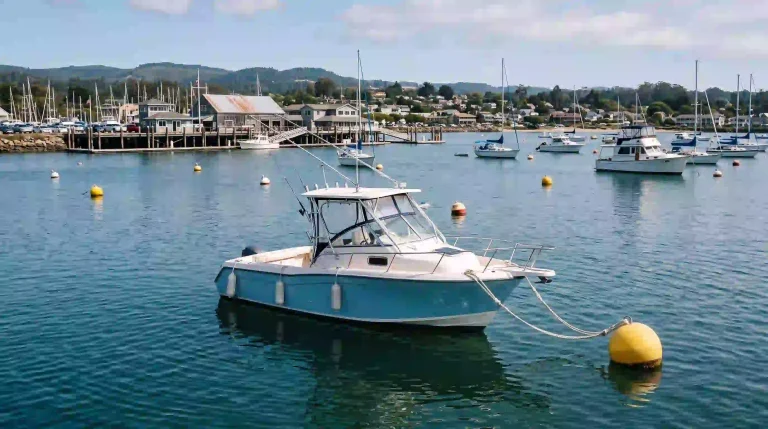
Mooring buoys vary by location, but many are spherical or cylindrical and have a pickup line or attachment point. Do not identify a buoy by shape or color alone; check local markings and regulations before securing a boat.
A mooring buoy, often called a mooring ball, is a floating attachment point connected to a permanent mooring system on the seabed. It lets a boat secure to an established mooring instead of deploying its own anchor. Mooring systems are common in marinas, designated mooring fields, and environmentally sensitive waters.
Mooring suitability is only one part of boat ownership. If you’re comparing boats by budget, use the boat loan calculator to estimate monthly financing costs before making a purchase.
What Is a Mooring Buoy Used For?
A mooring buoy provides a designated place to secure a boat without dropping an anchor. In protected marine areas, moorings can also reduce anchor and chain damage to coral reefs and other sensitive seabed habitats.
How Does a Mooring Buoy Work?
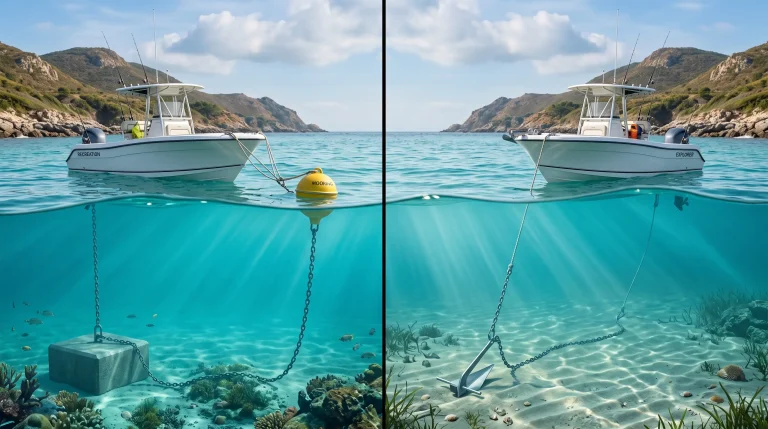
A mooring buoy transfers the boat’s load through the buoy, mooring line or pendant, underwater hardware, and a permanent seabed anchor. The buoy floats at the surface while the anchor system holds the entire assembly in position.Mooring buoys are only one type of boat mooring system. The right setup depends on factors such as water depth, boat size, location, and the type of seabed.
Parts of a Mooring System
The main components include the surface buoy, pickup line, mooring pendant, underwater connection hardware, and seabed anchor. Some systems use pin, U-bolt, or other engineered anchors depending on the bottom conditions.
How the Boat Load Reaches the Seabed
When a boat is secured, tension travels from the boat’s attachment point through the mooring system to the seabed anchor. This fixed connection prevents the boat from drifting away while allowing controlled movement around the mooring.
Where Can You Find Mooring Buoys?
Mooring buoys are commonly found in marinas, designated mooring fields, harbors, marine sanctuaries, national parks, and protected coastal areas. Availability and use conditions depend on the managing authority.
Public Mooring Fields
Public mooring fields provide designated spaces for multiple boats. Availability, fees, vessel limits, and maximum stay periods depend on the managing authority.
Marine Parks and Protected Areas
Mooring systems are especially useful where anchoring could damage sensitive habitats. NOAA uses mooring buoys in the Florida Keys to reduce anchor damage to coral reefs and seagrass.
How to Find Mooring Buoy Locations
Check official park, sanctuary, marina, or local boating maps before traveling. A buoy’s physical presence does not guarantee availability. Some moorings are assigned, reserved, fee-based, or subject to time limits. Official location maps can also show designated mooring fields and restrictions.
How to Use a Mooring Buoy Safely
Approach the buoy slowly, preferably with the pickup line visible to the person handling the bow line. Use a boat hook if necessary, retrieve the designated pickup line, and secure the boat to the proper attachment point specified for that mooring system.
Step-by-Step Pickup
- Approach at idle speed.
- Position the boat safely near the buoy.
- Retrieve the pickup line with a boat hook.
- Pass your mooring line through the designated attachment point.
- Secure it to a strong bow cleat or approved fitting.
- Check the connection before leaving the helm.
What to Check Before Leaving the Boat
Inspect the buoy, pickup line, and visible hardware for serious wear or damage. Do not use a mooring with a broken or badly frayed line. NOAA specifically asks boaters to report damaged or missing mooring equipment.
Can Any Boat Use a Mooring Buoy?
No. A mooring buoy may have limits based on boat length, weight, mooring capacity, weather, water conditions, and local regulations. Physical compatibility does not automatically mean legal permission to use it.
Boat Size and Mooring Limits
Always check the posted or official vessel restrictions. For example, Biscayne National Park limits its mooring balls to vessels up to 45 feet unless specifically authorized and limits use to four hours.
Weather, Wind, and Current
Strong wind, waves, and current increase loads on the boat and mooring system. If conditions exceed the system’s intended limits, move to a safer approved location rather than relying on the buoy.
Local Rules and Time Limits
Rules vary by location. Some moorings are free and first-come, first-served, while others charge fees or restrict overnight use. Florida Keys National Marine Sanctuary, for example, states that its sanctuary moorings are first-come, first-served and intended for short-term use.
Mooring Buoy vs Anchor: Which Should You Use?
| Factor | Mooring Buoy | Boat Anchor |
|---|---|---|
| Setup | Attach to existing system | Deploy your anchor |
| Seabed impact | Usually lower | Can damage sensitive habitat |
| Location | Designated areas | Suitable anchorage required |
| Convenience | Faster once secured | More setup required |
| Restrictions | Local rules apply | Local anchoring rules apply |
A mooring buoy is usually the better choice when an approved mooring is available, especially in protected areas where anchoring is restricted or environmentally harmful.
Mooring Buoy vs Navigation Buoy
A mooring buoy secures a boat, while a navigation buoy provides navigational information or marks a waterway feature. Their colors and markings can vary by jurisdiction, so never rely on appearance alone.
How to Tell Them Apart
Do not rely on color alone because buoy markings differ between locations. Read the buoy markings and consult local navigation information before attaching a line.
Which Buoys Can You Tie Your Boat To?
Only use a buoy clearly designated as a mooring point. In the Florida Keys, for example, sanctuary mooring buoys are white spherical buoys with a blue stripe.
Common Mooring Buoy Mistakes to Avoid
Do not use a mooring if the buoy, pickup line, or visible hardware appears damaged, badly worn, or disconnected. Also avoid a mooring when your boat exceeds its posted limits or weather conditions make the system unsuitable.
Using a Damaged Mooring
Avoid moorings with visibly damaged or badly worn components. Report damaged equipment to the responsible authority instead of risking your boat.
Approaching Too Fast
Approach slowly enough to control the boat and avoid hitting the buoy or another vessel. Prepare the bow line and boat hook before reaching the mooring.
Ignoring Boat or Time Limits
Check vessel-size, occupancy, and time restrictions before securing your boat. Local rules can be stricter than general boating practices.
Mooring in Unsafe Weather
A mooring is not automatically safe in every condition. Consider wind, waves, current, and the condition of the mooring before staying attached.
Frequently Asked Questions About Mooring Buoys
Can you anchor next to a mooring buoy?
Local rules determine whether anchoring near a mooring is permitted. Some protected areas prohibit anchoring within specified distances or prohibit anchoring when a mooring is available. Biscayne National Park, for example, prohibits anchoring within 300 feet of its mooring buoys.
Can you sleep overnight on a mooring buoy?
Not necessarily. Mooring duration varies by location. Some systems allow only short-term daytime use, so check the local rules before staying overnight.
Are mooring buoys free?
Some public moorings are free, while private marinas and managed anchorages may charge fees. Florida Keys sanctuary moorings are available at no cost, but other moorings in the Keys may charge.
Who maintains mooring buoys?
The responsible marina, park, sanctuary, or local authority maintains its own mooring system. Maintenance can include inspections, cleaning, line replacement, and anchor inspection.
What happens if a mooring buoy is missing?
Do not assume an absent buoy means the underlying mooring is usable. Report missing or damaged equipment to the responsible authority and use an approved alternative location.

Michael Carter is a financial research writer specializing in vehicle financing, loan calculations, interest rates, and consumer budgeting. He creates practical, easy-to-understand resources that help readers make more informed financing decisions.