Can You Take Over Boat Payments?
Yes, you can take over someone else’s boat payments, but only if the lender agrees to it in writing. This is called a loan assumption. Most marine lenders do not allow it as standard practice, so the first step is always to ask the lender, not the seller. If the lender says no, you cannot take over the loan, and any informal deal where you simply pay the seller each month leaves the loan, and the legal risk, in the seller’s name.
Buyers ask about this for good reasons. The seller’s loan may carry a lower interest rate than a new loan today, the remaining balance may be smaller than the price of a similar boat, and the purchase can move faster than a new application. Those benefits are real, but they only exist in a formal assumption. An informal deal gives you the payments without any of the protection.
What taking over boat payments actually means
There are three different arrangements, and buyers often confuse them.
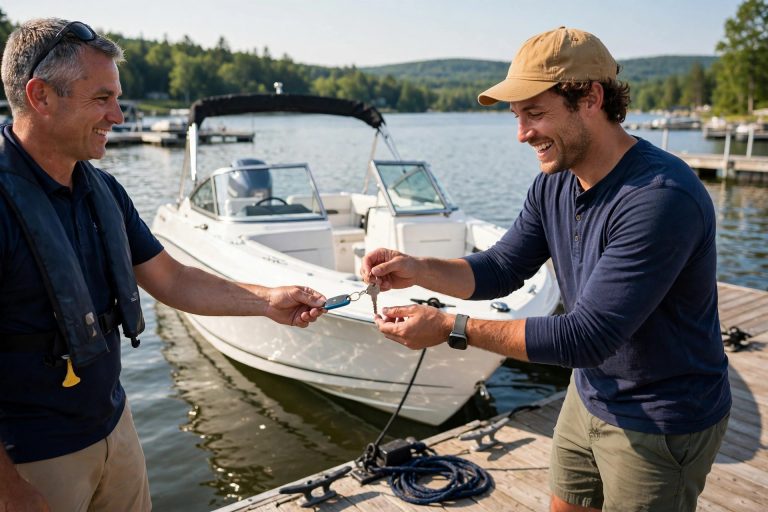
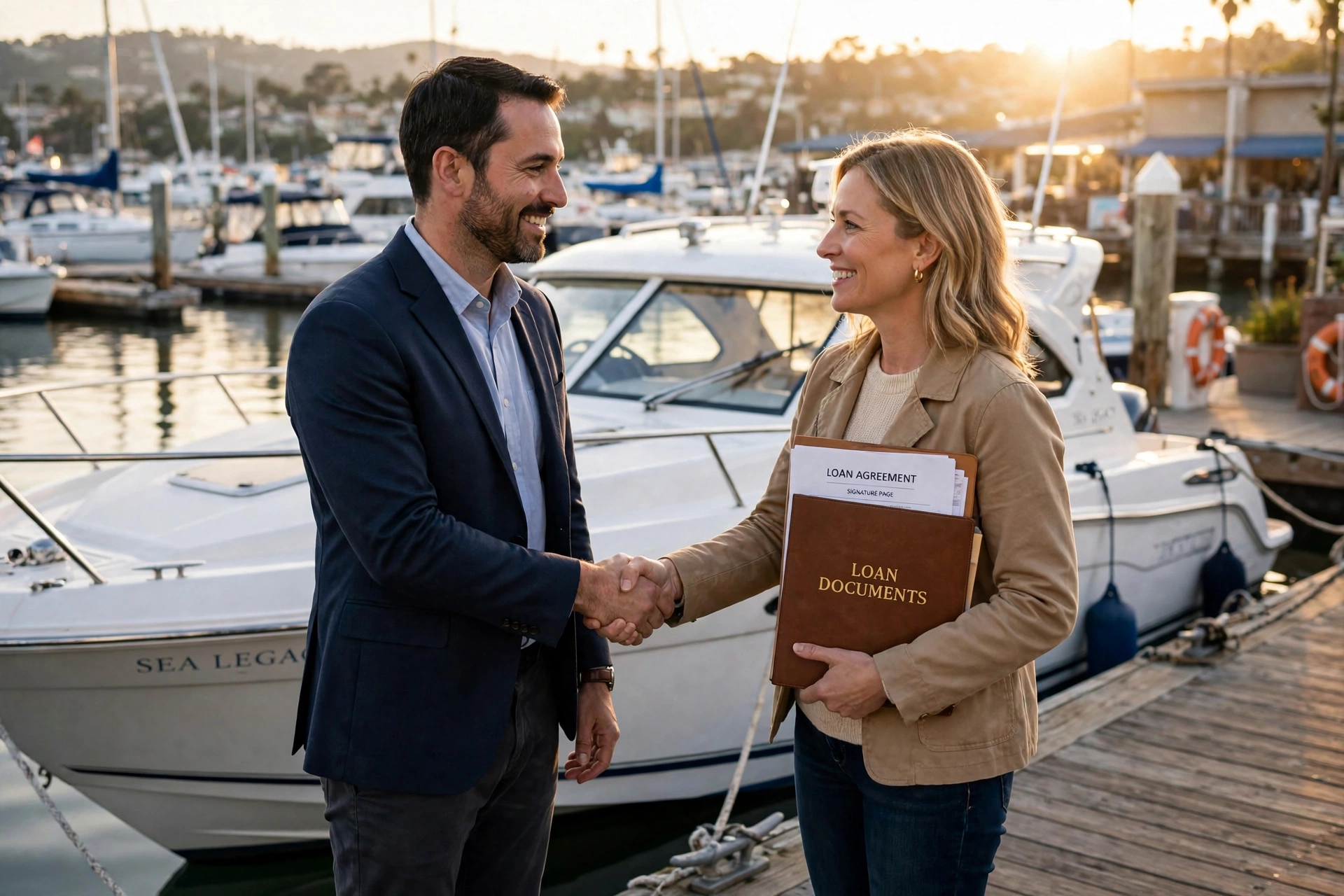
A formal loan assumption is the proper route. The lender checks your credit and income, approves you as the new borrower, and signs an agreement that transfers the loan to you. The title moves into your name with the lender’s lien noted on it, and you make payments directly to the lender.
A novation goes one step further. The lender replaces the seller with you entirely and releases the seller from the loan. This is the cleanest version for both sides, but it is also the rarest, because the lender gives up its claim against the original borrower.
An informal takeover is not a transfer at all. You pay the seller each month, the seller pays the lender, and the loan stays in the seller’s name. You do not own the boat in the lender’s eyes, and the title cannot move into your name until the loan is paid off in full. This is the arrangement that causes most of the trouble in this area, and it is covered in detail below.
Loan assumption is well known in home mortgages, but it is rare in boat loans. Most boat loan contracts include a due-on-sale clause, which says the full balance becomes due when the boat changes hands. That clause is the reason most takeovers need the lender’s permission first.
Why most lenders say no
A lender approved the seller, not you. Your credit history, your income, and your debts are unknown to them, and they have no reason to accept a new borrower without checking.
The boat is the collateral for the loan. If the new borrower stops paying, the lender must repossess and sell the boat to recover its money. A lender would rather make that decision about a borrower it has checked than about a stranger.
Some lenders do allow assumptions. They are more common in dealer-originated retail contracts, some credit union loans, and high-end yacht finance than in everyday personal boat loans. But even where assumption is possible, it is never automatic. The lender decides case by case, and the answer is often no.
The formal assumption process, step by step
If you want to try the formal route, work through these steps in order.
First, ask the seller for the loan details. You need the lender’s name, the remaining balance, the interest rate, the remaining term, and whether the contract allows assumption at all. If the seller will not share this information, walk away. You cannot take over a loan you cannot see.
Second, contact the lender together with the seller. Ask in writing whether assumption is possible and what the requirements are. A verbal yes from a sales person is not enough. You need the lender’s written position before you spend money on a survey or a deposit.
Third, apply. Expect a credit check, proof of income, and possibly a survey or valuation of the boat. The lender will treat you much like a new borrower, because that is what you are. If your credit or income is weaker than the seller’s, the lender may refuse or change the terms.
Fourth, agree the price with the seller, and keep it separate from the loan balance. The boat’s value and the loan balance are two different numbers. If the price is higher than the balance, you pay the seller the difference. If the balance is higher than the value, think very carefully, because you would be taking on more debt than the boat is worth.
Fifth, sign the assumption agreement and pay any fee the lender charges. Read the agreement before you sign it, and check whether the seller is released from the loan or remains liable if you default. That one detail matters a great deal.
Sixth, transfer the title with the lender’s lien noted on it, and arrange insurance in your own name from the first day of ownership. Do not take the boat out before the insurance is in place.
Seventh, set up your own payments directly with the lender, and confirm the first payment date in writing.
What it costs
A formal assumption is usually cheaper than a new loan, but it is not free. Lenders often charge an assumption fee, and the amount varies by lender and by the size of the loan. Ask for the fee in writing before you commit.
The lender may also ask for a survey or valuation, especially if the boat is older or the loan is large. You may also pay title, documentation, and registration fees to move the boat into your name. Insurance is a separate cost, and it must be in place from day one.
One cost buyers miss is a possible rate change. Some lenders reprice the loan when a new borrower takes over, so the rate you inherit may not be the rate the seller had. Confirm the rate in the assumption agreement, not in the seller’s old paperwork.
Finally, there is the difference between the price and the balance, which you pay to the seller. Work this figure out before you agree anything, and make sure you have the money available.

The risks of an informal takeover
An informal takeover, where you pay the seller and the loan stays in the seller’s name, is the arrangement to avoid. The risks fall on both sides.
The seller remains legally responsible for the loan. If you stop paying, the seller’s credit is damaged and the boat can be repossessed, even though you are the one using it. The seller also remains liable for the full balance if the boat is repossessed and sold for less than the loan.
You cannot get the title until the loan is paid off. That means you cannot prove you own the boat, you cannot sell it, and you cannot use it as collateral for anything else. If the seller has other debts, a creditor may come after the boat, because on paper it still belongs to the seller.
Insurance is another gap. A policy usually covers the named owner and the operators listed on it. If you are not the named owner, you may not be covered at all, and a claim could be refused. The lender can also call the full loan due if it learns of the transfer, because most contracts forbid it.
If the seller dies, goes bankrupt, or simply changes their mind, you have very little protection. You have been paying for a boat that you do not legally own. No saving on the monthly payment is worth that position.
When a takeover makes sense, and when to walk away
A takeover makes sense when the rate is clearly lower than a new loan, the balance is close to the boat’s value, the lender agrees in writing, the seller is released from the loan, and the boat has been surveyed and is in good shape. In that case you save money and time, and both sides end up with a clean deal.
Walk away when the lender refuses, when the balance is far above the boat’s value, when the seller wants a large cash payment on top of an already high balance, when a survey is not allowed, when there is pressure to skip paperwork, or when the title has problems. Pressure to move fast is itself a warning sign. A genuine deal survives a survey and a title check.
Alternatives if the lender says no
The normal route in a private sale is a new loan in your name that pays off the seller’s loan at closing. Our guide to how to finance a boat from a private seller explains that process, and it is the route most buyers end up taking. It is slower than an assumption, but it gives you a clean title and a loan in your own name.
If you already own a boat and your circumstances change, refinancing a boat loan can be an option later. If the seller’s situation is the problem, our guide to selling a boat with a loan on it explains the seller’s side of the same transaction.
Before you apply for any loan, read the boat loan requirements so you know what documents the lender will ask for. When you are ready to compare the numbers, the boat loan calculator on our homepage shows the monthly payment, the total interest, and the full cost of a loan side by side.
Checklist before you agree to anything
Do not hand over money until every item on this list is done. Lender approval in writing. A written assumption agreement that states the rate, the term, the fee, and whether the seller is released. A title check that shows the lien position clearly. A survey by an independent surveyor. Insurance bound in your name from day one. The price versus the balance worked out in writing. And an exit plan for what happens if you need to sell the boat later.
A takeover can be a smart way to buy a boat, but only when the lender, the paperwork, and the numbers all line up. If any one of them does not, a new loan is the safer choice, and it is the choice most buyers should make.

Michael Carter is a financial research writer specializing in vehicle financing, loan calculations, interest rates, and consumer budgeting. He creates practical, easy-to-understand resources that help readers make more informed financing decisions.