Aluminum vs Fiberglass Boats: Which Is Better?
Aluminum vs fiberglass boats can be difficult to compare when weight, durability, ride comfort, towing, maintenance, and cost all point in different directions. Choosing the wrong hull material can mean paying more for features you do not need, struggling with towing, or sacrificing comfort in the water.
The solution is to match the hull material to where and how you use the boat. Aluminum is often practical for lightweight fishing, shallow water, and frequent trailering, while fiberglass can suit buyers who prioritize ride comfort, stability, and more complex hull and deck designs. The right choice comes from comparing the material, hull design, water conditions, budget, and towing needs together.
Quick answer: which is better, fiberglass or aluminum? Aluminum is usually better if you fish shallow lakes and rivers, trailer often, and want a lower price and a lighter tow. Fiberglass is usually better if you boat on big, choppy water or in saltwater and want a smoother, drier ride and more deck layout options.
Aluminum vs Fiberglass Boats: What Is the Main Difference?
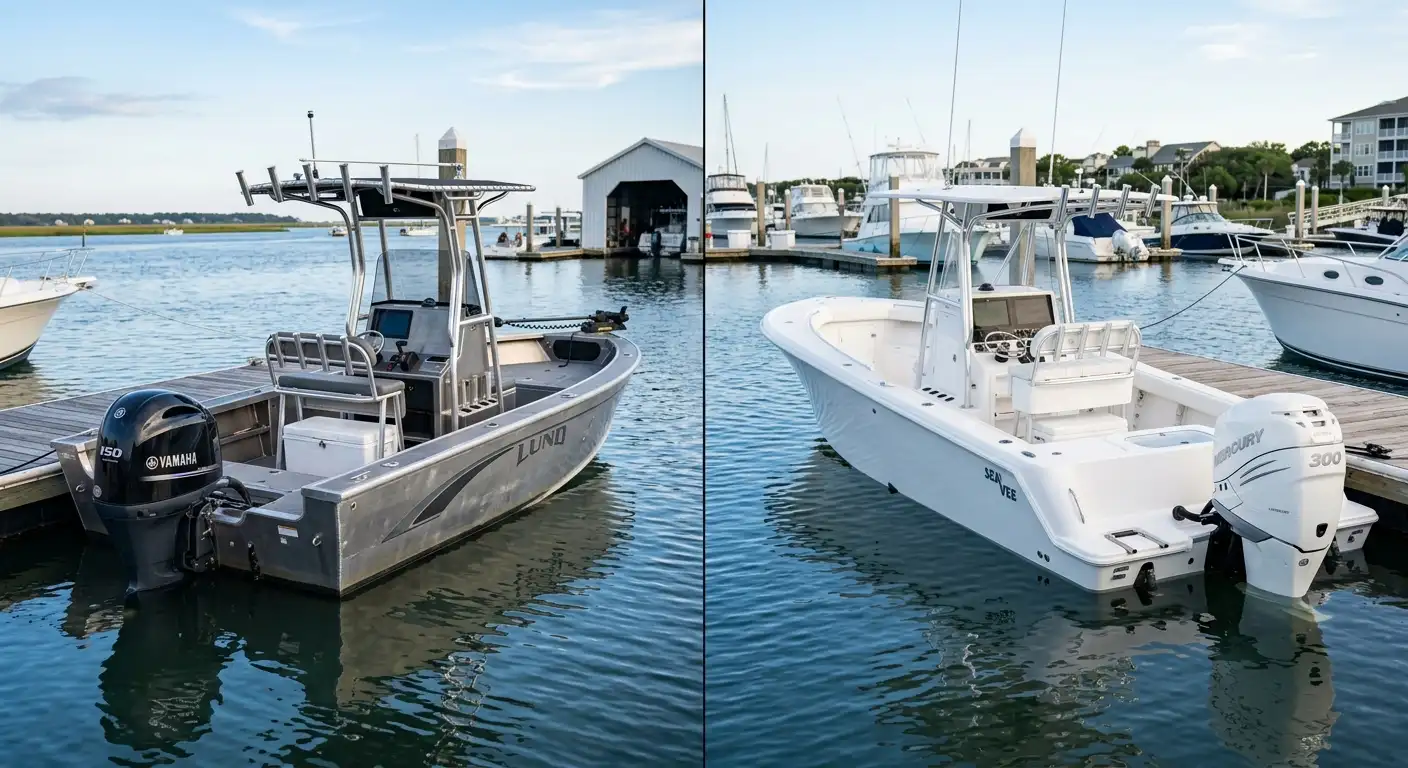
The main difference is the hull material and construction method. Aluminum boats use formed aluminum alloy panels, commonly joined by welding or riveting. Fiberglass boats use fiberglass and resin to create a molded composite hull.
Material affects weight, impact behavior, maintenance, repair, ride characteristics, and manufacturing flexibility. However, the material does not determine performance by itself. Hull design, deadrise, draft, freeboard, size, engine, and intended use can significantly change how a boat performs.
Aluminum’s lower weight can make a boat easier to trailer, launch, retrieve, and maneuver. Fiberglass allows manufacturers to create complex hull shapes, integrated storage, livewells, seating, and other molded features.
Aluminum vs Fiberglass Boats: Key Differences
| Factor | Aluminum Boats | Fiberglass Boats |
|---|
| Weight | Usually lighter | Usually heavier |
| Purchase cost | Often lower | Often higher |
| Towing | Usually easier | May require greater tow capacity |
| Impact behavior | Often dents rather than cracks | Can crack, chip, or require composite repair |
| Ride quality | Highly dependent on hull design | Often smoother in comparable rough-water designs |
| Maintenance | Wash-down and corrosion control | Gelcoat, finish, and composite care |
| Repair | Often repairable through aluminum welding | Structural repairs can require composite specialists |
| Saltwater | Requires corrosion and anode management | No metal-hull corrosion, but hardware still needs care |
| Hull design | Strong practical designs across many fishing applications | Broad molded-hull design flexibility |
| Performance | Highly dependent on hull, weight, and engine | Highly dependent on hull, weight, and engine |
Aluminum’s weight advantage can also reduce the power needed for similar performance, while fiberglass’s additional weight can improve stability and seakeeping in some conditions.
Which Is Better for Fishing: Aluminum or Fiberglass?
The purchase price is only one part of boat ownership. Compare the complete package: boat, engine, trailer, fuel, insurance, storage, maintenance, and potential repairs.
Aluminum
- Usually costs less than a comparable fiberglass boat.
- Lower weight can reduce towing and launching demands.
- A smaller tow vehicle may be sufficient for some aluminum packages.
- Minor impact damage may be repairable through dent correction or welding.
- Saltwater use requires corrosion prevention, proper electrical isolation, and anode inspection.
Fiberglass
- Usually costs more for a comparable boat.
- Greater weight can increase trailer and tow-vehicle requirements.
- Gelcoat requires cleaning and periodic cosmetic maintenance.
- Significant impact damage can require specialized composite repair.
- Molded construction allows integrated seating, storage, livewells, fish boxes, and other features.
The complete boat package matters more than hull material alone. A heavier fiberglass boat may require a different trailer and tow vehicle than a lighter aluminum model, while engine size, fuel capacity, and onboard equipment can substantially change total weight.
Aluminum fishing boats are particularly common where light weight, shallow-water access, and resistance to minor impacts are important. Fiberglass boats can be advantageous in open, choppy water because their additional weight and available hull designs can produce a smoother, more stable ride.
For a broader comparison of fishing platforms, see Fishing Boat Types.

Aluminum vs Fiberglass: Cost, Maintenance and Towing
The purchase price is only one part of boat ownership. Weight, repairs, maintenance, transportation, and storage can also affect the long-term cost.
Aluminum
- Usually costs less than a comparable fiberglass boat.
- Lower weight can reduce towing demands.
- Easier to launch and retrieve.
- Minor impacts commonly produce dents rather than fiberglass-style cracks.
- Requires attention to corrosion, especially around fittings, fasteners, and electrical or metal components.
Fiberglass
- Usually costs more for comparable boats.
- Greater weight can require a larger tow vehicle.
- Gelcoat may require cleaning, polishing, and cosmetic maintenance.
- Impact damage can involve cracking or structural repair.
- Molded construction allows integrated seating, storage, livewells, tackle stations, and fish boxes.
Saltwater requires particular attention to aluminum corrosion and galvanic effects. Fiberglass avoids metal-hull corrosion, but its gelcoat and composite structure still require proper maintenance.
Before deciding on a boat, compare the purchase price with the financing cost. You can estimate your boat loan payments to see how the purchase fits your budget.
What Each Hull Costs to Finance
For comparable size and features, an aluminum boat usually costs less than a fiberglass one, and that price gap follows you through the whole loan. Here is an example comparing a $35,000 boat with a $50,000 boat, each with 10% down at 8.5% APR over 15 years:
| Example boat price | Amount financed | Monthly payment | Total interest |
|---|---|---|---|
| $35,000 | $31,500 | about $310 | about $24,335 |
| $50,000 | $45,000 | about $443 | about $34,764 |
In this example, the $15,000 price difference turns into about $133 more per month and roughly $10,400 more in interest. Towing matters too: a heavier fiberglass hull may need a bigger tow vehicle and more fuel, so price those in. Run your own quotes in the boat loan calculator before you decide.
Disadvantages of Fiberglass and Aluminum Boats
Disadvantages of Fiberglass Boats
- Weight: heavier hulls need more horsepower, more fuel, and a stronger tow vehicle.
- Price: usually higher than aluminum for a comparable size.
- Impact damage: hard hits can crack or gouge the hull, and repairs need proper fiberglass and gelcoat work.
- Gelcoat upkeep: the finish needs regular washing and waxing to avoid oxidation and fading.
- Blistering and core issues: hulls kept in the water can develop blisters, and older boats with wooden stringers or transoms can rot if water gets in.
Disadvantages of Aluminum Boats
- Rougher ride: lighter hulls tend to pound and feel louder in chop.
- Saltwater corrosion: aluminum needs sacrificial anodes, good paint, and freshwater rinsing, especially where dissimilar metals touch.
- Dents: impacts leave dents that are harder to hide than a fiberglass cosmetic repair.
- Rivet leaks: riveted hulls can develop small leaks at the rivets over time. Welded hulls avoid this.
- Fewer layout options: complex hull shapes and molded deck features are easier to build in fiberglass.
Which Boat Material Should You Choose?
Use the operating environment first, then compare material.
Choose aluminum if you prioritize:
- Lower weight
- Easier towing
- Easier launching
- Shallow-water access
- Frequent trailering
- Lower initial cost
- Practical fishing use
- Greater tolerance for minor impacts
Choose fiberglass if you prioritize:
- Smoother ride characteristics
- Stability in larger or rougher water
- Complex hull shapes
- Integrated fishing features
- Refined fit and finish
- Fishing combined with recreation
- Larger-water applications
The key decision is not simply “Which material is stronger?” Compare the complete boat: hull design, size, deadrise, construction quality, equipment, engine, tow requirements, and intended water conditions. A well-designed aluminum boat can outperform a poorly matched fiberglass boat for a particular use, and the reverse can also be true.
If financing is part of the purchase decision, compare available boat financing options before selecting a model.
Frequently Asked Questions
Is an aluminum boat always better for shallow water?
No. Aluminum boats are common in shallow-water fishing because many models are lightweight and have shallow drafts, but hull design determines actual draft and operating capability. A fiberglass boat designed specifically for shallow water can also perform well.
Do aluminum boats corrode in saltwater?
Yes, aluminum can experience galvanic or other corrosion if saltwater exposure, electrical systems, dissimilar metals, or anodes are not properly managed. Regular freshwater rinsing, correct electrical isolation, and anode inspection are important for saltwater use.
Does fiberglass always ride better than aluminum?
No. Fiberglass often provides a smoother ride because of hull weight and the complex shapes available through molded construction, but deadrise, hull geometry, weight distribution, and construction also determine ride quality.
Is aluminum easier to repair than fiberglass?
Certain aluminum hull damage can be repaired through metalwork or welding, while structural fiberglass damage may require composite repair and refinishing. The actual repair method depends on the damage and construction.
Which material is better for frequent trailering?
Aluminum is usually easier to trailer because comparable aluminum boats are often lighter. The complete package still matters, including engine, fuel, trailer, equipment, and cargo.
Which lasts longer: aluminum or fiberglass?
Neither material has a universal lifespan advantage. Longevity depends on construction quality, maintenance, corrosion control, storage, impact exposure, and whether the boat is operated within its design limits.

Michael Carter is a financial research writer specializing in vehicle financing, loan calculations, interest rates, and consumer budgeting. He creates practical, easy-to-understand resources that help readers make more informed financing decisions.