Center Console Boats Guide: Everything You Need to Know Before Buying
Center Console Boats Guide helps you choose the right boat for offshore fishing, family boating, inshore fishing, or watersports without making an expensive mistake. With so many boat sizes, Deep-V hull designs, outboard engine configurations, T-Tops, marine electronics, and seating layouts available, comparing models can quickly become overwhelming. This guide explains the key features, pros and cons, boat type comparisons, and expert buying tips, so you can confidently select a center console boat that matches your lifestyle, budget, and boating goals.
What Is a Center Console Boat?
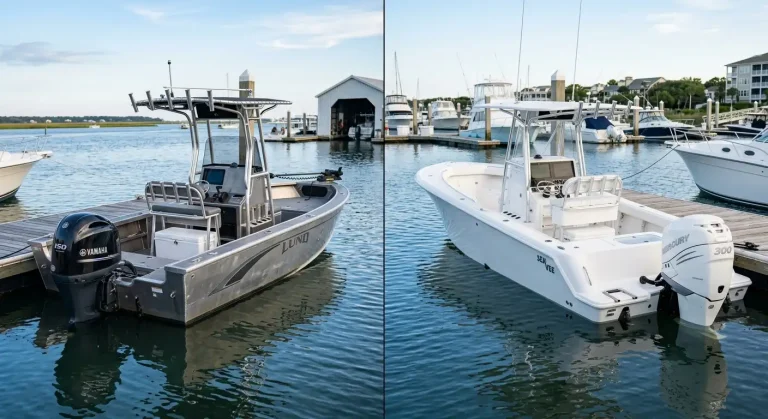
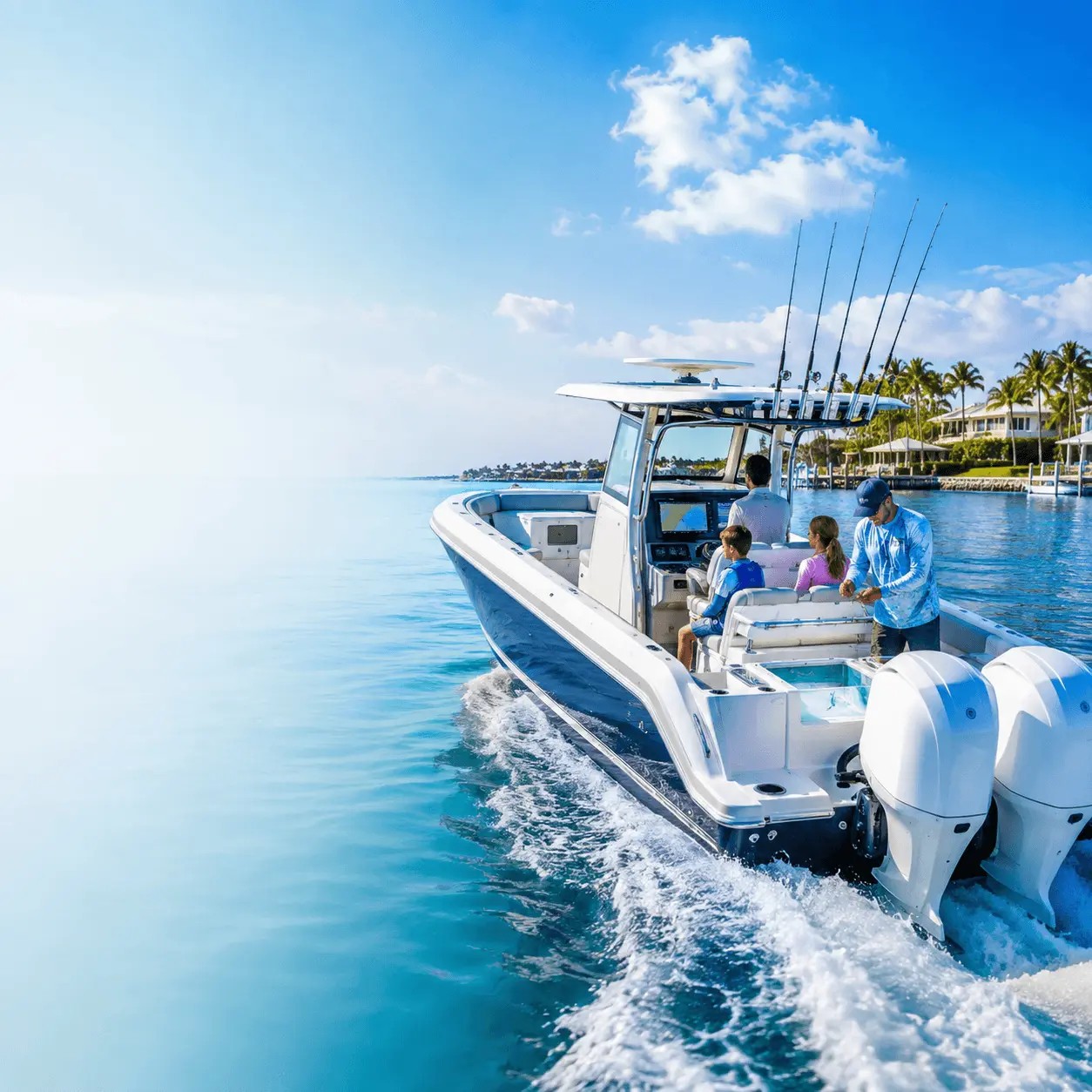
A center console boat is an open-deck boat with the helm console positioned in the center of the deck. This layout creates 360° deck access, allowing passengers to move freely around the boat. Most center console boats are powered by one or more outboard engines and are designed for offshore fishing, inshore fishing, family cruising, and recreational boating.
Unlike boats with side consoles or enclosed cabins, a center console maximizes usable deck space. The open layout improves visibility, simplifies movement while fishing, and provides flexibility for different boating activities. Although originally designed for anglers, modern center console boats also appeal to families who want a versatile and easy-to-operate boat.
Key Takeaway: A center console boat combines an open layout, center helm, and outboard power to support both serious fishing and recreational boating.
Key Features of Center Console Boats
The popularity of center console boats comes from their practical design rather than a single feature. Each component contributes to performance, safety, and versatility.
Essential Features
| Feature | Purpose | Why It Matters |
| Center Helm | Central steering position | Improves visibility and balance. |
| 360° Deck Access | Walkaround layout | Makes fishing and movement easier. |
| Outboard Engine | Primary propulsion | Provides speed, efficiency, and easier maintenance. |
| Deep-V Hull | Hull design | Delivers a smoother ride in rough offshore water. |
| T-Top | Overhead protection | Offers shade while leaving the deck open. |
| Livewell | Keeps bait alive | Essential for saltwater and offshore fishing. |
| Rod Holders | Stores fishing rods | Keeps gear organized and accessible. |
| Marine Electronics | GPS, fish finder, chartplotter | Improves navigation and fishing success. |
Not every boat includes every feature. Fishing-focused models typically include livewells, fish boxes, and multiple rod holders, while family-oriented models prioritize additional seating, storage, and comfort features.
Must-Have vs Optional Features
When comparing boats, focus on the features that match your boating style.
Must-Have Features
- Center helm
- Outboard engine
- Deep-V hull
- Reliable marine electronics
- Adequate storage
- Comfortable seating
Optional Features
- T-Top
- Premium audio system
- Extra livewells
- Additional fish boxes
- Swim platforms
- Luxury upholstery
Real-World Example
A family planning weekend cruising may value comfortable seating, shade from a T-Top, and integrated storage more than multiple bait tanks. In contrast, an offshore angler will likely prioritize a large livewell, extensive rod storage, powerful outboard engines, and advanced marine electronics.
Key Takeaway: The best center console boat is not the one with the most features—it’s the one with the features that match how you plan to use it.
Next: We’ll compare the advantages and disadvantages of center console boats to help you decide whether they’re the right choice for your needs.
Pros and Cons of Center Console Boats
Center console boats are popular because they combine offshore capability, fishing performance, and family-friendly versatility in one design. However, they are not the best choice for every boater. Understanding both the advantages and limitations helps you decide whether a center console boat fits your needs and budget.
Advantages
Excellent 360° Deck Access
The center helm creates an open walkaround layout, allowing unrestricted movement from bow to stern. This design is ideal for fighting fish, handling dock lines, or moving safely around the boat without obstacles.
Built for Offshore Performance
Many center console boats feature a Deep-V hull that cuts through rough water more smoothly than flatter hull designs. Combined with powerful outboard engines, they offer stability, speed, and confidence for offshore fishing and longer coastal trips.
Versatile for Multiple Activities
Although designed for anglers, modern center console boats support much more than fishing. They can be used for:
- Offshore fishing
- Inshore fishing
- Family cruising
- Island hopping
- Watersports
- Coastal exploration
One boat can serve different purposes throughout the year, making it a practical choice for many owners.
Easier Maintenance
Most center console boats use outboard engines, which are easier to inspect, service, and replace than many inboard systems. The open deck also simplifies cleaning after a day on the water.
Disadvantages
Limited Weather Protection
The open layout provides excellent visibility but offers less protection from rain, wind, and cold weather. A T-Top provides shade but does not replace an enclosed cabin.
Less Interior Space
Unlike cabin cruisers or walkaround boats, center console boats have little enclosed storage or sleeping space. They are designed for day trips rather than overnight boating.
Higher Initial Cost
Larger center console boats equipped with twin or triple outboard engines, advanced marine electronics, and premium fishing equipment can be expensive to purchase and operate.
Fuel Costs Increase with Size
Larger engines and offshore use generally consume more fuel than smaller recreational boats. Buyers should consider long-term operating costs, not just the purchase price.
Who Should Buy a Center Console Boat?
A center console boat is a good choice if you:
- Enjoy offshore or inshore fishing.
- Want one boat for both fishing and family recreation.
- Prefer an open, easy-to-move-around deck.
- Value speed, versatility, and modern marine technology.
Who Should Consider Another Boat Type?
You may prefer another boat if you:
- Frequently boat in cold or rainy conditions.
- Need overnight accommodations.
- Want maximum seating for large groups.
- Primarily cruise on calm inland lakes.
Decision Framework
| Your Primary Goal | Recommended Choice |
| Offshore fishing | Center Console |
| Family boating + fishing | Center Console |
| Overnight cruising | Cabin Cruiser |
| Casual lake recreation | Bowrider |
| Shallow-water fishing | Bay Boat |
Common Misconception
Many people believe center console boats are only for professional anglers. In reality, many modern models include comfortable seating, entertainment features, swim platforms, and family-friendly layouts that make them suitable for recreational boating as well.
Key Takeaway: Center console boats offer exceptional versatility, but they’re best suited for buyers who value open-deck performance over enclosed living space.
Center Console vs Other Boat Types
No single boat is perfect for every activity. Comparing a center console boat with other popular boat types helps you choose the design that best matches your boating lifestyle.
Side-by-Side Comparison
| Feature | Center Console | Bay Boat | Dual Console | Bowrider |
| Offshore Fishing | ⭐⭐⭐⭐⭐ | ⭐⭐⭐ | ⭐⭐ | ⭐ |
| Inshore Fishing | ⭐⭐⭐⭐ | ⭐⭐⭐⭐⭐ | ⭐⭐ | ⭐ |
| Family Cruising | ⭐⭐⭐⭐ | ⭐⭐⭐ | ⭐⭐⭐⭐⭐ | ⭐⭐⭐⭐⭐ |
| Watersports | ⭐⭐⭐ | ⭐⭐ | ⭐⭐⭐⭐⭐ | ⭐⭐⭐⭐⭐ |
| Rough Water Performance | ⭐⭐⭐⭐⭐ | ⭐⭐⭐ | ⭐⭐⭐ | ⭐⭐ |
| Open Deck Space | ⭐⭐⭐⭐⭐ | ⭐⭐⭐⭐ | ⭐⭐⭐ | ⭐⭐⭐ |
Center Console vs Bay Boat
Choose a center console boat if you regularly fish offshore or travel through rough coastal waters. Its Deep-V hull provides better stability and comfort in challenging conditions.
Choose a bay boat if you mainly fish shallow bays, estuaries, rivers, or flats where a shallower draft is more important than offshore capability.
Center Console vs Dual Console
A dual console boat offers additional passenger protection with two consoles and a windshield, making it a popular choice for families and watersports.
A center console boat provides better deck access, easier movement, and a layout optimized for fishing.
Center Console vs Bowrider
A bowrider prioritizes passenger seating, comfort, and recreational activities on calm lakes and inland waters.
A center console focuses on versatility, offshore performance, and fishing while still supporting family boating.
Which Boat Is Right for You?
| If You Mainly… | Best Boat Type |
| Fish offshore | Center Console |
| Fish shallow flats | Bay Boat |
| Cruise with family | Dual Console |
| Enjoy watersports | Bowrider |
| Need one boat for fishing and recreation | Center Console |
Expert Insight
Don’t choose a boat based only on appearance. Match the boat to where you’ll spend most of your time. Buying an offshore-ready center console for occasional lake trips—or a bowrider for regular offshore fishing often leads to unnecessary compromises.
Key Takeaway: A center console boat is the strongest all-around option for buyers who want offshore capability, open-deck versatility, and a balance between serious fishing and family recreation.
Next: We’ll explore how to choose the right center console boat based on size, engine configuration, budget, and your primary boating activities.
How to Choose the Right Center Console Boat
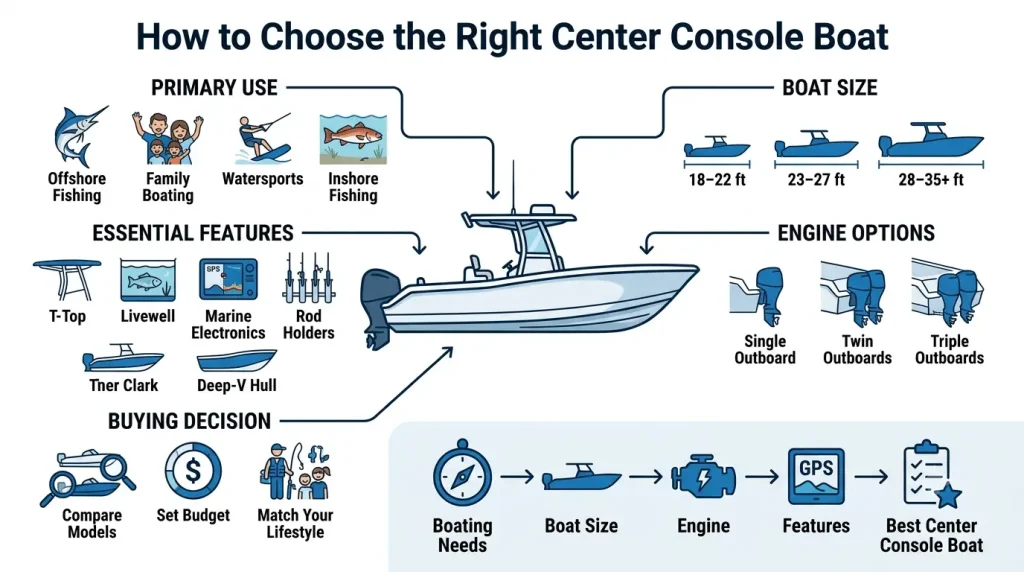
Choosing the right center console boat depends on how you plan to use it, your budget, preferred water conditions, and the features that matter most. Instead of focusing on brand alone, match the boat’s length, outboard engine, layout, and equipment to your boating lifestyle.
Step 1: Define Your Primary Use
Your intended activity should guide every buying decision.
| Primary Use | Recommended Choice |
| Offshore Fishing | Deep-V hull, twin outboard engines, large fuel capacity |
| Inshore Fishing | Smaller center console with shallow draft |
| Family Cruising | Comfortable seating, T-Top, storage |
| Watersports | Powerful engine and open deck layout |
| Mixed Activities | Mid-size center console with versatile features |
Buying a boat designed for your most frequent activity delivers better long-term value than choosing one with features you’ll rarely use.
Step 2: Choose the Right Size
Boat length affects passenger capacity, ride quality, storage, trailerability, and operating costs.
| Boat Length | Best For |
| 18–22 ft | Beginners, lakes, inshore fishing |
| 23–27 ft | Families, coastal cruising, mixed use |
| 28–35+ ft | Offshore fishing and long-distance trips |
Larger boats provide more space and offshore capability but also increase fuel consumption, maintenance, and purchase costs.
Step 3: Select the Right Engine
Most center console boats use outboard engines, but the number of engines should match your boating needs.
| Engine Setup | Best Choice For |
| Single Outboard | Smaller boats and everyday recreational boating |
| Twin Outboards | Offshore fishing and improved reliability |
| Triple Outboards | Large performance-focused offshore boats |
Choose engine power based on the manufacturer’s recommendations rather than simply selecting the highest horsepower available.
Step 4: Prioritize the Right Features
Focus on features that improve your boating experience rather than every available upgrade.
Fishing Essentials
- Livewell
- Fish box
- Rod holders
- Marine electronics
- T-Top
Family Essentials
- Comfortable seating
- Storage compartments
- Swim ladder
- Shade protection
- Easy boarding access
Decision Framework
| If You Want… | Choose… |
| Maximum offshore capability | Large Deep-V center console |
| Family-friendly versatility | Mid-size center console with additional seating |
| Lower ownership costs | Smaller single-engine model |
| Serious tournament fishing | Twin-engine offshore model with premium electronics |
Common Buying Mistakes
Avoid these common mistakes before purchasing:
- Buying a boat larger than your budget allows.
- Ignoring long-term fuel and maintenance costs.
- Choosing features you rarely use.
- Overlooking trailerability and storage requirements.
- Purchasing without considering your primary boating activity.
Expert Insight
Many first-time buyers focus on horsepower or luxury upgrades first. In reality, boat size, layout, and intended use have a much greater impact on long-term satisfaction than premium accessories.
Key Takeaway: The best center console boat is the one that matches your boating lifestyle, budget, and most common activities not simply the largest or most expensive model.
A center console boat is one of the most versatile options for anglers, families, and recreational boaters. Its open layout, 360° deck access, outboard engine, and Deep-V hull make it suitable for everything from offshore fishing to weekend cruising.
Before making your final decision, compare different center console models, estimate ownership costs, and review financing options. Explore our Boat Buying Guide, Boat Loan Calculator, and Boat Financing Guide to choose a boat that fits both your lifestyle and budget.
FAQs
Are center console boats only for fishing?
No. While they are popular for offshore and inshore fishing, many models are designed for family cruising, watersports, island hopping, and recreational boating.
Are center console boats good for families?
Yes. Modern center console boats often include comfortable seating, storage, swim platforms, and shade options, making them suitable for family outings as well as fishing trips.
Are center console boats safe offshore?
Yes, many are built specifically for offshore conditions. Models with a Deep-V hull, quality construction, and appropriate outboard engines provide excellent stability and performance in rough water.
What size center console boat should I buy?
Choose the size based on your boating needs:
- 18–22 ft: Beginners and inshore fishing
- 23–27 ft: Families and mixed recreational use
- 28 ft and above: Offshore fishing and longer coastal trips
Which engine setup is best?
A single outboard is ideal for smaller boats, while twin outboards offer greater power and redundancy for offshore boating. Large offshore models may use triple engines for maximum performance.
Are center console boats expensive to maintain?
Maintenance costs depend on boat size, engine configuration, and usage. Larger offshore boats generally require more fuel, servicing, and upkeep than smaller recreational models.
Can beginners operate a center console boat?
Yes. Smaller center console boats are often easy to handle and are a popular choice for first-time boat owners, provided they receive proper boating education and follow local safety regulations.
Is a center console boat worth buying?
If you want a versatile boat for fishing, family recreation, and offshore adventures, a center console boat offers excellent long-term value because it supports multiple boating activities with one platform.
How Much Maintenance Does a Center Console Boat Need?
Routine maintenance includes engine servicing, hull cleaning, electrical inspections, and safety equipment checks. Boats used frequently in saltwater typically require more regular maintenance than freshwater boats.

Michael Carter is a financial research writer specializing in vehicle financing, loan calculations, interest rates, and consumer budgeting. He creates practical, easy-to-understand resources that help readers make more informed financing decisions.