Luxury Center Console Boats: Features, Benefits & Buying Guide
Luxury Center Console Boats offer an attractive mix of offshore performance, fishing capability, and premium comfort, but choosing one can be difficult. Buyers must balance hull design, boat size, outboard power, marine electronics, seating, storage, and onboard amenities without paying for features they will rarely use.
The solution is to match the boat to your actual lifestyle and budget. This guide explains the features that define a luxury center console, compares hull and power options, covers fishing and family-cruising needs, and breaks down ownership costs so you can choose a boat that delivers the right combination of performance, comfort, and long-term value.
What Are Luxury Center Console Boats?
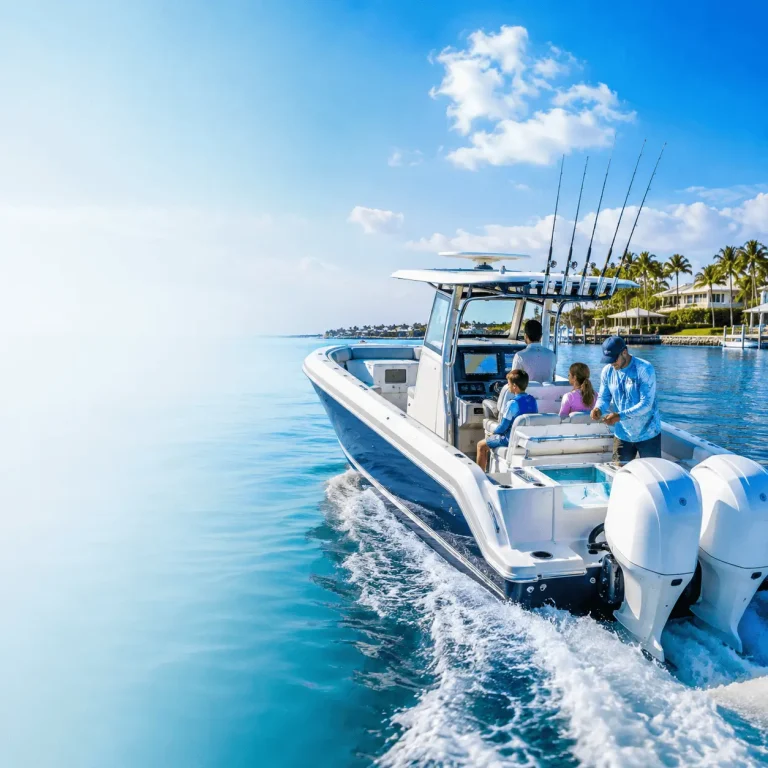
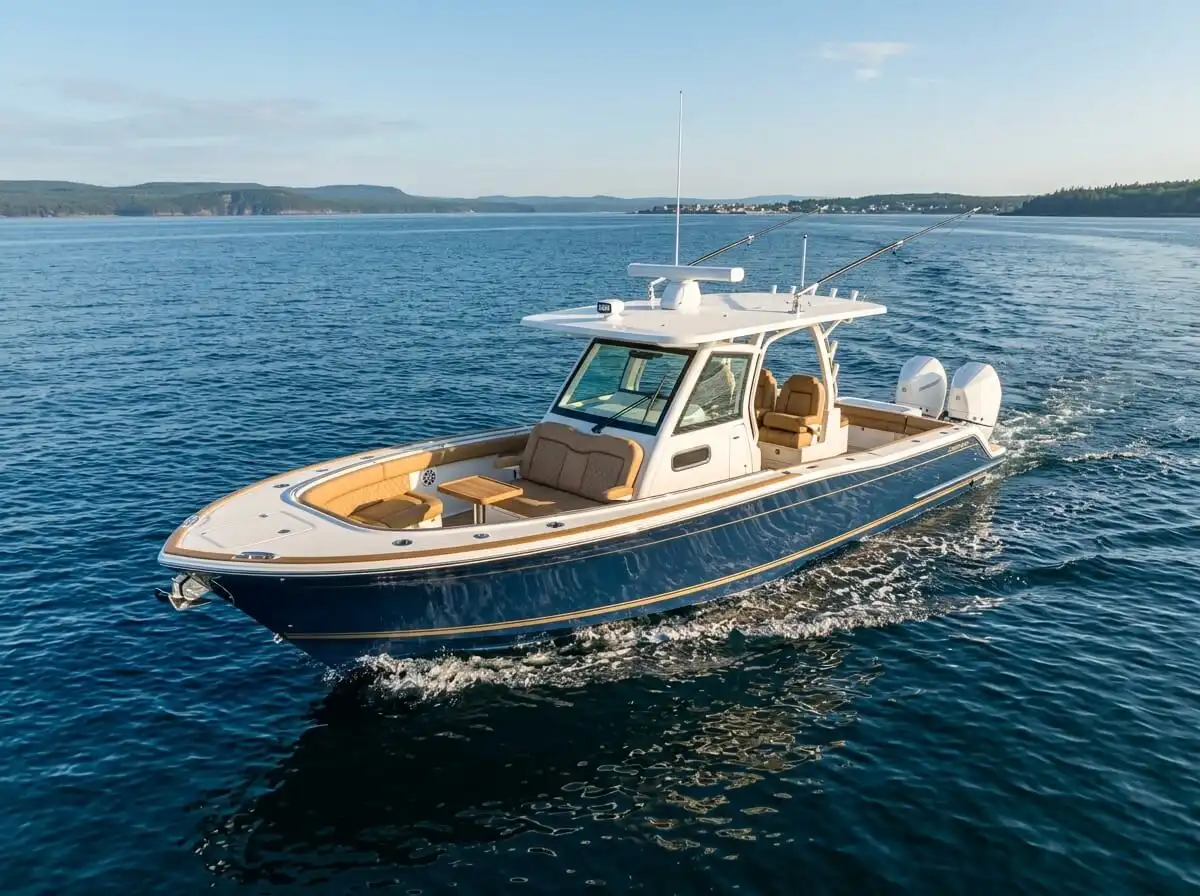
Luxury center console boats combine the open, 360-degree layout of a center console with premium construction, offshore capability, advanced electronics, and high-end comfort. The category now ranges from fishing-focused performance boats to larger models designed for family cruising and entertaining.
| Standard Center Console | Luxury Center Console |
|---|---|
| Basic seating | Premium ergonomic seating |
| Essential electronics | Integrated navigation, radar, and sonar |
| Functional storage | Purpose-built storage and amenities |
| Basic T-top | Extended hardtop or premium shade |
| Fishing-focused layout | Fishing, cruising, and entertaining |
| Limited cabin facilities | Head, cabin, galley, or climate control on larger models |
The important distinction is capability, construction, comfort, and integration not price alone. A genuinely premium boat should improve the experience through better ride characteristics, materials, systems, usability, and finish rather than simply adding expensive options.
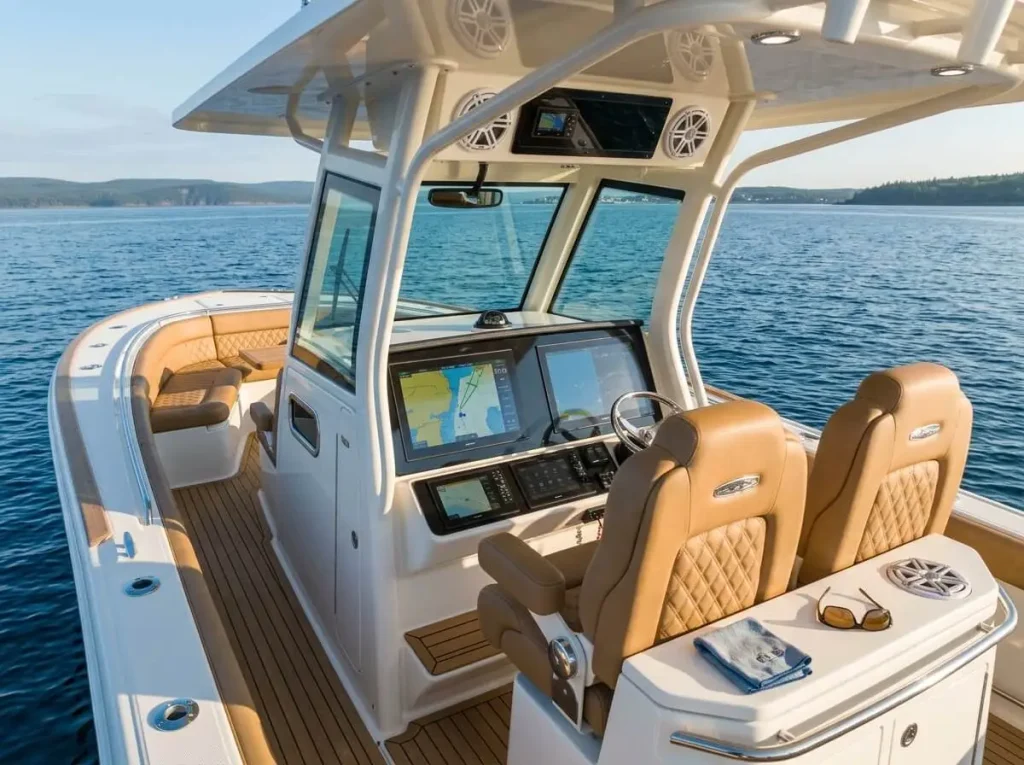
For example, HMY identifies features such as deluxe helm seating, premium forward seating, enclosed heads, premium audio, and cockpit galleys as common features in midsize luxury center consoles.
Premium builders such as Valhalla, Freeman, Invincible, Contender, and Regulator illustrate how modern luxury center consoles combine offshore capability with premium construction and specialized fishing layouts.
What Features Define a Luxury Center Console?
The most valuable luxury features are those that improve safety, ride quality, usability, comfort, or capability. Buyers should prioritize functional upgrades before lifestyle extras.Larger luxury center consoles may include an enclosed head, cabin, galley, air conditioning, premium audio, and expanded seating, moving the boat closer to a center-console yacht than a traditional fishing platform.
| Priority | Features | Why They Matter |
|---|---|---|
| Must-have | Hull quality, reliable engines, navigation, safety equipment | Foundation of performance and safe operation |
| Valuable | Premium seating, hardtop, storage, fishfinding electronics | Improves everyday usability |
| Optional | Joystick control, stabilization, climate control | Adds convenience and comfort |
| Lifestyle luxury | Premium audio, lighting, galley, entertainment | Enhances cruising and entertaining |
For buyers who want both fishing capability and family comfort, brands such as Boston Whaler, Grady-White, Scout, and Pursuit provide useful examples of how seating, storage, shade, fishing systems, and cruising amenities can be combined.
Sport Fishing also highlights livewells, rod holders, fish boxes, premium helm systems, and integrated electronics as important features in luxury fishing-oriented center consoles.bility, while a family buyer may value seating, shade, storage, and an enclosed head.
Pay first for features that improve safety, reliability, ride quality, and usability. Add lifestyle upgrades after those fundamentals are covered.
How Should You Choose the Right Size?
Boat size should match your passenger needs, boating range, offshore conditions, storage, and intended activities.
| Size | Best Fit | Main Trade-Off |
|---|---|---|
| 25–30 ft | Day trips, fishing, smaller families | Less space and range |
| 30–40 ft | Offshore fishing, cruising, entertaining | Higher ownership costs |
| 40+ ft | Long-range trips, luxury cruising, large groups | Greater cost, draft, and storage needs |
A larger boat is not automatically better. A 32-foot center console may be more practical for a coastal owner who trailers occasionally, while a 45-foot model may make more sense for offshore range and extended cruising.
Before choosing size, consider passenger capacity, fuel range, draft, marina availability, storage, and towing requirements.
Which Hull Design Is Best for a Luxury Center Console?
There is no universally best hull design. Deep-V, stepped-hull, and power-catamaran designs provide different combinations of ride quality, stability, efficiency, and handling.
| Hull Type | Main Strength | Best For |
|---|---|---|
| Deep-V | Predictable offshore ride | Rough-water cruising |
| Stepped Hull | Performance and efficiency potential | Fast offshore boating |
| Power Catamaran | Stability and interior space | Cruising and comfort |
A Deep-V is often preferred by buyers who prioritize predictable rough-water handling. Stepped hulls can improve performance and efficiency when properly engineered. Power catamarans provide a different platform with strong stability and usable interior volume.
The right choice depends on sea conditions, speed expectations, cruising range, and how the boat will be used.

How Much Engine Power Do You Need?
Engine power should match the boat’s size, weight, hull design, passenger load, and intended performance. Luxury center consoles commonly use single, twin, triple, or quad outboard configurations.
More horsepower can provide stronger acceleration and higher cruising or top speeds, but it also increases purchase price, fuel consumption, maintenance requirements, and potentially insurance costs.
For example, a large offshore center console designed for heavy loads may benefit from multiple outboards, while adding maximum horsepower to a smaller recreational boat may provide little practical benefit.
Which Technology and Comfort Features Are Worth Paying For?
Prioritize technology that improves navigation, safety, fishing efficiency, maneuverability, or comfort.
High-value systems include:
- Integrated chartplotter and GPS
- Radar
- Fishfinder and sonar
- Autopilot
- Digital switching
- Joystick control
- Stabilization systems
- High-quality VHF communication
- Integrated engine monitoring
Comfort upgrades such as premium audio, refrigeration, climate control, lighting, and entertainment systems become more valuable when the boat is used for extended cruising or entertaining.
Luxury Center Console vs Other Boat Types
A luxury center console sits between a dedicated fishing boat and a traditional cruising boat.
| Boat Type | Fishing | Cruising | Comfort | Offshore |
|---|---|---|---|---|
| Luxury Center Console | High | High | High | High |
| Dual Console | Moderate | High | High | Moderate |
| Cabin Cruiser | Low–Moderate | High | Very High | High |
| Sportfish | Very High | Moderate | High | Very High |
| Power Catamaran | Moderate | Very High | Very High | High |
Choose a luxury center console when you want open deck space, fishing access, offshore capability, and premium cruising comfort in one platform.
Which Luxury Center Console Is Right for Your Lifestyle?
Your use case should determine the boat configuration.
Offshore fishing: Look for builders such as Valhalla, Freeman, Invincible, Contender, or Regulator when evaluating fishing-focused layouts, offshore performance, and specialized equipment.
Family cruising:Boston Whaler, Grady-White, Scout, and Pursuit can be relevant examples when comfort, seating, fishing capability, and family use all matter.
Entertaining: Prioritize lounges, audio, refrigeration, grills, lighting, and usable social space.
Performance boating: Prioritize hull design, power-to-weight ratio, engine configuration, handling, and range.
The best luxury center console is therefore the one whose features solve your actual boating needs, rather than the model with the highest price or horsepower.
What Does a Luxury Center Console Really Cost to Own?
The purchase price is only the starting point. A luxury center console can also require substantial spending on fuel, insurance, maintenance, dockage, storage, engine service, electronics, and registration.Before choosing a luxury center console, use our boat loan calculator to estimate your monthly payment based on the boat price, APR, loan term, and down payment.
| Cost Category | What Can Increase the Cost? |
|---|---|
| Fuel | Larger hull, higher horsepower, frequent offshore use |
| Engine Service | Twin, triple, or quad outboards |
| Insurance | Higher insured boat value and performance |
| Dockage | Larger overall length and marina location |
| Storage | Boat size and indoor-storage requirements |
| Electronics | Advanced or outdated systems requiring replacement |
| Maintenance | More engines and onboard systems |
Engine selection deserves particular attention. Current center-console configurations can range from single outboards to triple and quad high-horsepower setups, so horsepower should be evaluated alongside fuel burn, service requirements, maneuverability, and long-term operating costs not top speed alone.
A boat that fits your purchase budget may still exceed your ownership budget if recurring costs are not calculated first.
Should You Buy a New or Used Luxury Center Console?
A new boat offers the latest equipment, factory warranty, customization, and lower initial uncertainty. A used boat can provide more equipment for the money but requires closer inspection.
When evaluating a used luxury center console, check:
- Hull condition
- Engine hours and service records
- Electronics age
- Electrical systems
- Fuel system
- Steering system
- Generator and climate systems
- Upholstery
- Trailer condition
- Previous damage
A professional marine survey and mechanical inspection can identify problems that a visual inspection misses.
Luxury Center Console Buying Checklist
Before purchasing, verify:
- Use case: Does the layout fit fishing, cruising, or entertaining?
- Hull: Does it match your typical water conditions?
- Power: Is the engine configuration appropriate for the boat?
- Range: Does fuel capacity support your normal trips?
- Technology: Are navigation and safety systems adequate?
- Comfort: Do seating, shade, storage, and facilities meet your needs?
- Ownership: Can you comfortably cover fuel, insurance, maintenance, and storage?
- Condition: For used boats, review service records and obtain a professional inspection.
Frequently Asked Questions
What makes a center console boat luxury?
Premium construction, advanced electronics, high-quality seating, powerful propulsion, superior ride characteristics, and comfort amenities distinguish luxury center consoles from basic models.
Are luxury center consoles good for families?
Yes. Larger models can provide spacious seating, shade, storage, enclosed heads, entertainment systems, and comfortable offshore performance for family boating.
Are luxury center consoles expensive to maintain?
They can be. Multiple engines, advanced electronics, larger fuel systems, specialized equipment, dockage, and storage can increase annual ownership costs.
Are luxury center consoles good for fishing?
Yes. Many combine luxury amenities with livewells, fish boxes, rod storage, tackle stations, offshore hulls, and advanced fishfinding electronics.
What should I check on a used luxury center console?
Inspect the hull, engines, electronics, fuel system, electrical components, steering, service records, and previous damage. A marine survey and mechanical inspection are recommended before purchase.
Are stepped-hull center consoles better than Deep-V boats?
Neither is universally better. A Deep-V generally emphasizes predictable offshore ride characteristics, while a properly engineered stepped hull can prioritize speed and efficiency. Sea conditions, hull design, weight distribution, and manufacturer engineering should determine the choice.
Do luxury center consoles hold their value?
Resale value depends on brand reputation, condition, engine hours, maintenance history, equipment, model demand, and market conditions. A premium purchase price does not automatically guarantee stronger resale performance.

Michael Carter is a financial research writer specializing in vehicle financing, loan calculations, interest rates, and consumer budgeting. He creates practical, easy-to-understand resources that help readers make more informed financing decisions.