Pontoon Boats: Types, Sizes, Features & Buying Guide
Pontoon boats can be difficult to choose because models vary in size, layout, horsepower, passenger capacity, and intended use. A boat that works well for family cruising may not be the best fit for fishing or watersports. Understanding the main types, sizes, features, and performance differences makes it easier to choose a pontoon that matches your activities, passenger needs, and operating conditions.
Choosing between pontoon boats starts with matching the boat to your priorities rather than simply choosing the largest or most powerful model. Consider boat length, tube configuration, passenger capacity, outboard horsepower, deck layout, storage, and towing needs together. This helps narrow your options and ensures the boat provides the space, performance, and comfort you actually need.
What Is a Pontoon Boat?
A pontoon boat uses one or more long flotation tubes beneath a large deck. Most recreational models use two tubes, while a tritoon uses three. The tubes provide buoyancy and support the deck, seating, equipment, and outboard motor.
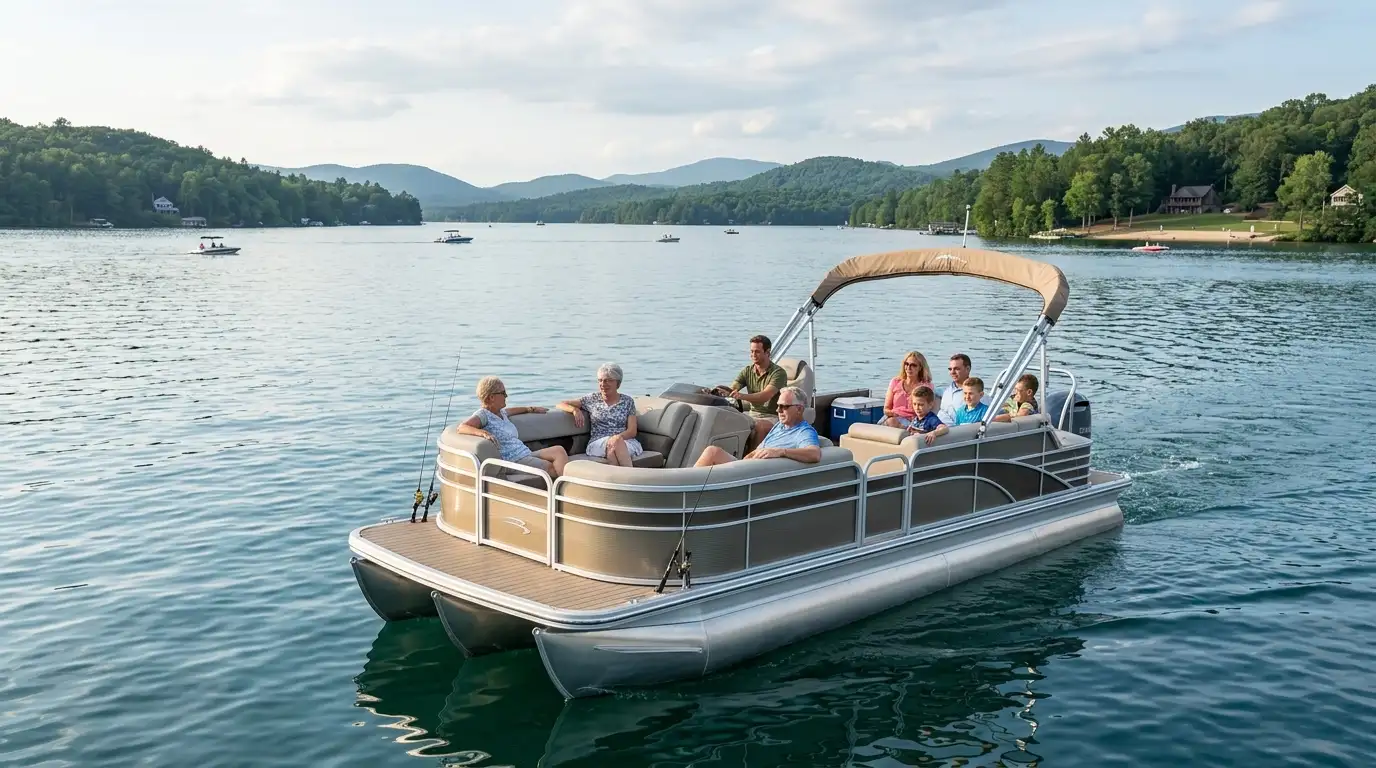
The wide deck gives pontoon boats more usable space than many similarly sized traditional boats. This makes them well suited to passengers, socializing, fishing, and family recreation.
Pontoon boats are generally valued for stability, space, comfort, and versatility rather than aggressive handling or high-speed performance. If you’re comparing a pontoon’s cost with your budget, use the boat loan calculator to estimate potential monthly payments before choosing a model.
What Types of Pontoon Boats Are Available?
Pontoon boats can be grouped by their tube configuration and intended use.
| Type | Best suited for | Key characteristic |
|---|---|---|
| Twin-tube pontoon | Cruising, families, general recreation | Two flotation tubes and a stable platform |
| Tritoon | Performance, larger groups, watersports | Three tubes with greater buoyancy and support |
| Fishing pontoon | Angling | Fishing-oriented seating, storage, and equipment |
| Recreational pontoon | Family outings and cruising | Flexible seating and open deck space |
| Luxury pontoon | Entertaining and comfort | Premium seating, electronics, and amenities |
The best type depends on your primary activity. A simple twin-tube pontoon can be practical for relaxed lake cruising, while a tritoon may make more sense when you want stronger performance, higher horsepower, or a larger passenger load.
What Pontoon Boat Size Do You Need?
Pontoon boat size should match passenger capacity, intended activities, storage, and towing requirements. Length alone does not determine whether a boat is suitable.
| Typical use | Size consideration |
|---|---|
| Small family outings | Compact pontoon with sufficient seating and capacity |
| Larger groups | Longer deck with higher passenger and weight capacity |
| Fishing | Space for anglers, rods, gear, and movement |
| Watersports | Adequate horsepower, capacity, and appropriate tow equipment |
| Entertaining | Larger deck, seating, storage, and amenities |
Choose length according to passenger capacity, deck space, activities, storage, and towing ability. Smaller pontoons can suit couples or small families, while longer models provide more seating and usable deck space for larger groups. Always compare the boat’s passenger and weight capacity rather than relying on length alone.Always verify specifications, capacity ratings, and operating limits in the manufacturer’s documentation before purchasing or operating a boat.
How Do Pontoon and Tritoon Boats Compare?
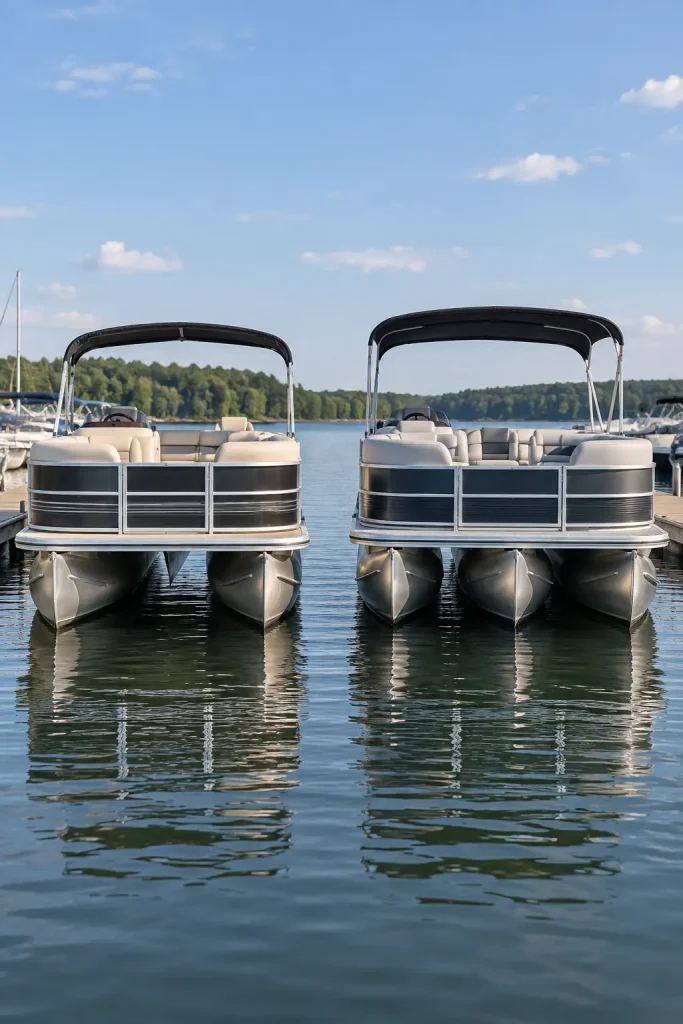
The main difference is the number of flotation tubes. A conventional pontoon normally uses two tubes, while a tritoon uses three.
| Factor | Pontoon | Tritoon |
|---|---|---|
| Tubes | Two | Three |
| Stability | High | Generally higher |
| Performance potential | Moderate | Higher |
| Heavy passenger loads | Suitable within rating | More buoyancy available |
| Watersports | Depends on setup | Often better suited to higher-performance applications |
| Cost | Generally lower | Generally higher |
A tritoon is worth considering when performance, higher horsepower, heavier passenger loads, or more demanding use justify the additional cost. For relaxed cruising on smaller inland waters, a twin-tube pontoon may provide everything you need.
Neither configuration is automatically better. The correct choice depends on your intended use, boat size, engine, budget, and operating environment.
How Much Horsepower Does a Pontoon Boat Need?
Pontoon boat horsepower should match the boat’s manufacturer rating, passenger load, intended speed, and activities. Lower power can be sufficient for relaxed cruising, while watersports, heavier passenger loads, and stronger acceleration generally require a more powerful engine within the boat’s rated limit.
Higher horsepower can provide stronger acceleration and better performance under heavier loads, but it can also increase purchase price, fuel consumption, and operating costs.
Never select an engine above the manufacturer’s rated maximum. When comparing models, consider the complete combination of boat length, weight, passenger capacity, outboard motor, and intended use rather than horsepower alone.
Which Pontoon Boat Features Matter Most?
The most useful pontoon features depend on what you do on the water.
- Seating: Important for passenger comfort and group capacity.
- Storage: Useful for safety equipment, fishing gear, coolers, and personal items.
- Bimini top: Provides shade during extended trips.
- Fishing equipment: Rod storage, fishing seats, and livewells can matter to anglers.
- Ski tow equipment: Useful for tubing and watersports when the boat is properly equipped.
- Electronics: Navigation, depth information, audio, and other onboard systems can improve convenience.
- Flooring: Affects comfort, maintenance, and long-term durability.
Prioritize features that support your actual activities instead of paying for upgrades you are unlikely to use.
Where Are Pontoon Boats Best Used?
Pontoon boats are especially popular on lakes, calm rivers, and protected coastal waters where their wide deck and stable platform are useful.
Water conditions should influence your choice. If you regularly encounter stronger waves or rougher conditions, consider the boat’s size, hull configuration, freeboard, handling characteristics, and manufacturer’s intended operating environment.
Saltwater use also requires appropriate materials, corrosion protection, maintenance, and equipment. A pontoon designed and equipped for freshwater recreation should not automatically be assumed suitable for every marine environment.
What Are the Advantages and Limitations of Pontoon Boats?
Pontoon boats offer several advantages:
- Stability: The wide platform provides a stable environment for passengers.
- Space: The open deck supports more seating and usable living space.
- Versatility: Many layouts can support cruising, fishing, entertaining, or watersports.
- Comfort: Large seating areas make them practical for family outings.
- Accessibility: Their layout can be convenient for boarding and moving around the deck.
They also have limitations. Their wide profile can make them more affected by wind, and some configurations are less suited to high-speed or aggressive handling than performance-oriented boat designs.
A pontoon is therefore a strong choice for space, stability, comfort, and recreation. Someone prioritizing sharper handling, speed, or a different hull performance profile may prefer another type of boat.
What Should You Consider Before Buying a Pontoon Boat?
Start with how you will use the boat, then work backward to the appropriate configuration, size, horsepower, and features.
A practical buying checklist is:
- Define the main use: cruising, fishing, entertaining, or watersports.
- Estimate passenger needs: choose capacity based on the people and equipment you expect to carry.
- Choose the configuration: compare a twin-tube pontoon with a tritoon if performance or heavier loads matter.
- Check horsepower: stay within the manufacturer’s rating and match power to your activities.
- Evaluate storage and towing: confirm that your storage location and tow vehicle can handle the boat and trailer.
- Calculate ownership costs: include insurance, fuel, maintenance, storage, registration, and equipment—not only the purchase price.
- Compare new and used boats: a used pontoon can reduce the upfront cost, but condition and maintenance history become especially important.
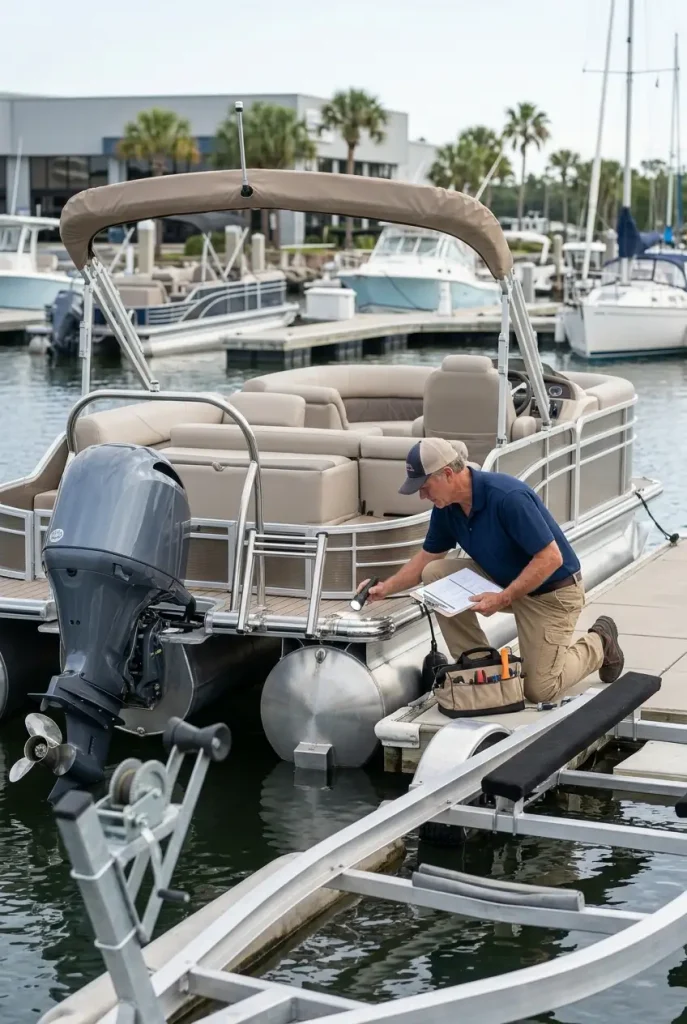
- Inspect before buying used: check the tubes, deck, flooring, motor, electrical systems, steering, upholstery, and trailer.
If financing is part of the purchase, review your boat financing options and calculate the expected payment before committing to a particular boat.
| Primary use | What to prioritize |
|---|
| Family cruising | Stability, seating, shade, storage |
| Fishing | Fishing layout, storage, deck space |
| Watersports | Suitable horsepower, capacity, tow equipment |
| Large groups | Deck space, passenger capacity, buoyancy |
| Performance | Tritoon configuration, horsepower, handling |
Pontoon Boat FAQs
Are pontoon boats good for beginners?
Yes. Pontoon boats are often suitable for beginners because their wide platforms provide stability and their layouts are relatively straightforward. Beginners should still learn local boating rules, navigation, docking, and safety procedures.
What is the difference between a pontoon and a tritoon?
A pontoon typically has two flotation tubes, while a tritoon has three. The additional tube can provide greater buoyancy and support for higher-performance applications, heavier loads, and larger engines.
What size pontoon boat should I buy?
Choose a size based on passenger capacity, intended activities, storage, towing ability, and available budget. Do not select a length based only on the number of seats.
Are pontoon boats good for fishing?
Yes. Fishing-oriented pontoon boats can provide substantial deck space, seating flexibility, storage, and room for fishing equipment. A fishing-focused layout is preferable if angling is the boat’s primary purpose.
Are pontoon boats good in rough water?
Pontoon boats can operate in appropriate conditions, but suitability depends on the specific boat, size, configuration, load, and water conditions. Always follow the manufacturer’s operating guidance and avoid treating a recreational pontoon as suitable for every sea state.

Michael Carter is a financial research writer specializing in vehicle financing, loan calculations, interest rates, and consumer budgeting. He creates practical, easy-to-understand resources that help readers make more informed financing decisions.