Boat Loan vs Home Equity Loan: Which Is the Better Way to Buy a Boat?
How a Boat Loan Works
If you are deciding between a boat loan vs home equity loan to finance your next boat, you are really choosing between two very different kinds of risk. A boat loan is built for one job: buying a boat. A home equity loan borrows against your house to free up cash you can spend on anything, including a boat. The home equity route usually wins on interest rate, but it can cost you more in the long run, and it puts your home on the line. Here is how the two options compare, with a real dollar example so you can see which one is cheaper for you.

How a Home Equity Loan Works
A boat loan is an installment loan, similar to an auto loan, offered by banks, credit unions, and online marine lenders. You borrow a fixed amount, make fixed monthly payments, and the boat itself serves as collateral. If you stop paying, the lender can repossess the boat, but your house and other assets stay untouched.
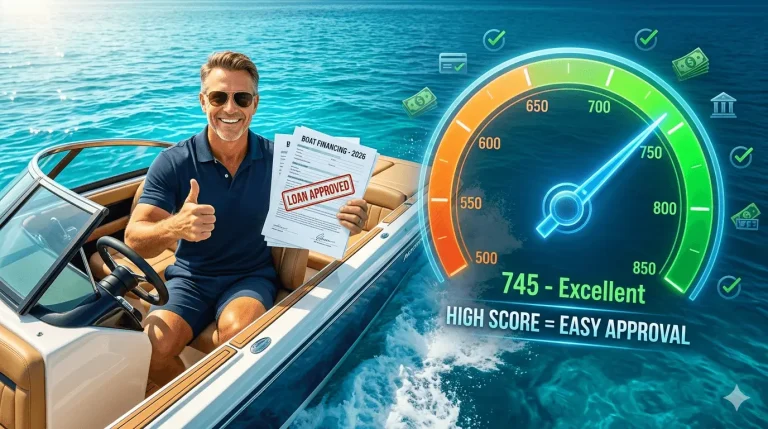
Most boat loans run 5 to 20 years, depending on the loan amount and the age of the boat. Interest rates for marine loans average roughly 7% to 10%, depending on your credit profile and the vessel. Lenders usually want a down payment of 10 to 20 percent of the purchase price, so on a $50,000 boat, expect to bring $5,000 to $10,000 to closing. A strong credit score, ideally 680 or higher, unlocks the best rates and terms.
A home equity loan lets you borrow against the equity in your home, which is the difference between your home’s market value and your remaining mortgage balance. It is often called a second mortgage. Unlike a boat loan, the money can be used for anything, so nothing ties the loan to the boat. Your house is the collateral.
Because the loan is secured by real estate, lenders see less risk, so home equity loans usually carry lower interest rates than boat loans, often 1 to 3 percentage points lower. Terms can stretch up to 30 years, which shrinks the monthly payment but stretches out the interest bill. The catch: you need enough equity to borrow against, and if you cannot make the payments, the lender can foreclose on your home.
Boat Loan vs Home Equity Loan: Head-to-Head
Interest Rates
Home equity loans win here. Their rates are typically lower because your home backs the loan. Boat loan rates run higher because boats are luxury purchases that depreciate, and lenders price in that risk. If your only goal is the lowest rate, home equity looks tempting. Just remember that getting the best boat loan rate you can narrows that gap more than most buyers expect.
Loan Terms and Monthly Payments
Home equity loans also win on monthly payment size, thanks to longer terms. A 20 or 30 year repayment schedule makes even a big boat feel affordable month to month. But longer terms mean you pay interest for longer, which is why the cheapest monthly payment is rarely the cheapest loan overall.
Collateral and Risk
This is where a boat loan shines. If you default on a boat loan, the lender repossesses the boat. Painful, but your home is safe. Default on a home equity loan and you risk foreclosure. Ask yourself: is a slightly lower rate worth putting your house on the line for a depreciating asset? Here is what actually happens if you default on a boat loan, so you can compare the two outcomes with eyes open.
Tax Treatment
Neither option gives most buyers a tax break. Boat loan interest is personal interest and is not deductible, unless your boat qualifies as a second home with sleeping, cooking, and toilet facilities. Home equity loan interest is only deductible when the loan is used to buy, build, or substantially improve the home that secures it, so borrowing against your house to buy a boat generally does not qualify. We break this down in detail in our guide on whether boat loan interest is tax deductible.
Total Cost
Rate is not the same as cost. A lower rate spread over twice as many years can quietly cost you thousands more. The example below makes this concrete.
The Total Cost Example: A $50,000 Boat
Say you finance a $50,000 boat two ways, with no down payment to keep the math clean:
- Boat loan: 8.5% APR, 10 year term. Monthly payment: about $620. Total interest paid: about $24,400.
- Home equity loan: 6.5% APR, 20 year term. Monthly payment: about $373. Total interest paid: about $39,500.
The home equity route saves you roughly $247 a month, but it costs you about $15,000 more in interest over the life of the loan. And it keeps your house pledged as collateral for an extra decade. Run your own numbers with our boat loan comparison calculator before you decide.
When a Boat Loan Makes More Sense
- You want to keep your home out of the deal entirely.
- You can afford the higher monthly payment of a shorter term.
- You do not have much home equity, or you rent.
- You might sell or trade up boats in a few years. A boat loan is tied to the vessel, not your mortgage.
- You prefer a fixed rate and a fixed payoff date, with no temptation to keep drawing against your house.
When a Home Equity Loan Makes More Sense
- You have substantial equity and need the lowest possible monthly payment.
- You want to preserve cash for the down payment, outfitting, and first year of ownership costs.
- You plan to pay the loan off early, in which case the long term never materializes. Check for prepayment penalties first.
- You need flexibility: a home equity line of credit (HELOC) lets you draw funds as boat-related expenses come up, such as electronics, a trailer, or storage.
The Bottom Line
In a boat loan vs home equity loan matchup, the boat loan is the safer, simpler choice for most buyers: the boat is the collateral, the payoff date is fixed, and the total interest is usually lower if you keep the term short. A home equity loan can make sense if you need a smaller monthly payment and have the discipline to pay it off early, but never let a lower rate blind you to the bigger risk, because your home is the collateral. Compare both offers side by side, factor in the term, and remember that the cheapest rate is not always the cheapest loan. And if rates fall later, you can always refinance your boat loan into a better deal.

Michael Carter is a financial research writer specializing in vehicle financing, loan calculations, interest rates, and consumer budgeting. He creates practical, easy-to-understand resources that help readers make more informed financing decisions.