Fishing Boat Types: 10 Options You Should Know Before Choosing One
Fishing boat types can make the buying decision confusing when different boats are built for completely different waters and fishing styles. Choosing a bass boat for offshore trips, or an offshore boat for small shallow lakes, can mean paying for capabilities you do not need or ending up with a boat that cannot handle your typical fishing conditions.
The solution is to match the boat’s hull design, draft, deck layout, passenger capacity, and equipment to where you fish and what you target. The right fishing boat depends on where you fish, how you use the boat, and what you can comfortably afford. Before comparing models, you can estimate your boat loan payments to set a realistic budget for the type and size of boat you are considering.
What Are the Main Fishing Boat Types?
Fishing boats are designed around specific environments and fishing techniques. The most common recreational options include:
| Fishing Boat Type | Best For | Key Advantage |
|---|---|---|
| Bass Boat | Freshwater lakes and reservoirs | Speed and casting space |
| Jon Boat | Shallow lakes, rivers, and ponds | Simple, lightweight design |
| Aluminum Fishing Boat | Freshwater and mixed use | Durability and easy towing |
| Center Console | Inshore and offshore fishing | 360-degree fishing access |
| Bay Boat | Bays and coastal waters | Shallow-water versatility |
| Flats Boat | Very shallow water | Minimal draft |
| Skiff | Inshore fishing | Easy shallow-water access |
| Dual Console | Fishing and family use | Versatile seating |
| Walkaround Boat | Coastal fishing and cruising | Fishing space with protection |
| Offshore Fishing Boat | Deep-sea fishing | Rough-water capability |
The best fishing boat type depends on the water you fish, the species you target, and whether fishing or general recreation is the main priority.
10 Fishing Boat Types and What Each Is Best For
1. Bass Boats
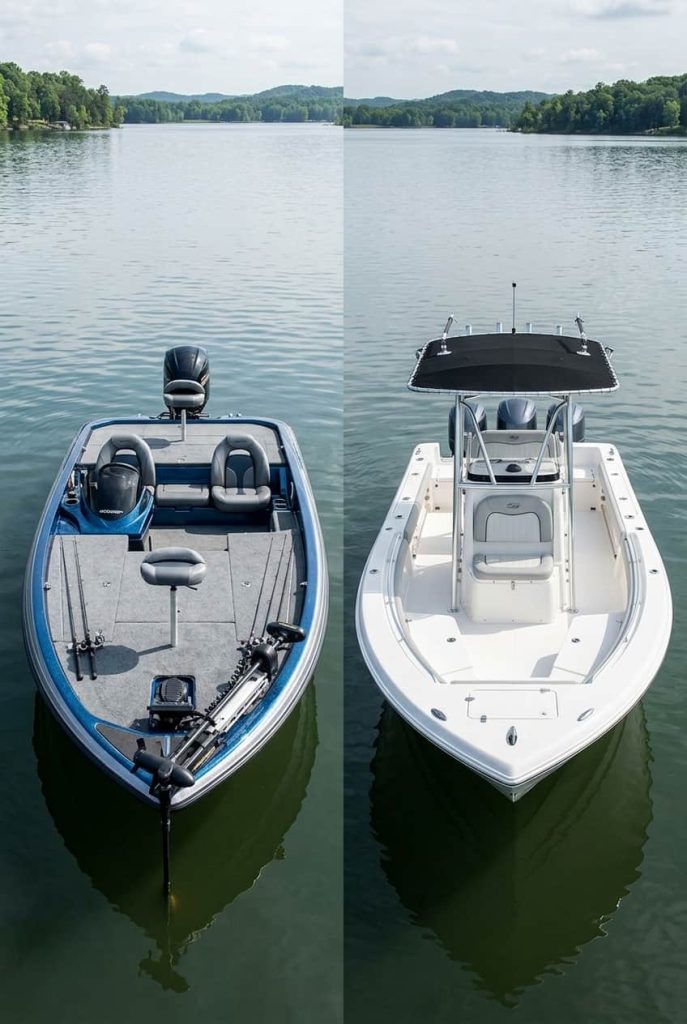
Bass boats are built primarily for freshwater bass fishing on lakes and reservoirs. They typically have a low-profile hull, elevated casting decks, fishing seats, large livewells, and dedicated tackle storage.
Their combination of speed and casting space makes them particularly suitable for anglers who cover large areas of water or participate in bass tournaments. Their low freeboard and fishing-focused layout make them less suitable for rough offshore conditions.
2. Jon Boats
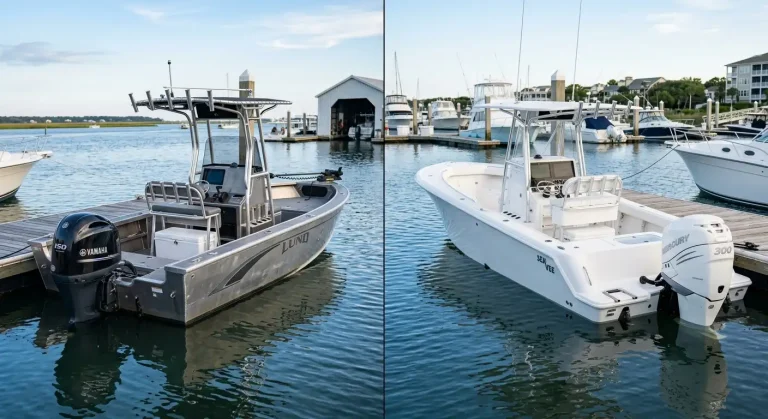
Jon boats use a flat or shallow hull that works well in calm, shallow water. Their simple aluminum construction, open layout, and low draft make them useful for fishing, hunting, and general utility.
They are a practical choice for anglers who prioritize easy launching, transport, and access to shallow rivers, ponds, and lakes.
3. Aluminum Fishing Boats
Aluminum fishing boats combine durability with relatively low weight. Many models use bench seating, open decks, storage compartments, and outboard motors.
They are well suited to freshwater anglers who regularly launch from smaller ramps or operate around rocky shorelines where a lightweight, impact-resistant hull is useful.
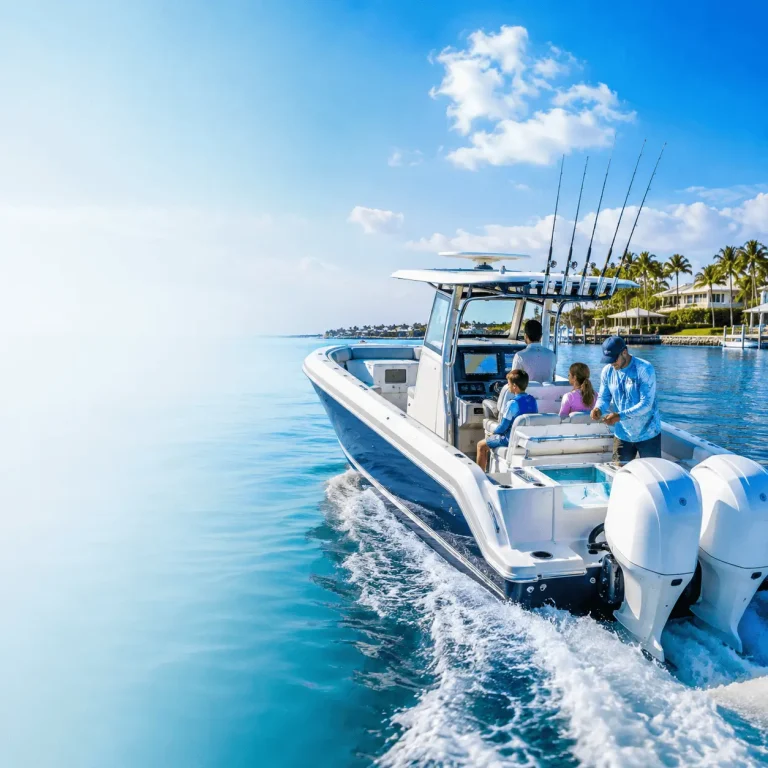
4. Center Console Boats
Center console boats place the helm near the middle of the boat, leaving fishing access around the perimeter. This layout makes it easier to move around the boat while casting, trolling, or fighting a fish.
Smaller models can serve inshore waters, while larger deep-V center consoles can be equipped for offshore fishing. Their flexibility makes them one of the most versatile fishing boat types.
5. Bay Boats
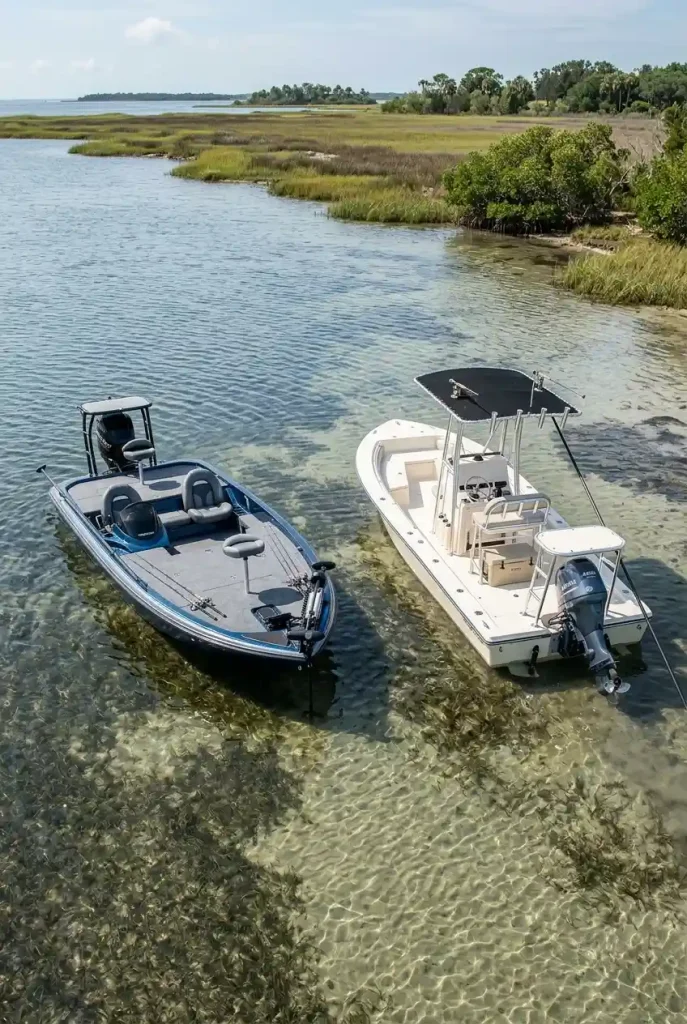
Bay boats are designed for protected coastal waters, including bays, estuaries, and shallow nearshore areas. They generally combine shallow-water access with more freeboard and rough-water capability than a dedicated flats boat.
A bay boat can be a strong choice for anglers who want one boat for fishing and family use without moving to a larger offshore platform.
6. Flats Boats
Flats boats are built for extremely shallow water and sight fishing. Their shallow draft allows anglers to reach areas that deeper-hulled boats cannot.
Many have elevated casting decks, low freeboard, and specialized features such as poling platforms. They are particularly useful for anglers targeting shallow-water species where stealth and precise positioning matter.
7. Skiffs
Fishing skiffs are small, shallow-draft boats designed primarily for inshore fishing. Their compact size makes them easy to trailer, launch, and maneuver in shallow coastal areas.
Compared with larger center consoles, skiffs generally sacrifice offshore capability for easier access to skinny water and simpler ownership.
8. Dual Console Boats
Dual console boats place the helm and passenger seating behind separate consoles, providing more protection and seating than many open fishing layouts.
They work well for anglers who want to combine fishing with family cruising. The trade-off is less unobstructed fishing space compared with a center console.
9. Walkaround Fishing Boats
Walkaround boats combine an open fishing cockpit with a small enclosed cabin or protected bow area. This makes them useful when anglers need additional shelter without moving to a large cabin boat.
They can suit coastal fishing, day trips, and mixed recreational use where protection from weather is more important than maximum open-deck space.
10. Offshore Fishing Boats
Offshore fishing boats are designed for deeper water and more demanding sea conditions. Common features include higher freeboard, larger fuel capacity, substantial electronics, live bait systems, fish boxes, rod storage, and stronger hull designs.
Large center consoles and sportfishing boats are common offshore platforms. The added capability comes with higher purchase, fuel, maintenance, and storage costs.
How Do You Choose the Right Fishing Boat Type?
Start with where you fish, then match the hull and layout to that environment.
- Lakes and reservoirs: Bass boats, jon boats, and aluminum fishing boats.
- Shallow coastal water: Flats boats, skiffs, and bay boats.
- Bays and nearshore waters: Bay boats and center consoles.
- Offshore fishing: Larger center consoles and offshore fishing boats.
- Fishing plus family recreation: Dual consoles, bay boats, and versatile center consoles.
Also consider passenger capacity, draft, hull design, outboard horsepower, fuel capacity, storage, trailerability, and the fishing equipment you need.
What Features Matter Most on a Fishing Boat?
The most useful fishing features depend on the type of fishing you do. Common equipment includes:
- Livewells for keeping caught or live bait fish.
- Rod storage for organizing multiple setups.
- Fish boxes for storing the catch.
- Trolling motors for precise positioning in shallow water.
- Fish finders and marine electronics for locating structure and navigating.
- Casting decks for standing and casting comfortably.
- T-tops or windshields for shade or weather protection.
A feature is valuable only when it supports the way you actually fish. Paying for offshore electronics or large livewells makes little sense if most trips happen on a small inland lake.
Which Fishing Boat Type Is Best for You?
There is no single best fishing boat for every angler. Bass boats favor freshwater performance, flats boats and skiffs favor shallow-water access, bay boats balance shallow-water capability with versatility, and center consoles offer broader inshore-to-offshore flexibility.
Your choice should also fit your overall budget, especially if you are comparing larger boats with higher purchase and ownership costs. Understanding boat financing options can help you compare different price ranges and decide how much you can comfortably spend.
Frequently Asked Questions About Fishing Boat Types
What is the best fishing boat type for beginners?
A jon boat or aluminum fishing boat is often a practical starting point because both are simple, durable, and relatively easy to trailer and operate.
What type of fishing boat is best for offshore fishing?
A center console or dedicated offshore fishing boat is better suited to offshore conditions because it can provide greater stability, freeboard, fuel capacity, and equipment space.
What fishing boat is best for shallow water?
Flats boats and skiffs are designed for very shallow water because they have a shallow draft and can reach areas that deeper boats cannot.
What is the difference between a bass boat and a center console?
A bass boat is optimized for freshwater bass fishing, with casting decks, livewells, and tournament-focused layouts. A center console provides more open-around-the-boat access and is generally more versatile for inshore and offshore fishing.
What should I consider when choosing a fishing boat?
Consider where you fish, target species, passenger capacity, hull design, draft, outboard horsepower, storage, fuel capacity, and towing requirements before choosing a boat.

Michael Carter is a financial research writer specializing in vehicle financing, loan calculations, interest rates, and consumer budgeting. He creates practical, easy-to-understand resources that help readers make more informed financing decisions.